The Bride! Is! Not! That! Bad!
General Reviews
The Bride! came out and left a wake of mixed reviews. Some were indifferent to it. Most people hated it. Nobody really loved it.
I guess that is a fair response. I went through a bunch of emotions when it came to this movie, too. Initially, I was pleasantly surprised. The movie wasn't shocking or all that surprising, but it was fun. Despite how much I oppose random dance sequences, I did not hate it in this movie. Nor was I opposed to the insane amount of men who were lowkey rapists in it– not because I think that's a valid description or realistic, but it works for the hyperstylized environment. I don't know about you, but I found it kind of reminiscent of the dark alleyways described in Watchmen, or if you've seen the first season of Daredevil and how he could always hear some woman being sexually abused in Hell's kitchen, The Bride! had a similar, gritty, over-magnified landscape of decay and corruption. I don't think that this choice was without reason, either; the environment was its own character, meant to over-emphasize Ida, and later, the Bride's, seemingly deranged persona. Things were hyper-exaggerated, left unexplained, and it kind of helped build this third space where the "realized" woman can exist (I put realized in quotes because I think there's a lot to unpack there, and I'll get to it in a bit).
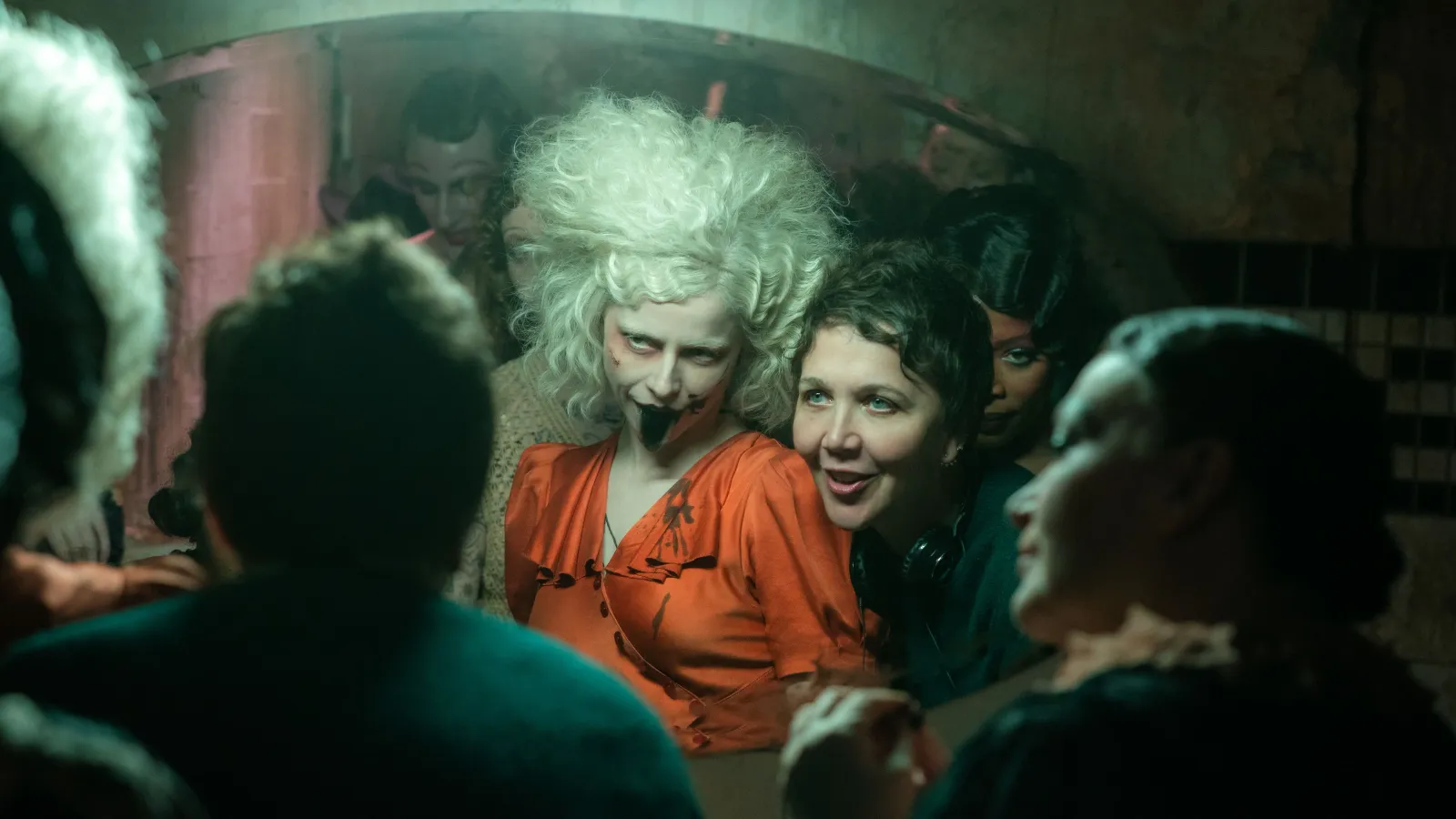
At the theatre, I was jamming to the movie. It was a vibe. I mean, maximalist as hell but it worked because that is the point. One major complaint that I heard was that too much was happening in the movie, and people had qualms with the truth-telling tic that she had at the beginning (also the Mary Shelley persona). I can't speak too much on the Mary Shelley persona because I also was not a fan of that; I thought it was a disservice to the impact of the narrative. However, those initial scenes where Ida is being possessed by Mary Shelley, a perfect example of a scene where too much is happening, is a perfect example of how this movie uses visual storytelling to complicate what is being shown on the surface.

The first discrepancy begins with what Ida says versus what she does. As an undercover prostitute, she is supposed to enact a specific role– that is, to please her client. At first, we see Ida somewhat hidden in the background, taking up the margins. It's evident from her silence and discomfort that this performance (fulfilling a role of hypersexualized femininity for male pleasure), that the physical space of the bar is not compatible with her. That's when Mary Shelley pops up, disrupting the tone and ambience of the bar. Was the moment cringey as hell? Yeah. But it was also ingenious. Having her body seize up while Mary Shelley possessed her was weird to watch, but it allowed Ida to reject the geography, of the context in which she was in, and the role that she played. Her physical appearance was intentionally over the top and uncomfortable because it leaned heavily into the monstrosity. Her physical body caused discomfort, pushed the people around her into the margins, opening conversation as to how monstrosity, or otherness, provided her with freedom. Ultimately, her death, which cleverly plays into the "refrigerator girl" trope, complicates her origin story as Frankenstein's Bride.

I think haters overlook the layers of feminist storytelling in the movie. Yeah, on the surface, there are loose ends and whatnot (especially with the whole detective subplot), and the story unfolds rather as a spray of vomit, but I feel like you have to appreciate the mess of it all. Like, with the Bride's origin story, there is already another layer to her feminist identity simply by way of how she died. She's supposedly this female figure fighting for respect and consent, and yet, her boundaries are constantly violated, even after death. Sure, the whole "brain attack" might feel irritatingly on-the-nose, or idealistic and naive, or maybe even convoluted amidst all the subplots, but it reflects both an underlying desire of the female population wanting to speak up, as well as the reality that there is a limit to this ambition.
The fact that the Bride's freedom can only exist when she becomes undead, or monstrosized already indicates the bounds in which her autonomy and individuality can exist. As a monster, the Bride has space to redefine herself on her own terms. Her physical appearance already marks her as an outsider, so speaking out has less stake as compared to when she was Ida. Her truth-telling tics are no longer a hindrance. Nor are they hiccups she must suppress. She, for the first time, can spew out messily, and it will be heard. By Frankenstein, at least.
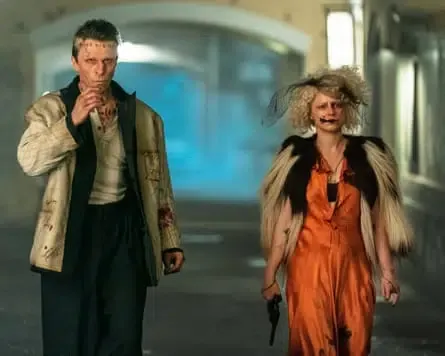
The tragic twist is that even after death, the Bride doesn't have much say. She is reborn to fulfill her role as Frankenstein's wife; she rejects that, but to what extent does that rejection work? I think that is the real hidden horror of the story. Think about it. She is reanimated, looks at Frankenstein, and is immediately like, yeah no. But then, who does she end up on the run with? That's right, Mr. Undead over there. The same man-monster-thing who was like, I'm horny, make me a woman. That's technically what she was preaching against in the first place. She wanted rights, respect, and to be heard. Mr. Frank, over there, is just sex-depraved and desperate for a romance that fulfills his pleasure. Everything he does for her, therefore, hinges on the condition that at one point she will finally accept her role as his wife. Again, here, the movie is critiquing the Bride's freedom; on one level, she advocates and is able to propel a certain level of change within the living female population, but the cost of that is her own freedom and life.
You might argue that Frank isn't that bad. At the very least, he did learn how to treat the Bride, right? Very quickly he learned that she was not like the characters in the movie, that she was flightly and untameable, but ironically neither of them are really able to step away from the patriarchal expectations of man and wife. Sure, Frank learns a bit here and there about how he has to treat his new girl, but most of the stuff he does fulfills the same toxic tropes. Like, their trust forms only after he saves her from those rapists. He likes her audaciousness because he's also been put to trial for speaking out. He's portrayed as an innocent creature, but like, the Bride is constantly mothering him– not that there is anything wrong with that, only that in this context it replicates the same cycle that she was stepping away from. Frank does eventually learn to respect her, but the main issue is that he is also in the margins. And, within the margins, between the two of them, he inherently has more power than her. Sure, he understands her because he, too, has been in her position; they have a shared monster identity. But Frank has more time, age, and authority (in that, he requested she be created in the first place). Ida is his wish manifestation and not the other way around; the Bride has to learn to accept him, and the fact of the matter is that she really doesn't have any other choice.

I think the horror really cemented why this movie was such a vibe. Underneath all the playfulness and over-the-top absurd romance was also the underlying nightmare of what death actually brought upon her. On the surface, it seems like the Bride is actualized, that she receives some enlightenment, but then things don't really match up. Immediately after choosing her name– which is also questionable because it inherently makes her an entity that can only exist in relation to someone else– she is shot and killed. I mean, the moment there was some momentum in her female rights movement, the world cuts her down. Which, I thought was so poignant and relevant. Then, again, she is reanimated without consent and again, her new re-existence is entwined with Frank's. Cool, right? Because the cycle keeps on repeating.
It's really easy to be dissuaded to watch because of just how much is happening on screen. I will admit, there were some plotlines and choices that made no sense to me and made the plot a bit blurry. However, I think there is a lot of underlying critique happening below what feels like an on-the-nose girl-power movie. I wouldn't call this the best movie of the year, by far, but I also don't think it deserves all the hate that it gets.
Don't believe me? Go watch it yourself and tell me what you think!


Comments 5