The man who never stops running.
General Reviews
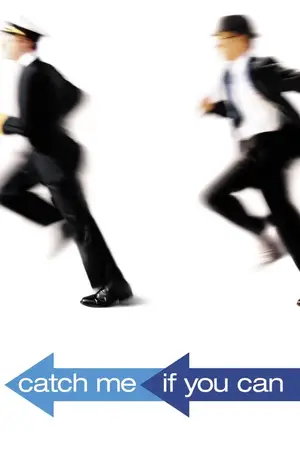
Frank Abagnale Jr. had finally been caught. After years of escapes, disguises, and deceptions, the cell closed on him with a metallic slam that seemed definitive. The guards watched him with the satisfaction of those who believe they have defeated a ghost. But that night, in the prison’s shadows, the impossible happened: Frank’s body began to fade, as if the jail could not contain him…

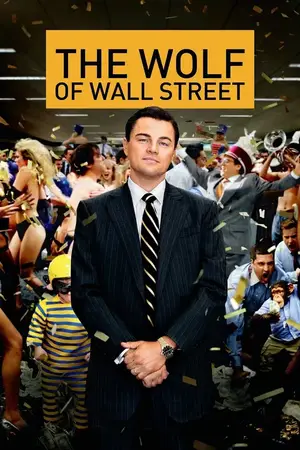
When he opened his eyes, he was no longer Frank. He was in a New York penthouse, surrounded by luxury, excess, and screens flashing stock market figures. Now his name was Jordan Belfort. The same talent that had once made him a teenage con artist now transformed him into a Wall Street tycoon. He no longer fled from the law: the law protected him, admired him, feared him. Yet the cracks of the multiverse pursued him.

At every party, in every speech, he saw reflections of his past: forged checks, pilot uniforms, the cell that swallowed him. He understood he had not escaped—he had only changed masks. The vertigo of power was another kind of prison, brighter, louder, but just as suffocating. And it was then, in the midst of that frenzy, that he was arrested again. The prison corridors stretched like endless tunnels, and as they led him to his cell, everything shifted. The air grew heavy, the walls narrowed, and in the metallic reflection of the bars there was no Jordan Belfort, no Frank Abagnale, but a man condemned to wear a hidden face.
The cell transformed into a damp stone dungeon, and upon his head fell the iron sentence: a mask that erased his identity, turning him into a prisoner of himself. It was as if the multiverse had hurled him into another story, that of the Man in the Iron Mask. There, DiCaprio was not the swindler nor the magnate, but the hidden brother, the silenced double, the face that had to vanish so another could reign.

Leonardo DiCaprio, suffocated under the weight of iron, tried to tear off the mask. His fingers clawed at the metal, desperate to recover a face he no longer felt was his own. But that gesture was a fatal mistake: the multiverse did not tolerate a man defying his sentence. The iron fused with his skin, and instead of freeing himself he began to transform. His eyes darkened, his body hunched, and slowly he became a different prisoner, one marked by fragility and waiting.
The dungeon lit up with a greenish glow, as if the cell had become death row. There, among shadows and echoing footsteps, the guardian appeared: Tom Hanks once again.
Hanks did not raise his voice nor brandish weapons. He approached slowly, with the serenity of one who knows the weight of every sentence. “It is not the mask that imprisons you,” his eyes seemed to say, “but your endless flight.” In that corridor, DiCaprio understood that each leap brought him closer to the truth: he could not escape himself, nor the stories that haunted him.

Leo looked at him, and for an instant thought he would find compassion in those eyes. But Hanks’s presence was more than human: it was the reminder that every escape had a limit, that no mask could save him. The air tightened, the iron vibrated, and the multiverse opened again like an invisible crack.
At the exact moment Tom Hanks extended his hand toward him, Leonardo began to fade. First his fingers, then his face, then his entire body dissolved like smoke. The cell was left empty, the corridor silent.
Leo had escaped once more, but not into another disguise nor another prison: he had vanished into the crack of the multiverse, heading toward an unknown destiny. And Tom Hanks, unmoving, only murmured to himself, as if speaking to the air:
“Life is like a box of chocolates… you never know which universe you’re gonna get.”







Comments 1