Taylor Swift Is Equivalent To The Subway Guy From Community
Sociocultural
I'm calling it. I cannot afford being a Taylor Swift fan anymore.
I mean, I'm a little bummed because she's garnered the reputation of creating spectacles for her three-hour long shows, but I don't think I have the capacity to mortgage my house just to attend one of her concerts. I barely have the capacity to purchase a subscription to Disney+ just to watch her new docuseries titled The End of an Era.
The first time I learned of Taylor Swift was over a decade ago, back when I was in grade school. She played "Love Song" in her white gown on the large Toshiba laptop my parents had bought for the family— the coolest piece of technology that we owned at the time. I remember hearing that song, the same familiar intro melody that to this very day has my soul reacting, and knew that this girl was going to be famous famous.
Over the years, I grew up alongside Taylor Swift. When she morphed into her Red era, I was there, singing in my flowy dresses; when her reputation was tainted, I was belting "I did something bad," eyelined eyes and all. I knew about the Kanye lore, I had opinions about Joe Alwyn (folklore will always have a special place in my heart); and don't even get me started on Gyllenhaal and Mayer. When people bashed her, I was there to talk about how significant her impact was on young girls. Sure, she's flawed, but at the very least, she emblemizes success in a world that constantly marginalizes women. She took capitalism and just went full swing with it. How can you not appreciate that?


Taylor Swift's cultural impact within the music industry is undeniable. She's a marketing tycoon, cleverly selling a persona that is relatable, strong, and ethereal. This isn't her first docuseries, either. Right after her album Fearless, we were presented with the behind the scenes of this young businesswoman who was paving her way in the music industry in her mini docuseries Journey to Fearless. Now I look at Taylor and I know that she'd strum her guitars till her fingers bled. I look at her and I know that as a young girl, she tirelessly put herself out there until she acquired a label, and that even now to this day, all she does is work on her music performances, and that she does it for her fans.
But Taylor went above and beyond that. I remember when she started the ultra-exclusive Secret Session where she invited some fans to her house for a live, intimate mini-concert; I was in awe. In all of the marketing that she could have done, this one was ridiculously genius. Inviting her fans made her feel like a friend, someone that was human and real, without having to sacrifice the untouchability of her wealth and power as a super famous mega-star.
That right there, ladies and gentlemen, is how you sell a brand.
The issue is that with someone so powerful, whose entire business hinges on being human, her success becomes an encumbrance. We see that most clearly in her new docuseries, The End of an Era.
Since I couldn't attend any of the Eras tour concerts, I settled on reluctantly watching The End of an Era while travelling through Houston. I thought, okay, sure, this would be a good alternative to missing out on such a historical moment in pop culture.
I say I watched the series reluctantly because I wasn't expecting much. Ever since her last documentary, Miss Americana, after her whole spiel about having to "deconstruct an entire belief system" and the ways in which fan culture had made things toxic for her, and then also knowing about the whole alleged Olivia Rodrigo feud, I just couldn't take her seriously. Even back then, before the whole plagiarism stuff with Rodrigo was out, I was getting tired of having to hear how much emotional trauma she was going through in trying to create this persona. In the meanwhile, where Taylor could and was on her way to becoming a mentor for the starry-eyed new talent, Olivia, turned into a messy situation that threw Olivia's singing trajectory three steps back. Whether or not there is a feud, the truth of the matter is that Olivia underwent a barrage of scrutiny for her music, which is especially unfair considering that half of Taylor's new album uses so many influences without the same criticism. In fact, half of Rodrigo's royalties go to these huge artists including Swift because of the crediting issue. Then to turn around and spill her woes about how hard it is to be an artist in yet another marketing scheme only played into the bullying allegations. How much could her behind the scenes and brand save Taylor? There was an element of disillusionment that was growing and wouldn't dispel. I could see that Taylor Swift, herself, was battling against it as well. She knew that her success was changing how people viewed her.

The problem with Taylor's marketing genius is that it requires staying frozen in time. As an emerging artist, showcasing her resilience as a young women in a toxic and combative work environment was a strong selling point because it posited her as one of us. Young women could look at her and say, yes that's what hardwork and talent gets you. This is an example of someone breaking through the glass barrier. However, as she grew into her success, this persona was harder and harder to cling onto; yet, it was the only persona Taylor Swift really had going for her.
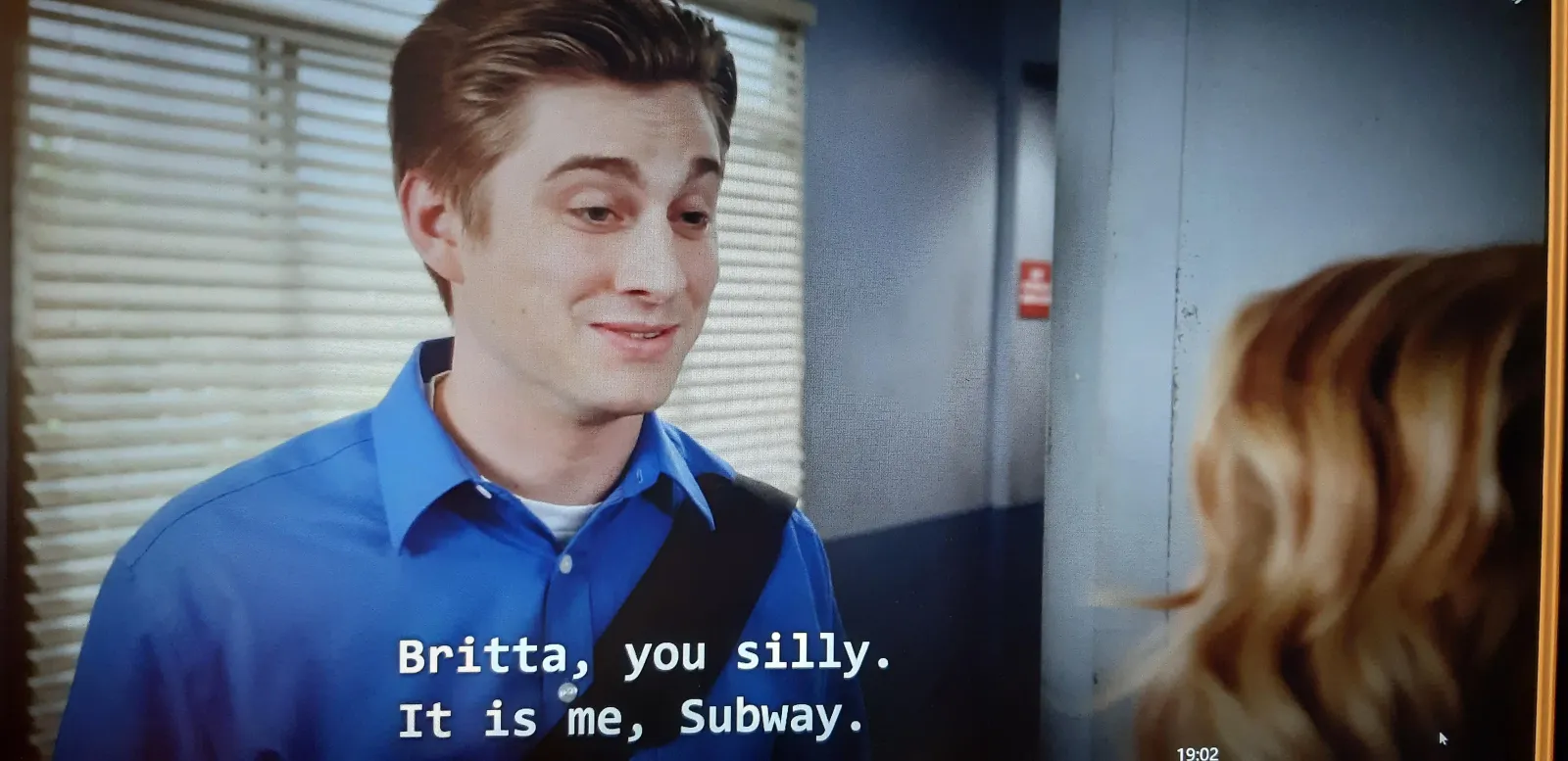
A significant marker of Texas is that it is a landscape pockmarked with a fastisdiously absurd amount of billboards with the craziest ads. I thought of Subway man who didn't have a name other than Subway, who couldn't date because contractually he was owned by Subway. You know, that subway guy who contractually had to change his name to Subway because he was a "corpohumanoid" representing the sandwich shop, Subway? No? Check the video out below.
For some reason, I kept thinking about the Subway guy from Community every time I saw Taylor Swift on screen in The End of An Era talking about her creative endeavours. Taylor Swift is kind of like that. More than her individuality, she is merely a corporation, a business sold in the form of a body. I guess it makes sense then why she views other emerging artists as threats; why she will go to such lengths, like selling various versions of the exact same song, to ensure she stays at the top.
However, it begs the question: If your entire identity hinges on this brand that you've created for yourself, what else can you be?
Something that has been really clear from the get-go is that Taylor needs her reputation to be pristine and nostalgic. Even in her Reputation era, where she was shedding skin and changing persona, she clung to sentimentality. Sure, "the old Taylor's dead" is a cool line, but it's not really true because her old persona haunts each and every one of Taylor's new music videos. The nostalgia lingers in her easter eggs, in her costumes, even in her lyrics. The old Taylor can never really be gone because that is all that sells.
Consider her documentaries as well. In Journey to Fearless, she talks about her past and bullying. She embodies this young, vulnerable sweetheart that has found and created a safe space for herself. Over time, she creates the #squadgoals, talking about the importance of female friendships and demonstrating how her fame has enabled her to overcome her trauma. She's still relatable because she's fighting for herself just like the rest of us wish we could. At one point, Taylor realizes the value of exclusivity and elitism, so the #squadgoals becomes this untouchable army that protects the queen. Then, obviously the elitism reaches its peak when drama surfaces between the women. For some reason, Selena Gomez is Tay-Tay's bestie for a bit, but its weirdly infantilizing the way that Taylor treats her (that's my opinion based on random interactions surfacing on the internet, but that's a whole other discussion I won't get into here); soon, Taylor Swift goes into hiding because allegations about the toxicity of her friend group starts taking the limelight. Then we get Miss Americana where she talks about the struggles of maintaining her reputation. It was here where I truly started slipping off the Taylor Swift bandwagon.

If you've seen the Miss Americana documentary, I think you'll understand where I come from when I start talking about how self-indulging it was. And, also, how repetitive it was. I mean, maybe it's because the same old story is drilled back into our heads yet again: Taylor Swift is a hardworker who only does music and appeases her fans. Yes, she went into hiding because fans started bullying her. Yes, she had to "dismantle an entire belief system" or whatever, which sounds a lot more fancy than what it is, because ultimately, what did Taylor Swift become after all her revelations and changes? Seriously, what was the transformation?
While I was watching the show, I started feeling more and more sad for her. She was masquerading in front of the cameras, so desperately selling this character that she'd become, that she is. She's political when her audience demands it; she's kind and generous when it benefits her. Something about her appeal felt like a thin, fracturing veneer, whether it be her comforting her tear-sodden backup singer, or whether her fashion designer half-heartedly trying to convince me of just how great a person she was. Maybe it was the fact that despite the many eras she'd collected and written, they all felt like the same. And now, sitting here in the living room, being forced to embrace yet another song that marked some kind of change or revelation, it felt cheap and heartless.
The thing is, I'd argue that she lost some of her heart ever since her feud with Olivia Rodrigo came to light. It's hard to take a performer seriously when they start transforming into an autocracy, taking over spaces meant for new artists. The same way Disney has monopolized TV; where Taylor was relatable because she was paving the way for herself has transformed into her blocking the ability for others to do the same. So this docuseries which is supposed to save her reputation and remind viewers of just how wonderful she is, feels like a cheap marketing scheme.
That's when I finally started understanding my disillusionment. For so long, my ick towards Taylor was growing; I hated the fact that she so desperately clung to this identity of being a victim. That she was exploitative and greedy, what with the way she sells her albums and singles, ensuring that she stays on the top 20 billboard. It's marketing genius, but it's also blatantly toxic. I hated how she'd curated this elitist club, honestly more like a cult, where the highest worshippers got access to more of her work and inner life while disguising it under this good-girl identity. She was so clearly outgrowing her stance of humility, so when she even attempted to try acting humble, to look back at her roots, it was hard to root for her.

She is too much and everywhere. Her whole affair with Hiddleston, and then the Alwyn breakup, and now with her getting together with Travis Kelce... it all feels so plastic. Her new album, too, is so over the top and half-hearted, which is such a shame.
And still, my ick, I realize, isn't even really about her. She's just an example of what is wrong with the world.
Taylor Swift is not human. We know it. She knows it. Yet, we will still believe the long videos about her plight. We'll give her our sympathy. We'll build her up even though so much of her at this point is indestructible.

Why do we keep ripping open our empty wallets and scrounging up any and every dime we can find at the bottom of it for her? We hate on her, we bash her for all that she does, we reluctantly accept that she did in fact beat the system and made her mark on pop culture history. She continues coming back and testing us with worse and worse music; we defend it because at least it's not yet another rich man taking over. The bare minimum is so low. We open our wallets and listen to every single one of those singles and re-recordings and we say
that's our girl.
Anyways, people will fight me and say that at least this new documentary gives her team a chance at fame. Sure. I mean, that's good on her— not a lot of celebs even do that.
At the same time, I think it's important to consider the monopoly she's harnessed. I see her as equivalent to the corpo-humanoid. You know making a person into a business to sell talent sounds like a good idea until you start seeing what happens to her. With Taylor Swift, she's constrained by her Subway rules and regulations. Her love story, even, is defined by it. In effect, what we want as she so carefully reminds us is to go back in time; but the cost of that is losing and undervaluing hardworking talent that also exists outside of her realm.
I don't know, she's not the only famous person out there, but her marketing tactics are coldhearted and cutthroat, and the stuff she's putting out there now is cheap and without heart at the very best. I think that's worth some critique at the very least.





Comments 2