Step into the Mind of Evil
General Reviews
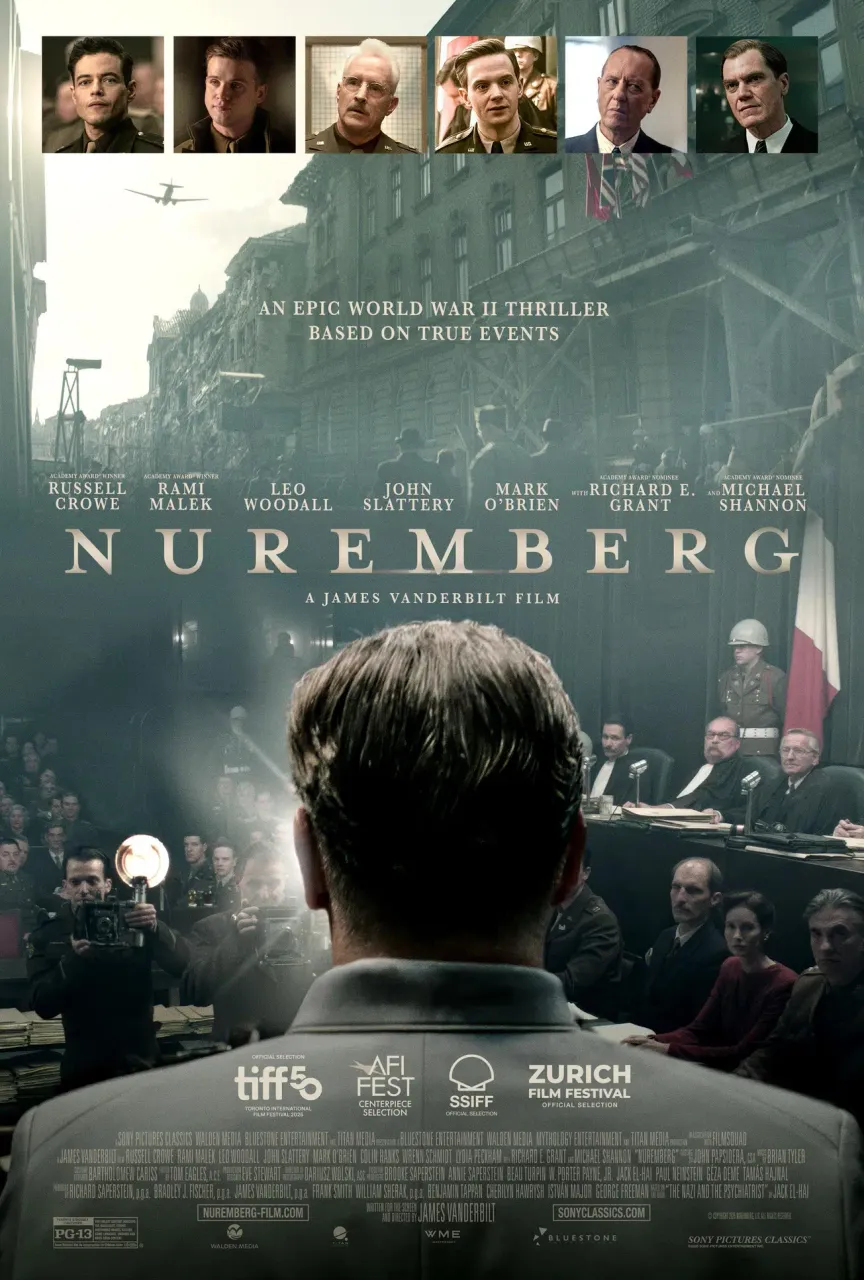
I feel that people use the term Nazi too liberally, these days. I'm sure those who use it to describe their least-favourite politicians believe that they are justified, but I think there is a clear distinction between the party that ruled Germany during World War II and the politicians that line North American government buildings in 2025. However, there is no doubt that the Nazis still live rent free in our collective consciousness. For a history buff like myself, there's few more interesting areas of study than Germany in the 1930s and 40s, so there was no way I was going to miss Nuremberg.
I was familiar with the story, both historically and artistically. I knew about the real Nuremberg trials, although it's not something I'd deep dived recently. I've also seen the film Judgement at Nuremberg that tells a similar story to this year's rendition, although the new film is not a remake. In truth, I think I liked the new version better, as I was disappointed with the classic and thought that the only truly memorable part was the short performance by the legendary Montgomery Clift.
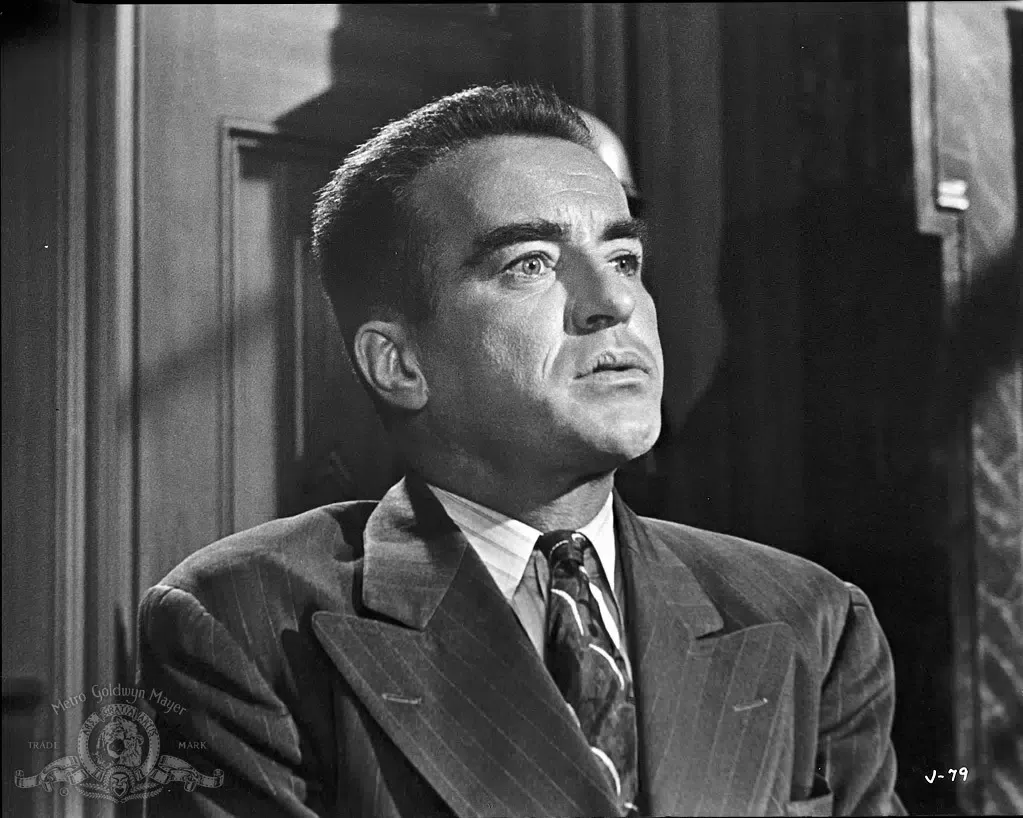
I couldn't convince any of my colleagues to see Nuremberg. A long legal drama about a landmark case from 80 years ago didn't feel like a must-watch. I thought it would be a solo mission, until I walked into the Cineplex and saw my friend waiting in the queue. At first, I was concerned that the only time I run into one of my friends in the theatre is for a Nazi movie, but then I remembered that he's a lawyer, so his interest in this film made more acceptable sense.
The lights dimmed and it was time to transport back to Germany circa 1945. The film is a stark reminder of the importance of justice and accountability, but, to hold the audience's attention, a film does well to keep a level of ambiguity. In that regard, Nuremberg backs itself into a corner. The audience knows who the bad guys and good guys are, but the film does its best to blur the line on who knew what about the Nazi's worst atrocity.
Russell Crowe's performance as Hermann Göring is the backbone of the film. After Hitler's suicide, Göring is the highest ranking Nazi in the world and the films starts with him giving himself up to Allied forces. While imprisoned at Nuremberg, he plays the role of a charismatic and charming villain. There's no doubt that, on pretence, the audience is supposed to hate him, but there are no scenes in the movie where he does anything truly villainous — leaving the audience's vitriol in a state of limbo.

To solve the enigma that is Göring, the U.S. military bring in psychiatrist Douglas Kelley, played by Rami Malek, to keep an eye on him and study his mental state. Kelley's methods aren't exactly orthodox, and it's clear that he is both fascinated and terrified by Göring. What he wants to discover most is how much Göring knew about The Holocaust (in the film referred to by the historical Nazi term, The Final Solution), and the charming villain knows exactly when to mince his words and leave the psychiatrist guessing. I struggled to empathize with Kelley, because he often seemed more focused on humanizing Göring than holding him accountable on well-formed assumptions.
One of Göring's strongest defence for Nazi actions was the hypocrisy of his party being put on trial by the Allied forces who committed their own share of atrocities. He makes the comparison of the Nazi's extermination of the Jews with the American's extermination of the Japanese via the two atom bombs. In my opinion, it's not an entirely unfair comparison, although the atom bombs killed 250,000 people while The Holocaust killed six million. Although it's fair to think that all countries should be held accountable for actions committed during a war, the proof in Nuremberg shows that there are levels to such atrocities.
Although the movie is largely a character study and a courtroom drama, there is one sequence where it becomes very difficult to watch. There is a documentary that you can find online called Memories of the Camps (also known as German Concentration Camps Factual Survey), which shows first-hand footage from the immediate aftermath of the discovery of the Nazi concentration camps. I watched this documentary a little while ago because I love history, but I wish I never watched it because it's the type of imagery that you can't erase from your brain. Nuremberg uses some of this footage, and I was once again faced with images I swore I would never see again.
For good reason, the film never lets us forget what these men are on trial for. Some of the film's methods are more effective than others, and some should have been cut completely. I don't like to rag on young actors, but Leo Woodall, who plays an interpreter, is given way too big of a role in this film, and nowhere is this more evident than his emotional monologue at the train station. Unfortunately, he doesn't have the acting chops to pull this big scene off and it left me yawning rather than crying.

If Göring can prove that he knew nothing about The Final Solution, he can largely salvage the reputation and global image of Nazi Germany. Throughout the film, he never admits to any involvement in mass extermination. Although this is interesting to watch, I was never buying his charade. Sitting in that theatre, I felt a certain level of indifference, because there was nothing that the highest-ranking Nazi could say that could sway my already formed opinion.
What I was more surprised by was my indifference and damn-near hatred of Kelley, the psychiatrist. He spends so much time in the movie trying to humanize Göring that it left me befuddled. I especially didn't care for the moments where he would choose to hide away information from the Americans in order to further his psychological research of Göring. And nowhere did I disapprove of him more than when he started making house calls to Göring's family.

I think these familial scenes were meant to humanize Göring and the Germans as the people behind the atrocities, but they didn't work on me. Call me cold-hearted, I guess, but I felt no sympathy for Göring's wife or his daughter. Watching Kelley teach the little girl how to play piano just made me hate the psychiatrist more. It's important to remember the extent of the antisemitism involved in Nazism, and that it extended well beyond the government officials and into the thinking of their wives, their children, everyone within their circle.
My favourite part of the film came at the very end, in the postscript epilogue that revealed the fate of Kelley. This little bit of text contained so much delicious irony, that it made the relationship between Kelley and Göring infinitely more fascinating. It proved that Göring's prophecy was fulfilled and that the Nazi leader continued to live rent free in Kelley's head long after his demise. I love when small moments like this recontextualize an entire movie and make me want to rewatch it.

Walking out of the theatre, my friend's reaction was a positive one. He and the group he was with really enjoyed it. When I texted him about it later and told him that I wasn't a big fan of the Kelley character, he agreed, calling him a “mousy freak.” I couldn't have said it better myself.
With movies like Nuremberg, half of the film is what you see on screen and the other half is the Wikipedia rabbit hole you go down after watching. As I prepared to write this article, I ended up spending way too much time reading about Nazi history. It's dark and terrifying, but there is so much detail to it that one movie could never encompass the entire picture. The film acts as a jumping off point, a reminder of what happened and how much we can learn from history.
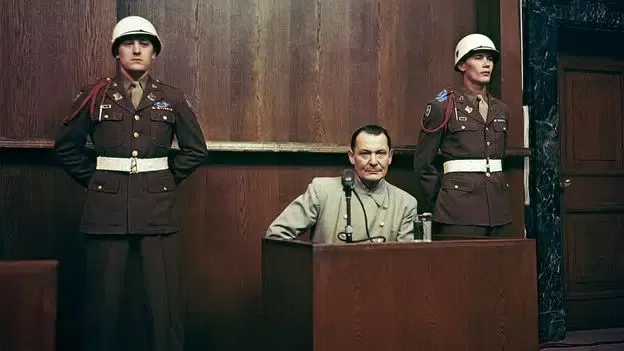
I'd suggest Nuremberg to any history buff, certainly. Although I didn't like the sentiments of the Kelley character or the film's failed attempts at humanizing these war criminals, I appreciated the courtroom scenes and it is always fascinating to psychologically analyze a Nazi. It deals with its subject matter with appropriate seriousness, although it's also not afraid to include small bits of humour. If you're bored and looking to learn something one night, this is a great choice for streaming.





Comments 1