Trainspotting: choose life, choose a f*cking big television and listen the best soundtrack ever
General Reviews
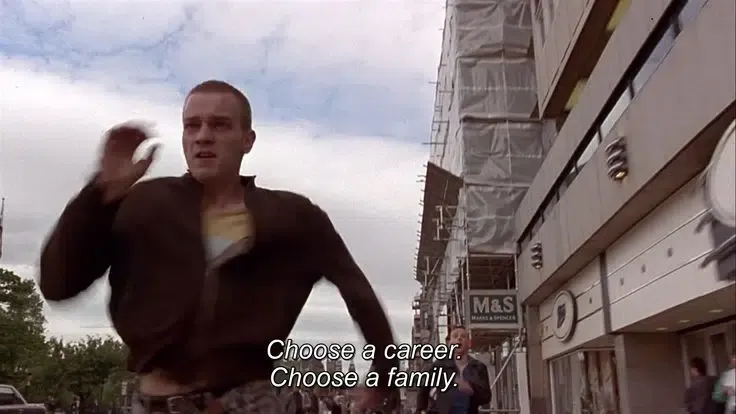
Choose Life. Choose a job. Choose a career. Choose a family. Choose a fucking big television, choose washing machines, cars, compact disc players and electrical tin openers. Choose good health, low cholesterol, and dental insurance. Choose fixed interest mortgage repayments. Choose a starter home. Choose your friends. Choose leisurewear and matching luggage. Choose a three-piece suit on hire purchase in a range of fucking fabrics. Choose DIY and wondering who the fuck you are on Sunday morning. Choose sitting on that couch watching mind-numbing, spirit-crushing game shows, stuffing fucking junk food into your mouth. Choose rotting away at the end of it all, pissing your last in a miserable home, nothing more than an embarrassment to the selfish, fucked up brats you spawned to replace yourselves. Choose your future. Choose life… But why would I want to do a thing like that? I chose not to choose life. I chose somethin’ else. And the reasons? There are no reasons. Who needs reasons when you’ve got heroin?
Since I was a child, music has played a very important role in my life. Many of the bands I listened to when I came home from elementary school and saw on MTV are the ones that shaped my character and my musical taste, bands like Blur, Oasis or My chemical romance were my best ally and I have to admit that music occupies a more important place than cinema; they basically raised me. But on the other hand, watching films from all over the world as a teenager allowed me to develop my musical ear, because films also have good soundtracks, and Trainspotting is the most notable example.
On this occasion, as usual, I let myself be guided by the first film that came to mind, and this time also to my ears. I could discuss for hours why its soundtrack is so incredible; the list of key artists in nineties Britpop is astonishing.
I remember watching the film in my living room, at film clubs, at film festivals with friends, and remembering how exciting every interaction between characters, the drugs, and the music was. The characters clearly have a problem they can't get out of, but in this case I'm going to focus on talking about probably the best thing about the two movies, the soundtrack.
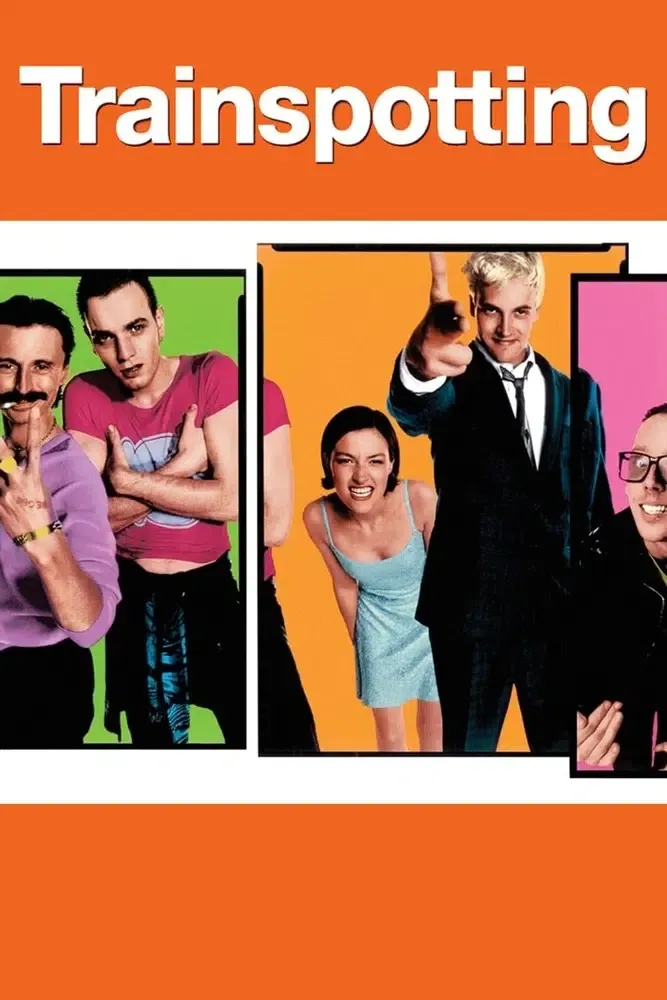
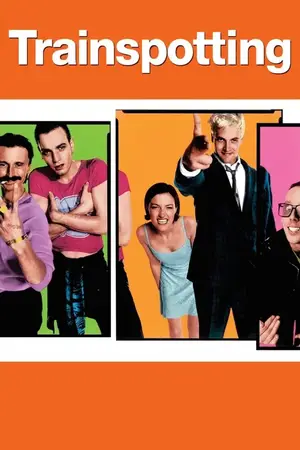
Trainspotting (1996), Danny Boyle's cult film, accurately captured the sociocultural spirit of late 1990s Britain, fusing it with an iconic soundtrack of new wave, post-punk, and Britpop.
Starring by Ewan McGregor, Ewen Bremner, Jonny Lee Miller, Kevin McKidd, Robert Carlyle and Kelly Macdonald.
Trainspotting could be a film simply about drug use, but it is also about friendship, moving forward, and reinventing oneself despite setbacks, because addictions, like relationships, are not easy. I find this adaptation of Irvine Welsh's book spectacular, from its performances to the textures in each space. It is synthetic acid melting like tar, or a crying baby walking on the walls, an immersive experience, a journey.

A film with dirty frames, acid humor, an X-ray of society and the marginalization of its neighborhoods. In narrative terms, drugs operate as a social and existential metaphor. Heroin is the visible symptom of a structural and subjective malaise: the identity crisis of a generation without a foundation. Sigmund Freud spoke of the death drive as a return to the zero state, to inorganic stillness. The substance in the film proposes precisely that: to stop the pain of the world.
Visually, the film mixes desaturated tones that reinforce the theory of dirtiness with saturated colors to express the altered state of their bodies and drug use. The overall color palette ranges from moss greens to browns and grays, affirming that they are in a world without a future, which clashes with the saturated colors as a sensory space when they inject heroin. Anthony Dod Mantle's handheld camera work is spectacular, reaching unimaginable heights and fragmenting human perception in a delirious way.
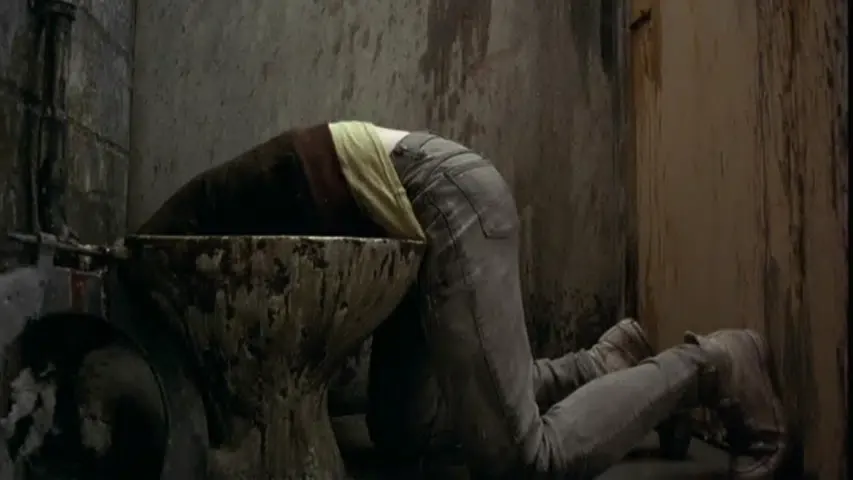

The film is characterized by its sincere and raw look at the slums of Edinburgh, but with an emphasis on a group of friends addicted to drugs. But if there is one thing that makes this seemingly weak plot special, it is the 90s soundtrack that exposes the aesthetics of marginality, the harshness of the environment, and its characters through musical culture shock. The film is defined by its soundtrack, which gives it an anachronistic feel, as if time had stopped in a dirty and corrupt Britain. In fact, for me, the real driving force behind the film is not only its characters but also its music. The soundtrack not only accompanies the story, but also articulates it, comments on it, and intensifies it until it becomes a parallel narrative voice. In Trainspotting, music is a drug, a refuge, a memory, euphoria, and condemnation.

This particularity manifests itself spectacularly and sublimely at the beginning of the film with its opening scene where "Lust for Life" by Iggy Pop plays, while we see Mark Renton (Ewan McGregor) and Spud (Ewen Bremner) running away from two John Menzies security guards down Princes Street. The frantic chase is perfectly accompanied by euphoric drums and punk that set the hyperrealism and rhythm that the viewer is going to encounter. It works as a moral declaration while Renton recites the famous "Choose life". This particular song challenges the limits of his character, of living under pressure and on the verge of death. Trainspotting perfectly complements its spectacular visuals with a stunning soundtrack.

Danny Boyle slows the film's excessive pulse with Renton's overdose scene; as he sinks into the vibrant red carpet, the music accompanying him is "Perfect Day" by Lou Reed. A melodic and emotional ballad that contrasts with what we see, but brutally intensifies the drama. The music functions as a sleeping pill, as artificial anesthesia that gives a perfect day only when spaced intravenously and slowly.
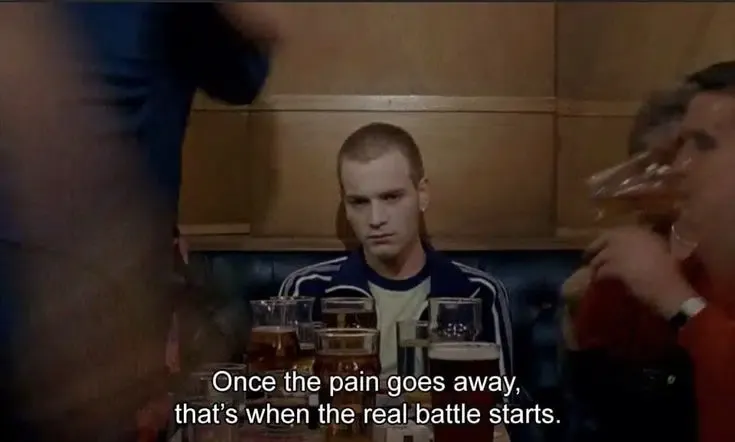
Another great musical moment comes in the club scene when Renton finds out that Diane is underage and "Temptation" by New Order plays in the background. A song capable of generating an atmosphere of unbridled desire and anger spread in the air; the party is the way out but also a space from which one cannot escape, and the rhythm of the song accompanies the speed at which the characters want to live. The music here functions as a collective heartbeat, as a reminder that even at the bottom there is an erotic, romantic, desperate drive. Addiction does not nullify love; it only makes it fragile.
Paul Virilio wrote about speed as a contemporary condition; in Trainspotting, the speed of the music captures the urgency of existing when there is no horizon.

But silence also plays a very important role. The sequence with the baby on the roof is accompanied by deafening silence, which prepares us for what is to come: a Machiavellian tension. Why is there no music in this scene? For Boyle, pain needs no accompaniment because it leaves you deaf without the need for an amplifier.


The film quickly comes to life with the next song, Pulp's provocative and carefree “Mile End,” and maintains that rhythm until the end. It culminates in the final scene, where Renton leaves his past behind to “choose life” and betrays his friends to the beat of Underworld's techno dance hit “Born Slippy.” As in the beginning, the rhythm of the music fills our bodies with adrenaline as if it were another drug, and as Renton breaks free, our hearts seek to embrace him.
In total, there were fourteen perfectly selected songs, and for many, it was the soundtrack of their lives and the summer of '96.


Capitol was so pleased with the result that it attempted something unheard of: a second official soundtrack for the same film. Trainspotting #2: Music from the Motion Picture, Vol. #2 was released in October 1997, just as the Britpop party lights were beginning to come on. The Trainspotting soundtrack became a cultural phenomenon with songs by Iggy Pop, Underworld, Blur, Primal Scream, New Order, and others.
It is an eclectic mix that expresses a historic transition: British youth who had grown up amid the debris of punk were now dancing in clubs to the beat of techno and house music. If punk was rebellion and rage, acid house was collective escapism and the pursuit of communal pleasure. The film captures this generational shift: the destructive impulse moves from nihilistic violence to chemical trance.
For me, Trainspotting has the best soundtrack ever, and also a great message because at the end of the day we have no choice but to accept life.

Obviously, I had to add two photos to demonstrate the immense affection I have for the film. With Renton and Spud!






Comments 5