What Went Wrong in Eden
General Reviews
On paper, Eden has everything. It's loaded with acting quality — Jude Law, Ana de Armas, Sydney Sweeney, even Daniel Brühl! (If you haven't seen Good Bye Lenin, I don't know what to tell you.) Eden is directed by Ron Howard, a director who, despite a few unsavoury detours like Hillbilly Elegy, has made classics like The Grinch, A Beautiful Mind and, one of my all-time faves, The Da Vinci Code. The film is scored by Hans Zimmer, the best composer in Hollywood. On top of all that, it's based on a fascinating true story. However, despite these positives, Howard and company managed to make a stinker, lacking in both intrigue and sex appeal. What went wrong in Eden? I'm here to find out.
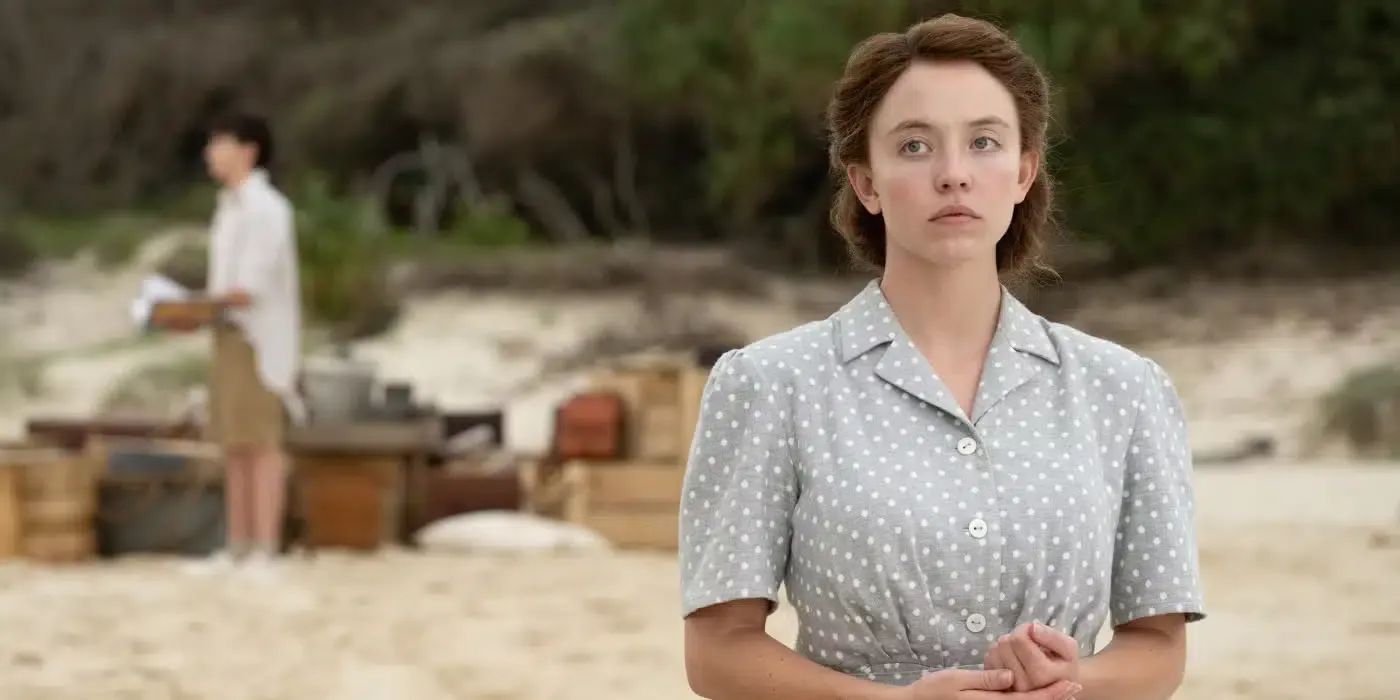
Let's start with the "based on a true story" aspect. Brace yourself for a lot of names. The true story is that Dr. Ritter (Law) and his wife, Dore (Vanessa Kirby), moved to the Galápagos Island of Floreana in the 1920s. Dr. Ritter wrote letters about their experiences and sent them back to Europe where they were widely read. Inspired by these letters, Heinz (Brühl) and his wife, Margret (Sweeney), travel to Floreana to live with the Ritters. Not far behind them, Baroness Eloise (de Armas) arrives at the island with her two boytoys, Robert (Toby Wallace) and Rudolph (Felix Kammerer). This all really happened. To me, this premise is enticing. It makes me wonder how they will manage living on such inhospitable land. What are their intentions? Will they work together? The whole setup screams potential.
Then came Howard's execution of the source material. The movie starts on the island, with Ritter working on his manifesto and Dore trying to overcome her multiple sclerosis. Dore keeps talking about how her husband is such a genius and how his ideas are going to change the world, but, whenever Howard chooses to include voiceover narration of Ritter's internal thoughts, the doctor's ideas seem as revelatory as taking the bus to work. He thinks that society is a disaster and that we need to shed societal norms. It's insightful stuff for a philosophy 101 class. Not that enticing for a manifesto that Dore compares to The Bible.

When Heinz and Margret arrive, my interest in Eden was renewed. I was curious to see how Ritter and Dore would treat these new and uninvited arrivals. They choose to treat them like shit, which is good for drama but bad for logic. I realize that the Ritters moved to Floreana to get away from people, but after so long in isolation, wouldn't some guests be welcomed? Life on a deserted island is hard — really hard — and I would imagine that having a few extra hands around to help out would make life much more enjoyable, but that's not the story Howard wants to tell, factual or not.
Instead, Heinz and Margret are sent to a totally different section of the island to make their home. Ritter thinks he's picked a place that is uninhabitable and that this will send Heinz and Margret packing. Turns out, Heinz and Margret are much more capable of living the island life than the Ritters. Things become doubly complicated when Margret reveals that she's pregnant.
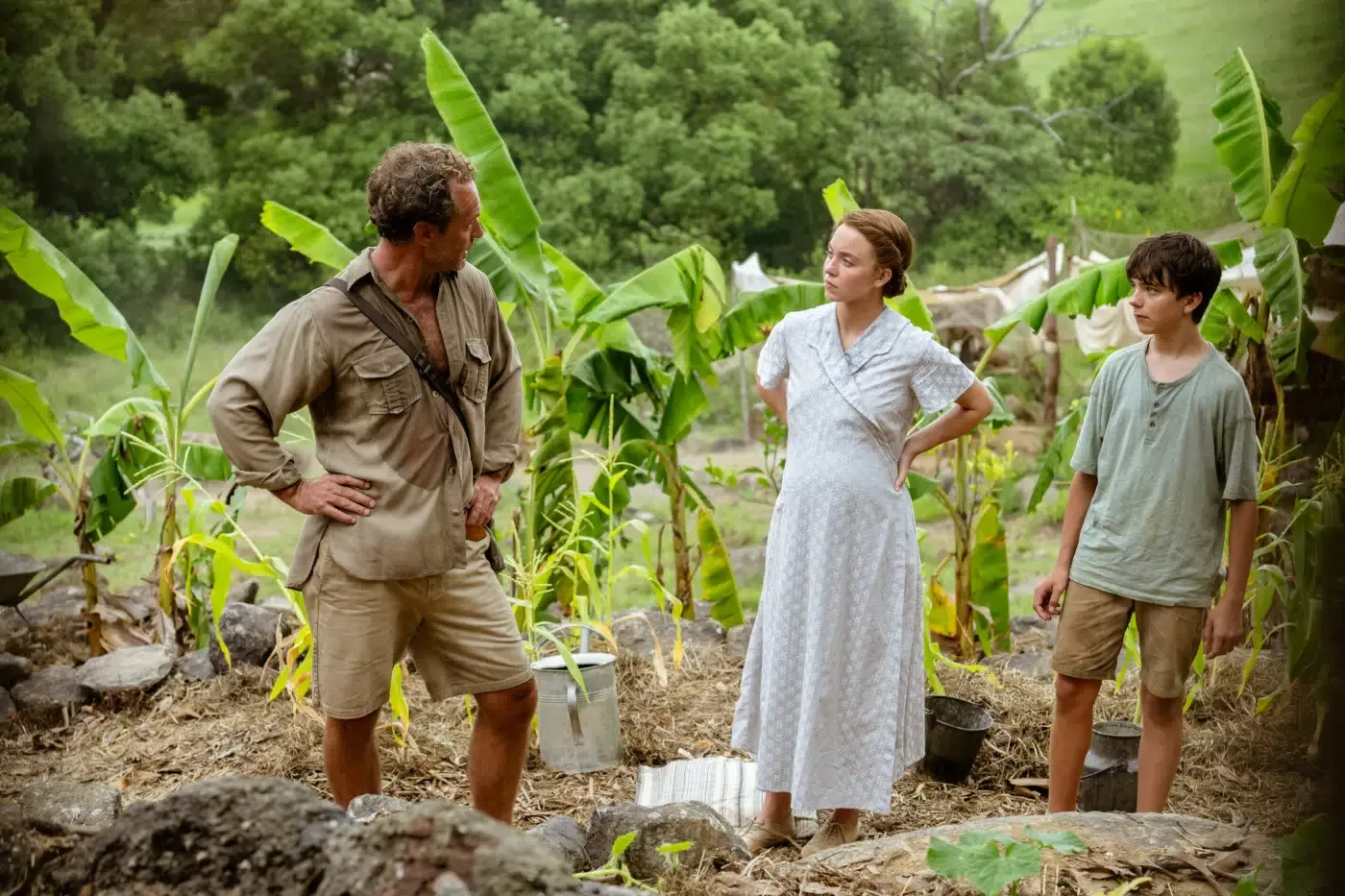
The final arrivals to the island are the Baroness and her two loverboys. Their first scene is a threesome together in the ocean. Cool enough, I guess, and it reminded me that I expected this movie to be sexy. The trailer had promised sex appeal. My inability to remove myself from my basest desires made me excited to see Sweeney and de Armas in a tropical thriller. However, despite having more than one sex scene, this movie is surprisingly unsexy. It lacks the edge that other modern, sexually charged thrillers have — I'm thinking of Challengers, Saltburn and Babygirl. Eden can't hang with these movies; not even a little bit.
Anyways, the Baroness arrives and she wants to build a hotel, but her plans are as thin as Ritter's philosophy. She's the most unprepared to live on the island and the Ritters, ever the logistical planners, set them up as neighbours to Heinz and Margret. Again, my feeling is that working together would benefit everybody. Instead, they treat each other like enemies because of greed, I guess, and their desire for control.

This unexplained and unnecessary, at least from an outsider's perspective, rivalry is best exemplified in the scene where Margret gives birth. Margret is alone when her water breaks. The only people nearby are the Baroness and her crew, who are down in their tent. Rather than helping their neighbour, the Baroness orders her boys to go and steal all of Margret's canned goods. While they're robbing the woman in labour, a pack of wild dogs come and start barking at Margret. They look like they're going to eat her baby! Team Baroness does absolutely nothing to help her, framing them as cartoonish villains with absolutely no moral compass.
This all happens early in the movie. From here, not much changes. These three groups don't trust each other, don't get along, and spend far too much time and effort trying to get the others to leave the island. Why they would feel territorial about this land that produces absolutely nothing is anyone's guess. My issue was that I didn't understand why these characters acted as they did. Simultaneously, I thought about how much better everyone would be if they simply got along. Without context, the movie became a bore to watch. There's no overarching mystery that we are waiting for answers to. There is no obtainable goal that these people are working toward, other than annoying the hell out of their neighbour with the hopes that they will pack up and leave. I spent the majority of Eden thinking, "What the hell am I watching?"
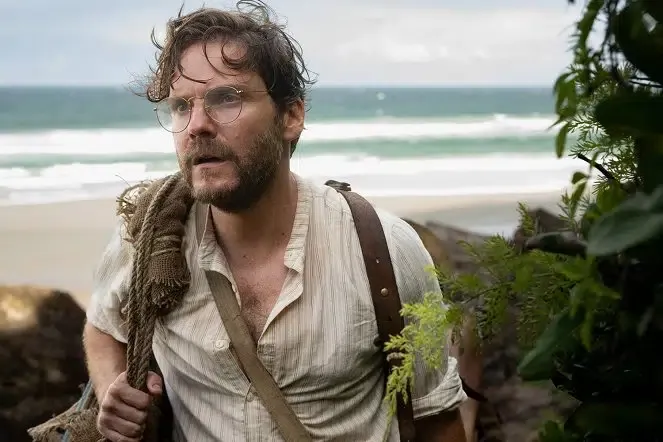
If you need more proof as to why you shouldn't watch Eden, read The DC's article where he analyzes just the dinner-party scene and why it's one of the worst thing he's ever watched. I didn't even touch on that scene, but everything in The DC's article echoes my sentiments exactly.
So, what went wrong? Despite the philosophy for beginners, despite the lack of sexual intrigue, despite logic being largely thrown out the window, I think the biggest error in Eden was not making me care about any of the characters. Was I invested in Ritter finishing his philosophy book? No. Was my jaw on the floor when he shoots his typewriter? Absolutely not. Did I care what happened to the Baroness? Not in the slightest. The two characters that had most of my sympathy were Heinz and Margret, but Howard makes the amateur mistake of having all the conflict happen around them rather than involving them. Yes, Margret has that harrowing birth scene, but the intrigue comes from the Baroness's villainy and from Ritter's ego. Margret and Heinz start a nice little life while the few people that make up their "community" all try to have them killed. Unfortunately, the people trying to ice them are not very bright, so rarely did I ever feel that Margret and Heinz were ever in true danger.
That is all to say, Eden is a skip. All the pieces are there, in theory, but the execution leaves a lot to be desired. Not intriguing enough to get my mind turning. Not sexy enough to get me hot and bothered. Just boring enough to leave me asking, "why am I watching this?" Howard needs to give his head a shake and make another Robert Langdon movie, because another misfire like Eden and he's really going to start pissing me off.








Comments 9