I Am a Fool: The Vanity of Seeing Beauty in the Joker's Chaos
General Reviews
They say that a man who believes he can turn chaos into beauty is a fool. That makes me a fool, I guess, because I've secretly thought for a while that I could fix the Joker. Not exactly Heath Ledger's anarchic demon or Joaquin Phoenix's Arthur Fleck, but the person who exists in the space between them both. Cultural imagination's Joker. The man who makes the audience laugh along with his joke, who transforms tragedy into theater, and who can't laugh without bleeding.

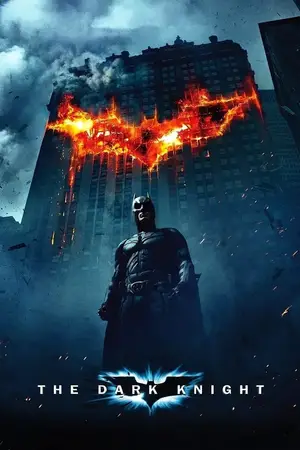
I was too young to fully comprehend the meaning of The Dark Knight when I first saw it, but I was old enough to experience the electrifying fascination of a man who had no beliefs. I couldn't take my eyes off the villain while others praised Batman's morality. The voice that cracked like a match lighting its own flame, the scars, the clown makeup. Despite making fun of the entire morality game, this individual was able to outperform everyone else at it. So I told myself the lie that many people tell about dangerous men: that if I were given the chance, I could understand him and possibly even heal him.

Maybe there was more to that belief. Like Arthur Fleck, I was ridiculed when I talked too much as a child and ignored when I became too quiet.
I was familiar with the void that results from sharing your truth and realizing that no one knows how to handle it. Jokes were my armor, just like his. Using humor to act as though I didn't care became my little act of rebellion. Beneath that façade, however, was the ongoing pain of being misinterpreted. Something tightened in my chest when Arthur burst out laughing on the subway. It wasn't sympathy, but rather an acknowledgment.

Monsters have always been loved in history. We study Manson and discover perverse charisma; we quote Nietzsche and act as though we are unaware of his spiral into madness; we read about Nero and see reflections of celebrity. The culmination of that fascination is the Joker. Decades of filmmakers and philosophers who view chaos as both art and warning have shaped this composite of imagined and actual cruelty. Even in fiction, to love him would be to acknowledge a desire for destruction. However, as Freud would say, attraction is not always erotic; it can also be redemptive, moral, or intellectual.
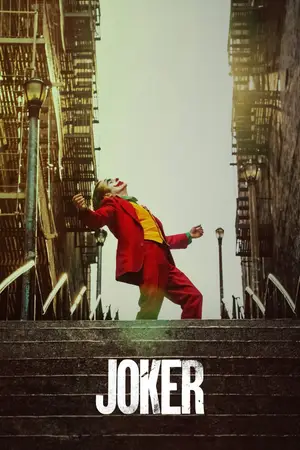
Fundamentally, The Joker is a study in failed empathy. He begs for understanding but punishes those who offer it. In Joker (2019), Arthur Fleck has neurological and psychological conditions that cause him to laugh inappropriately and uncontrollably. The state quickly reduces his funding after he asks for assistance. He makes an effort to relate to people, but society rejects him. Arthur's tragedy is not that he loses his mind, but rather that the world teaches him that there is no excuse not to. By the time he transforms into the Joker, he is both a symptom and a disease, a victim and a villain.

I wish someone had, which is what I mean when I say I could fix him. Someone who might have listened to him without a clipboard and a timer, or who would have sat next to him on that subway before the blood. That fantasy is stupid, of course.
A man who has turned his brokenness into a religion cannot be healed. But I am aware of the same folly. I've experienced it each time I've attempted to explain myself to those who merely witnessed the performance and never the artist. Living in a private kind of madness, where chaos seems like the only way to be noticed, is what it means to be misunderstood.
It says something unflattering about me, and all those who gravitate to characters like this, that we want damaged individuals to have purpose. It’s easier to imagine that madness is a mystery to be cracked than it is to accept that it just exists. There is vanity in wanting to “save” someone. To say “I could fix him” is just another way of saying “I’m not like everybody who wouldn’t or couldn’t.” Yet none of us are. Gotham betrayed him, yes, but Gotham is us. The apathetic, the entertained, the voyeurs.
So just what would it mean to admire the Joker? Maybe it’s that we understand the thin boundary between despair and humor. Maybe it signifies that in a universe of moral theater, his chaos feels truer than Batman’s order. Perhaps it means that some part of us, deep down, is tired of pretending we are sane.

I do not want to be him. But I get why people want to see him burn the stage we all perform on. For sometimes when a guy like Junior can't make himself understood, all he really wants from the world is to see if anybody notices the fire.
Ultimately, my fascination with the Joker isn't about saving him at all. It's about saving myself from becoming him. To look into that painted grin is to face the chance that I might also laugh when the world catches fire.
A fool, they say, learns nothing from tragedy. But I have learned at least this: the Joker is not an invitation to fix madness; he's a mirror that asks whether we can survive it.




Comments 2