VIFF ´25: The Secret Agent
General Reviews
I went to see The Secret Agent without any expectations, aside from the fact that Bacurau, directed by the same person, had been on my watchlist for a while, and I still hadn’t seen it. But if there’s one thing I can say for sure, it’s that this film will confuse and subvert the expectations of many viewers, just as it did for me.

The story is set in the late 1970s in the province of Recife, Brazil. We follow a professor who is running from his past, while the film alternates between fragments of the past and an investigation in the present. Little by little, we figure out what is haunting him and how it connects to the Brazilian dictatorship.
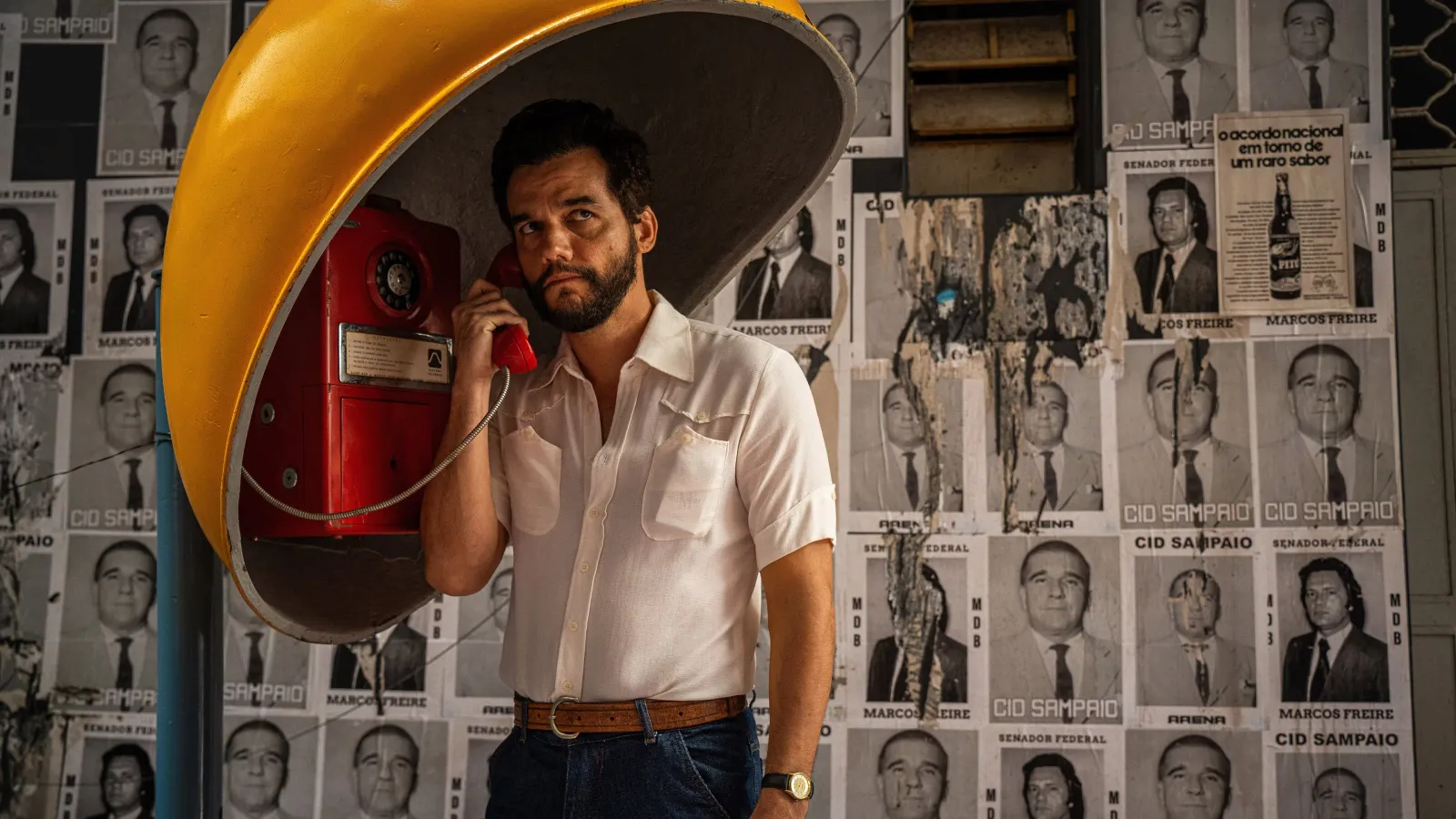
I don’t want to assume what the audience’s reaction will be when the film is commercially released. However, it’s worth clarifying something: if anyone is expecting to find a “Brazilian James Bond” with big action sequences or sophisticated espionage, they will be disappointed. O Agente Secreto is not looking for that. From its very first scene, it makes it clear that this is not a conventional thriller, but a political and moral reflection wrapped in the language of suspense.

That first scene says it all: a man stops at a gas station where a decomposing corpse lies covered with cardboard. Scavenger dogs try to devour it, and the attendant barely manages to chase them away. Then a patrol car arrives, not to collect the body, but to interrogate the protagonist. From there, director Kleber Mendonça Filho warns us that we are not dealing with a story where “everything fits,” but rather an improvised narrative, as uncertain as life itself in the region. Instead of gratifying us with information or answers, the film invites us to read between the lines about the value of life, corruption, and the feeling of constant flight that marked that era.

And the most disturbing thing is that, although the film is set in 1970s Brazil, its echo resonates throughout Latin America today. That phrase that appears on screen, “In Brazil, we improvise,” could well apply to the entire continent. O Agente Secreto does not seek to idealize a hero or redeem a country: it focuses on survival, on escape.

Like Steven Soderbergh’s Black Bag, released earlier this year, information is essential here. It is used not only as a narrative twist but as a tool to build context, character, and atmosphere. Every piece of information the director reveals changes our perception, takes us down unexpected paths, and, above all, reminds us that perhaps we are not following heroes, but victims. Victims of a system, of an era, of a machine that devours them without a trace.

On the other hand, the use of a present-day timeline, where an investigator revisits the case, initially confused me. But towards the end, I understood its purpose: to keep the memory alive. As in A Useful Ghost, the message focuses on the importance of not forgetting. In times when stimuli push us to turn the page and justify forgetting, this film insists on looking back, not out of nostalgia but out of a sense of justice.

Discussing The Secret Agent is complicated, a sentiment many people share. Not because it is inaccessible, but because it places us in a political and social context that many of us outside Brazil barely understand. Beyond the impeccable art direction or Wagner Moura’s remarkable performance, what I value most is that sense of discovery: not understanding everything, but feeling something similar to what Walter Salles presented us with a few months ago.

That may be why this review sounds more intuitive than analytical. But it is not easy to talk about a film that is based precisely on mystery, on measured information, and on memory as a political act. O Agente Secreto is not a spy story. It is a story about escape, about the silences of history, and about wounds that have not yet healed.



Comments 3