VIFF '25 | Everything I Watched, Ranked
General Reviews

Even though I knew that this year's installment of the Vancouver International Film Festival would coincide with the hectic final week of class of the third unit of my Masters, I couldn't possibly pass up the opportunity of attending a few screenings, at least.
Much to my delight, I picked very well. Not a single one of the seven films I watched was anything less than great, and I found an awful lot to enjoy in all of them. These are those seven movies, ranked from my least favourite to my favourite.
7. ‘Nouvelle Vague’

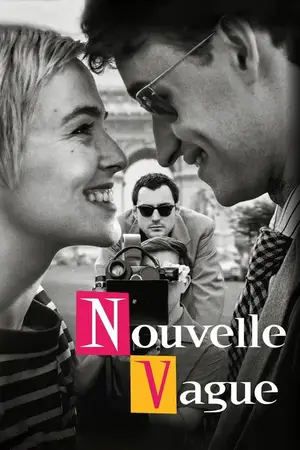
I typically don't like biopics that feel like they used a Wikipedia article as their script, a category which Richard Linklater's Nouvelle Vague definitely fits into, but I don't know—this one felt different. It doesn't do anything groundbreaking, and the film whose production it depicts is already such a perfect document of itself that I'm not sure how necessary a movie like this was, but nevertheless, the vibes were immaculate and the charm was undeniably present. I thought Nouvelle Vague was funny, cute, and visually exceptional, and its parade of cameos of French New Wave figures had the theatre constantly giggling like fanboys watching Avengers: Endgame for the first time. Sometimes, that's all you need in a movie like this one.

6. ‘I Died’

It's a tragedy that there are virtually no films made in my beautiful home state of Chiapas, Mexico. For a place so huge, so gorgeous, so biodiverse, and so brimming with vibrant culture and history, it should be surprising to any outsider that not even the Mexican film industry seems to be interested in even just shooting there, let alone telling the stories of Chiapanecos.
Maya-Tsotsil filmmaker and translator Ana Ts'uyeb has come to change that bad streak with Li Cham (I Died). Shot in her hometown of Chenalhó, a community nestled in the highlands of Chiapas, this documentary follows several Indigenous women close to Ts'uyeb as they go through their daily lives; embroidering, roasting coffee, making tortillas, getting their kids to do their homework. And throughout the breezy 76-minute runtime, they just talk. Talk about their relationship to the historic Zapatista movement, about the abuse they've suffered at the hands of Indigenous machismo, about how determined they are to push their daughters to get the education they weren't allowed to receive.
The film, which is spoken entirely in Tsotsil (all the way until the song that plays over the credits), reminded me a lot of Memories of a Burning Body, which played at this year's Vancouver Latin American Film Festival. I think they'd make for a great double feature. I'm so very glad that I got to watch a movie from Chiapas, and I hope that many more are made in the future.

5. ‘Palestine 36’

Palestine's submission for the Oscars this year, Palestine 36 can at times feel like a history lesson, but it's a crucial history lesson, and one told with such a stirring and epic humanistic eye by director Annemarie Jacir that it's remarkably easy to get lost in this world and grow to care deeply about its characters. Its credits were accompanied by a “Free Palestine” chant from an audience struggling to hold back tears, and once I exited the theatre, I ran into the largest amount of sobbing people I've ever seen at a VIFF screening. It really is that moving and admirable of a film. Is it perfect? No, but did it really ever need to be? It's noble, truthful, profound, and proudly Palestinian. I, for one, found everything I had walked into that theatre looking for.

4. ‘Magellan’

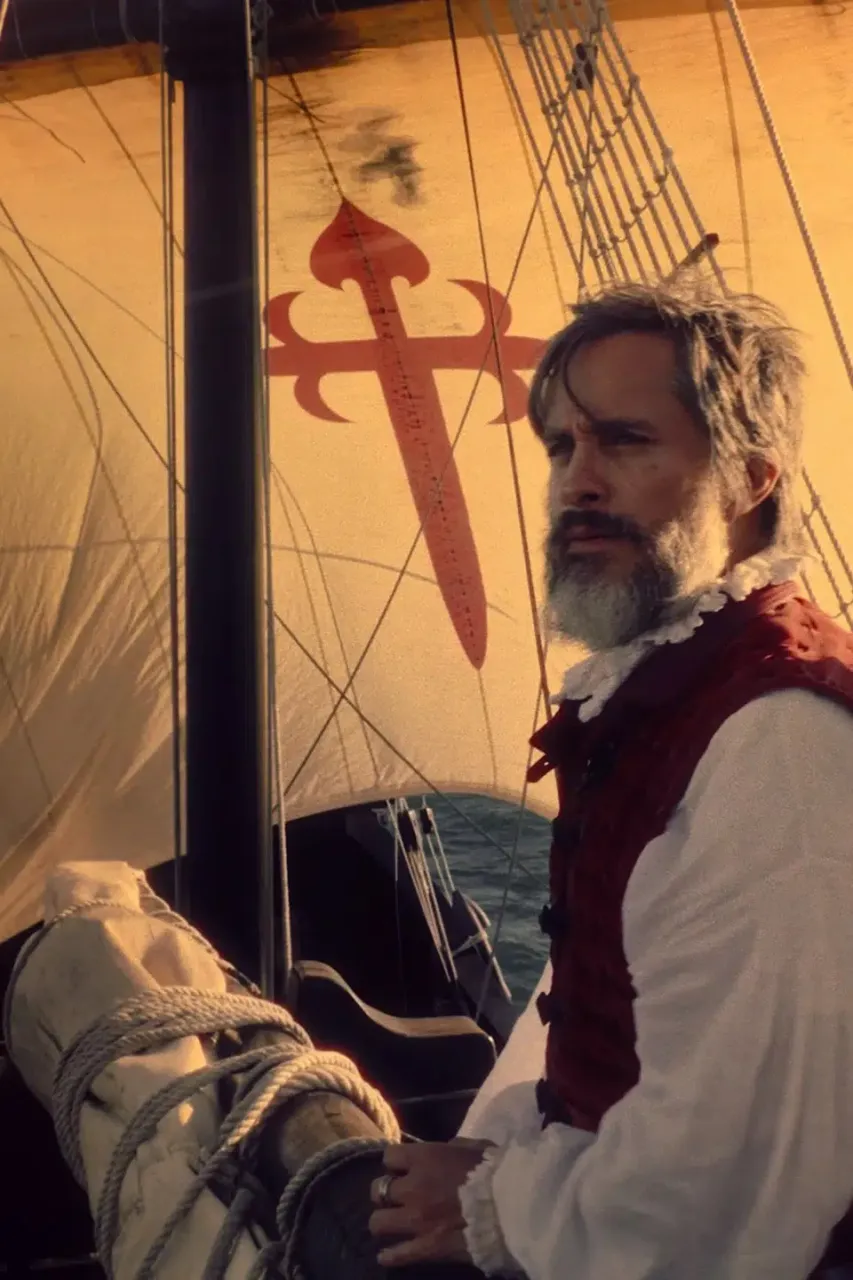
I love Gael García Bernal. The guy could choose to play Cinderella and I'd still be seated on day one. I went to see Magellan purely because of him. I didn't expect to be treated to a visually gorgeous, aurally majestic portrayal of colonial power dynamics and the tremendous power of faith told through the eyes of one of history’s most notorious colonizers.
This was my introduction to Lav Diaz, who, as I understand from the reviews I've read from his diehard fanbase, is nothing short of the king of Filipino slow cinema. According to them, Magellan's runtime of 2 hours and 40 minutes practically makes it seem like a short film in comparison to the rest of Diaz's work. I did struggle with the slow pacing, I must admit; but the cinematography was so divine, Diaz's gargantuan vision was so intimate yet epic in scope, and—of course—Gael was so phenomenal in the lead role (although, from what I could gather, his Portuguese sucks major ass) that I had an unforgettable time.
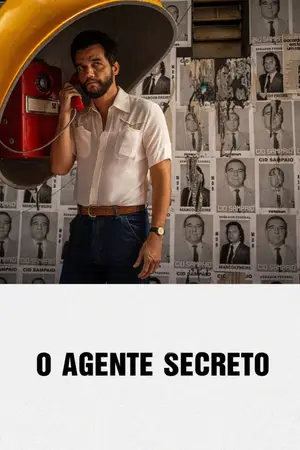
3. ‘The Secret Agent’

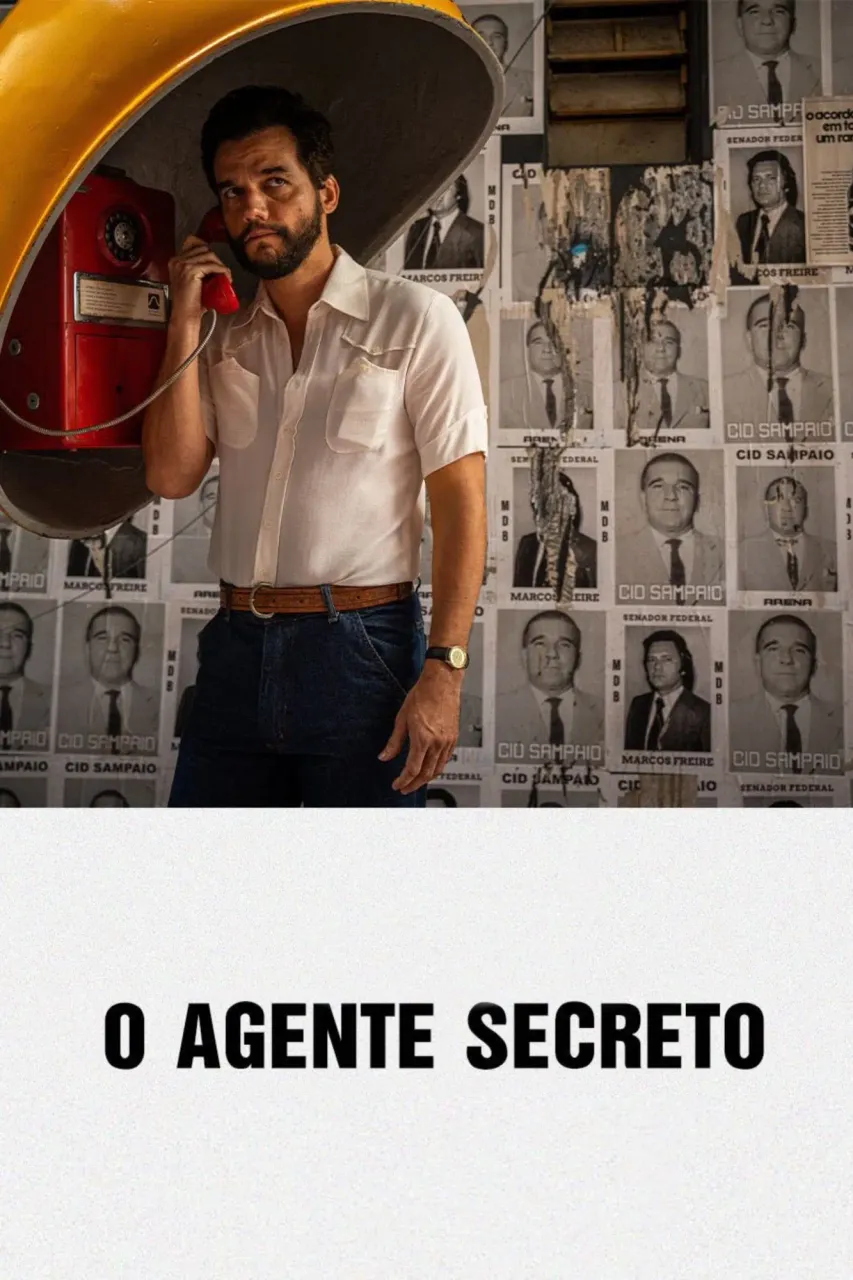
I watched The Secret Agent at a Vancouver Playhouse filled with Portuguese speakers. Seriously, I wish Mexican audiences had half the passionate love for Mexican cinema that Brazilians do for their films. I digress.
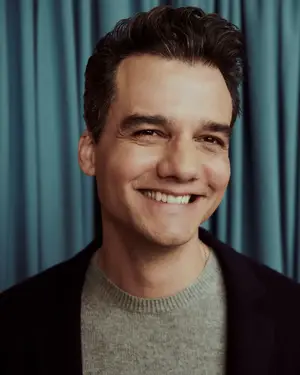
This vibrant neo-noir political thriller took me completely by surprise. I was expecting something suspenseful; what I got on top of that was also fun, pulpy, thematically sharp, and surprisingly funny. Kleber Mendonça Filho's sociopolitical critiques are only paralleled by his film's palpable love for Brazil, ‘70s cinema, and Panavision cinematography (which looks stunning here). Wagner Moura is a powerhouse in the lead role, and I honestly wouldn’t be surprised if he pulled a Fernanda Torres and got an Oscar nod next year.
I didn't love the framing device and I struggled with the pacing a bit, but nevertheless, I thought The Secret Agent was brilliantly thought-provoking yet also irresistibly entertaining. It's a really special film.
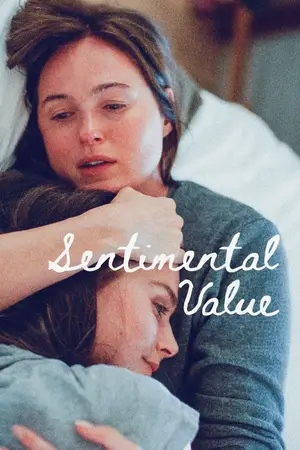
2. ‘Sentimental Value’

I went into Sentimental Value pretty skeptical. Despite the tremendous amounts of buzz that have been building up throughout its festival run, and the fact that I loved The Worst Person in the World, I had an uneasy feeling that Joachim Trier's latest would end up not being for me. Oh, how delightfully wrong I was.
Trier explores the healing and cathartic power of art with the utmost tenderness and gentleness, while also warning about the temptation to heal vicariously through said art. The movie's thematic depth and emotional potency are both soft and quiet, but they also sneak up on you in all manner of unexpected ways. And the cast? Probably the strongest ensemble of 2025. Reinsve, Skarsgård, Fanning, and Lilleaas all deliver career-defining performances that shook me to my core on several occasions without ever feeling overly flashy.
This is a profoundly poignant film, but there's also lots of hope, love, and even laughter in Trier’s story (one particular DVD-related gag got the biggest laugh I’ve ever heard at VIFF). It's incredibly complex, nuanced, and beautiful. I suspect that, like Worst Person in the World, it’ll grow on me even further the more I let its effects simmer.

1. ‘Nirvanna the Band the Show the Movie’

This is the most I've howled with laughter in a theatre since I watched Hundreds of Beavers last year. I was totally unfamiliar with Nirvanna the Band going into Nirvanna the Band the Show the Movie, but now, consider me a convert. What Matt Johnson and Jay McCarrol have achieved here is nothing short of a miracle.
Part pastiche, part parody of Back to the Future, part love letter to Toronto and the late 2000s, and 100% guerrilla-style comedy with so much copyright infringement that I'll be shocked if this gets a wide release without any significant cuts (something that the film makes direct reference to in the funniest fourth-wall break I've ever witnessed), Nirvanna the Band the Show the Movie is pure cinematic joy, and everyone at the Rio Theatre (which was more packed than I've ever seen it before) was laughing at every single bit and gag. There are some jokes here, like one involving The Hangover, another involving a gun, and the entire CN Tower-centric third act (I don't want to spoil anything beyond those vague details) that had me literally struggling to contain my laughter minutes later.
I can't believe that this film exists, I can't believe that it screened at VIFF, and I can't believe how fortunate I am that I got to see it. I knew as soon as I walked out of the Rio that it would remain my favourite of the festival, and I was right. In my book, this kind of unforgettable experience that's hard to get elsewhere is what the magic of film festivals is all about. If you see this screening near you, fly, don't run, to watch it.
While I would have loved to watch more movies at this year's VIFF, I'm delighted that what I got to watch was not only delightful all across the board, but also surprisingly cohesive thematically. Whether this was actually the overarching topic that the programming team envisioned for VIFF 2025 is beyond me, but the seven movies I watched all seemed to be about something of vital importance in this day and age:
Rebellion.
That rebelliousness can manifest itself in the form of Jean-Luc Godard playing entirely by his own rules and revolutionizing cinema as a whole in the process. Or perhaps a group of Indigenous women standing up to a patriarchal system and choosing to live meaningful lives. Maybe it's Palestinians standing up to the brutality and dehumanization of the British imperial machine. Or Magellan's rebellion against the Portuguese empire being mirrored by the native Filipino population's refusal to be taken over by an oppressive force. It could be a teacher quietly but powerfully standing up to a fascist regime. Or an eldest daughter healing her family's generational trauma while she grapples with years of rebelling against her father. It could even be something as silly as a pair of friends rebelling against copyright laws, the CN Tower's security rules, and the laws of the space-time continuum.
Whatever the case, I had an incredible time at the Vancouver International Film Festival this year, and I look forward to (hopefully) having more free time to watch more films in 2026.










Comments 1