VIFF '25 | After The Hunt Will Not Hold Your Hand
General Reviews
Bring on the controversy.

Luca Guadagnino is back and he isn't here to make friends. After The Hunt has already polarized viewers, and it's not even technically out yet. I watched it on Sunday at the Vancouver International Film Festival. I was stoked to watch it. Luca is my favourite director right now. He wowed me with Call Me By Your Name and turned me into a diehard fan with Challengers. Now, I'll watch anything he releases. So, with After The Hunt getting only one measly screening at VIFF, I made it my mission to attend the show.
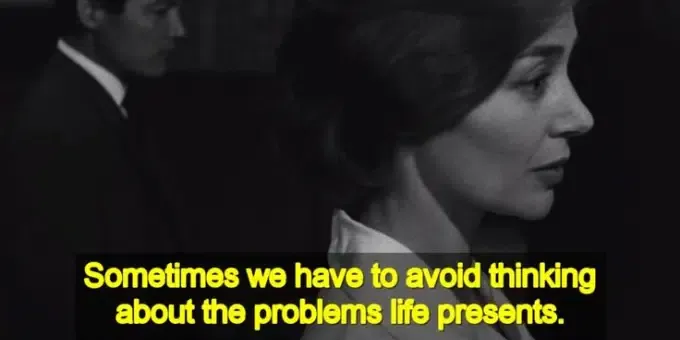
Out the gate, it's clear that Luca wants to ruffle feathers and bring up uncomfortable topics. The movie begins with white credits on a black background, and the Windsor font choice is not random. It's the same font that Woody Allen used for nearly all of his opening-credits scenes. For those who clocked that reference, it was a silent premonition of where Luca was going to take us for the next 139 minutes.

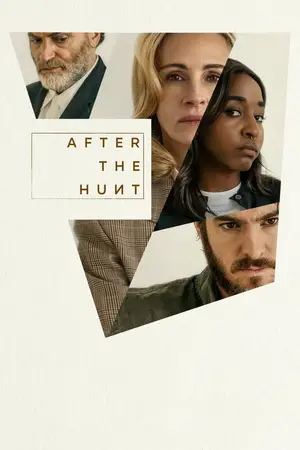
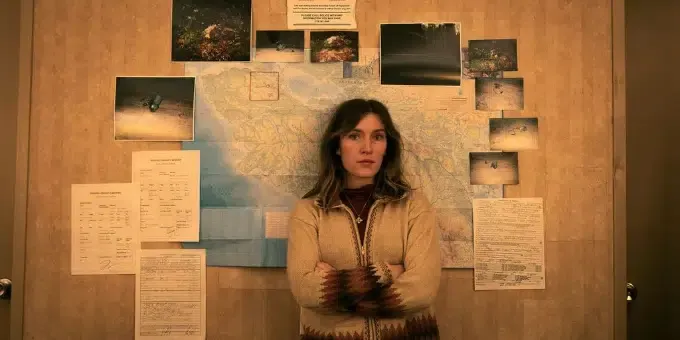
We're dropped into the world of Yale University. Alma (Julia Roberts) and Hank (Andrew Garfield) are philosophy professors. Maggie (Eyo Edebiri) is a star student and idolizer of Alma. They're all at a dinner party at the house of Alma and her husband Frederik (Michael Stuhlbarg). From the very first minutes, the twisted relationship between all these characters had me intrigued and wondering what was going to happen.
What I love about After The Hunt is that there are no heroes or villains. Every character operates in a grey area, which, to me, is an accurate portrayal of real life, and one that makes this movie feel painfully human. Despite being a story about sexual-assault allegations, Luca playfully toys with our emotions and biases throughout the film. Whenever I thought I was starting to understand who the "good guy" was in the movie, Luca would twist the knife again, and send my conceptions back to zero. At times, you're on the side of Maggie. At other times, you believe Hank. We're dragged through this story with Alma, but even her motives swing between righteousness and ignorance.
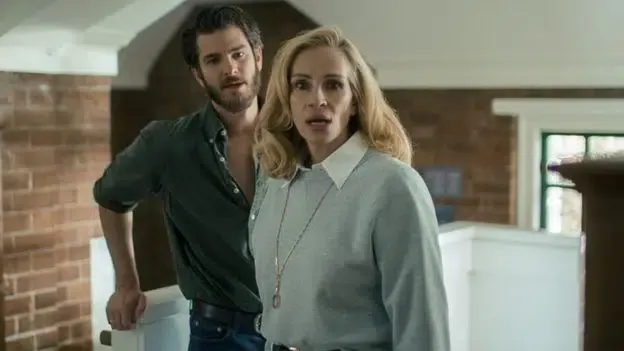
Like Challengers, we are again faced with a triangular relationship, but it's not exactly a love triangle. It's more of an idolatry triangle. Alma is the clear top point of the triangle, while the two bottom points are Hank and Maggie. Both of these characters look up to Alma and want to win her favour, yet it's between Hank and Maggie that conflict exists. Alma only gets involved because they both see her as a person they can rely on in their time of need.
What separates Alma from both Hank and Maggie is age. In her 50s, Alma is from a different generation than both Hank and Maggie. Her friend, Kim (Chloë Sevigny), even laments to her about how kids these days need to act like Alma and her, and develop a dependency to deal with life's problems. Alma's way of handling problems is to internalize them, while Maggie looks for validation from others. There's a clear generational gap with these characters, and it's this difference in experiences that creates the movie's biggest rifts.
Luca is not saying one generation has a better idea than the other. He, and screenwriter Nora Garrett, make it clear that everyone's coping mechanisms are flawed. Alma is a pillar of strength, but her choice to suppress her emotions causes a debilitating health problem. Hank makes a good case for himself, but his drinking and impulsive behaviour make him impossible to root for. On the surface, Maggie is the most mentally stable of the bunch, but underneath is an inferiority complex and such a fear of being wrong that she's willing to bend the rules just so that she looks right.

What I love about Luca is that his movies are more than just a provocative story. He understands that movies are a collaborative art form. From costumes to score to cinematography, Luca makes sure that all aspects of After The Hunt are captivating while still contributing to the larger story.
The movie's costumes are excellent. They're university prep, but mixed with Italian tailoring and the idea of clothing as symbols. For a majority of the movie, Alma wears all white. This kind of plays with her holier-than-thou persona; like she thinks she's above everyone else. Maggie's obsession with Alma is most clearly portrayed through her outfits. In the first scene, there's a clear similarity in their dress. As the film progresses, Maggie gets closer to mimicking Alma, like when she starts wearing a long chain necklace. Meanwhile, Hank is disarmingly hot in his knit sweaters and Oxford shirts (yes, this is sweater weather cinema).
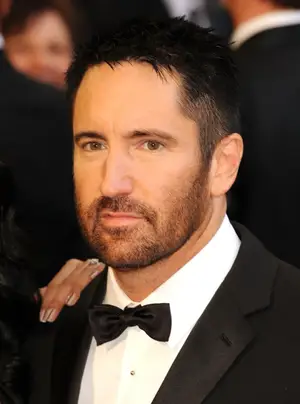
For the score, Luca collaborates once again with Trent Reznor and Atticus Ross. They did the iconic soundtrack for Challengers and, though this movie's score is not pulsating synthesizers, I thought it was perfect for the story they were telling. The most memorable aspect was the leitmotif of a ticking clock. This rhythmic sound was played sporadically throughout the movie and it could have a number of interpretations. As stated previous, the movie is focused on generational gaps, and how sentiments change through time. This ticking clock was like a reminder of the charging forward of social progress. Although Luca doesn't say that we are heading toward a better tomorrow, the clock ticking implies that all sentiments are transient. The proper way to handle things today is not necessarily going to be advisable tomorrow. Everything is fluid.

Finally, the cinematography. This time, Luca isn't working with frequent collaborator Sayombhu Mukdeeprom. Therefore, this movie isn't as visually experimental as Challengers. Instead, who does Luca tap to control the camera? A guy who hasn't filmed a feature film in 25 years: Malik Hassan Sayeed, the cinematographer of Belly and Clockers. Even if his style isn't as avant-garde as Mukdeeprom's, I still loved Sayeed's choices in After The Hunt. There was one scene in particular that stood out to me. Alma and Maggie are having a talk/argument, and Sayeed and Luca decide to focus on the two women's hands. This made me focus on the silent, secondary communication of body language. It revealed their struggle to find common ground, and emphasized the moment where they stopped trying to find a resolution.
I know that this movie is going to cause controversy and not everyone is going to like it. For me, a guy who loves flamboyant and bold movies, and appreciates characters that are morally dubious, this was a tremendous film. Luca has done it again. It may not be as innovative as Challengers or as emotionally devastating as Call Me By Your Name, but After The Hunt was one of the best movies I watched this year because of its sophisticated approach to sensitive topics, its delicious mise en scène, and acting performances that are nothing short of superb. It won't be for everyone, but I believe that this is another Luca movie that will gain more appreciation and fan favour as time ticks on. I, for one, can't wait to watch this again.






Comments 4