I Watched 'Capernaum' in a Laundromat in Portugal
General Reviews

Growing up as a cinephile in Southern Mexico wasn't easy. When a movie came out, only occasionally would it be screened in its original language. If it did, you had to rush to see it on opening weekend, because as soon as Monday rolled in, there would be nothing but dubbed screenings. Not that I have anything against dubbing, but I will always prefer to see a film the way its director intended.
We only ever got big releases. No arthouse, no experimental movies, only the occasional indie film. We certainly didn't have any film festivals. The closest one was Guadalajara, and that's nearly two thousand kilometres away. I had a few friends who liked movies, but cinephilia? I was the only diehard, “I want to dedicate my entire life to this art form” movie fan I knew. Almost my entire journey as a movie lover had to be self-directed.
Growing up, the concept of festivals seemed elusive and mystical. What was this magical congregation of people who loved movies, coming together to watch great films that hadn't been released in theatres yet? Cannes, TIFF, Sundance, VIFF—it all seemed as distant as the Moon.
So, doing a Bachelor of Media Studies at the University of British Columbia, when I ran into the opportunity of taking a course on film festivals that concluded with a trip to FEST Film Festival in Espinho, Portugal (a few minutes by train from Porto), I took it without hesitation.
I'd gone to a couple of VIFF screenings before, but that felt different, like just a very special going-to-the-movies. I left home, went to see the film, then immediately went back to cook dinner and go to bed. There was little space for true thought and reflection, and I didn't really give myself the chance to have any discussions with anyone at all. FEST was my first true festival experience, the thing that 13-year-old Diego had one day only dreamed about attending. I think it's at least a little funny that my most memorable viewing experience from the whole trip was not a film that screened at the festival, but one that I watched on my phone while waiting for my clothes to wash and dry in a dingy Portuguese laundromat.

Every year, FEST has special guests over to give talks on their craft. That year, I was particularly excited for Yorgos Lamprinos, editor of The Father; Kenneth Lonergan, writer-director of Manchester by the Sea, who I actually got to have an incredible conversation with over dinner (I win cinephile "two truths and a lie," sorry); and Nadine Labaki, writer-director of Capernaum. Before leaving for Portugal, I re-watched The Father and watched Lonergan's Margaret for the first time. I fully intended to watch Capernaum, too, but I couldn't find the time.
The festival started, and I still hadn't watched the film. I really wanted—needed—to watch it before Labaki's talk on the fifth day of the festival. It was while at this little laundromat that I finally found a couple of free hours to watch Capernaum.
The film, which premiered at Cannes in 2018, is a Lebanese slice-of-life drama about Zain (Zain Al Rafeea), a 12-year-old boy who, while serving a five-year sentence in prison for a violent crime, sues his parents for having given him life. It's a poignant premise, and the way the movie plays out is every bit as harrowing, even in spite of the beautifully hopeful ending.
The film isn't without controversy. Many have criticized it as an example of poverty-porn, portraying the difficult situation of people like Zain in a voyeuristic way. Many even read the film's portrayal of Zain's lawsuit as a subtle promotion of eugenicist ideas. While watching the movie, I came to understand these complaints. There's definitely something in Capernaum that feels exploitative; like Labaki is trying to manipulate me into feeling devastated over Zain's life, but not really taking things in a more productive direction. There was something else there, though. Something hopeful, something thought-provoking. I couldn't possibly dismiss Capernaum as nothing more than poverty-porn. Such a reductive approach didn't feel appropriate, particularly not during my first film festival experience.
I can't think of a better setting where I could have watched Capernaum. Something about sitting in that laundromat, alone with those characters, sitting in the fringes of a festival watching a film that was connected to it but not part of its programming, made the experience the most intimate it could have possibly been.
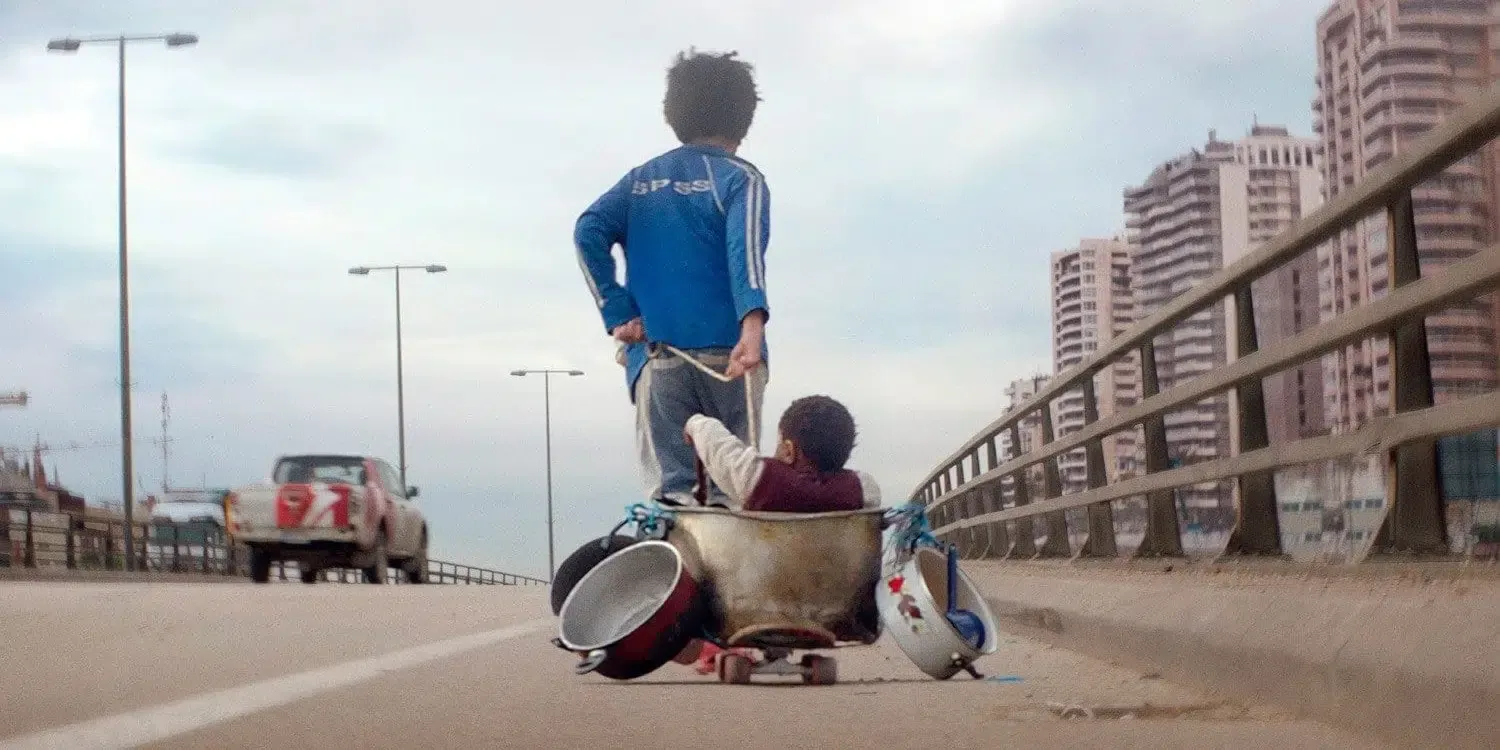
The spotlight panel on Nadine Labaki was one of the most memorable experiences of FEST, and all it did with my reception of Capernaum was deepen my understanding of her intentions as an artist, as well as enrich my opinions on the film and its impact. There was certainly stuff she talked about that I wasn't a fan of. For instance, there's a scene where Zain's parents marry off his 11-year-old sister to the family's middle-aged landlord in exchange for two chickens, and when the landlord takes the girl away in his motorcycle, the boy chases after them. Labaki described that Zain got so desperately in-character in that moment that, even after she yelled “cut,” the boy kept running around the block for half an hour in despair. They didn't stop him, didn't comfort him, didn't make sure he was okay. Treating child actors like this is something I fundamentally disagree with.
But that's the whole point of a festival film, isn't it? To stir something in you, get you questioning your own thoughts and morals, leave you with boiling questions that don't let you sleep at night. In my book, if you walk out of a festival film entirely satisfied, that film has failed at its mission. And yet, Capernaum wasn't a film at FEST. Instead, by foregrounding Labaki as the author and leaving her film as the background of the conversation, the festival seemed to be making a point on what the whole point of film festivals is. By leaving the movie as a phantom floating around during the conversation with its director, they make film history seem like an open and ever-changing book, not a finite message. Cinema is a conversation, and festivals are a celebration of those conversations.
Because of that, I'm glad that I watched Capernaum in the middle of my day, on my phone, sitting alone in a deserted laundromat in Espinho. It was a liminal experience, a festival film watched during a festival but not at the festival. It was just me, the movie, and the many questions and uncertainties it left me with. I was made uncomfortable by its portrayal of poverty and misery, but the fact that it exposed me to a wholly different reality I didn't know anything about was eye-opening. It made me question my thoughts on how directors should approach child performers. It made me wonder why Western festivals like Cannes love showing films like this, then criticizing them for how they portray life in developing countries, but not actually doing anything to help. These are all questions that have stayed with me, and I'm still grappling with them over a year later. I don't have answers to them yet, and I'm not sure I ever will. I think that that, right there, is what a festival film should be.




Comments 8