Outshining The Dark Knight: Heath Ledger's Joker Is Unforgettable
Characters
It's not exactly a hot take to say that Heath Ledger's stand-out performance was as the Joker in The Dark Knight. It's the role that won him an Oscar, a BAFTA, a Golden Globe, and the respect of critics and audiences everywhere.
I personally don't think this was Ledger's “breakout role” - he'd been in plenty of great films before The Dark Knight - but I do think this was the one that put him so firmly on the map that his name is now synonymous with one of the best performances of all time.
Sadly, we never saw much more from Ledger after he tragically passed away in 2008, only a few months after he'd completed filming on The Dark Knight. But if he had to leave us with one role to remember him by, what a role it was.

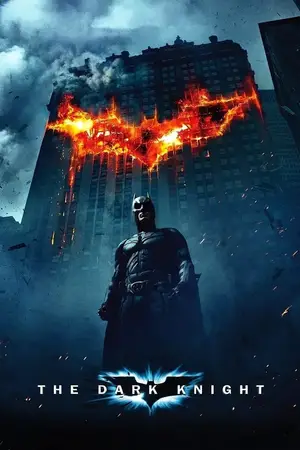
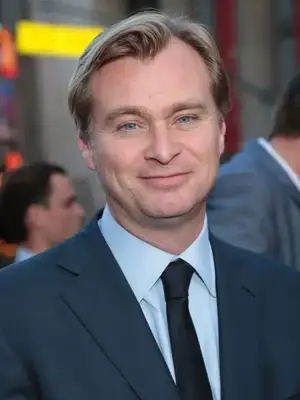
The Dark Knight is the second film in Christopher Nolan's superhero trilogy. His 2005 film Batman Begins had established a grounded tone and gritty prestige to the comic book movie genre that hadn't been tapped into in a blockbuster before. Expectations were already sky-high for the follow-up, even more so when it was confirmed that the Joker would be the main villain.
The Joker is Batman's ultimate rival. The gleefully chaotic yin to his stoic and justice-driven yang. The purple trenchcoat, cackling, clown makeup-wearing villain had been tackled before by the likes of Jack Nicholson in Batman, Cesar Romano in the 1966 Batman series, and Mark Hamill in the animated realm. These had all led to great, but fairly synonymous portrayals of the character.
How would Nolan's Batman, a world grounded in realism, tackle such an exaggerated villain?
It wasn't an easy task for any actor, let alone a young Australian known mostly for early romantic comedies and dramas. But Heath Ledger was more than up for the task.

This Joker wasn't the high-pitched laughing manic of Harley Quinn or the Arkham games, nor was he Nicholson's gleeful dancing crime boss. Ledger's Joker was still identifiably the clown-like psychotic criminal from DC Comics, but he was a Joker for this generation. His character embodied the dark criminal underworld presented in Nolan's trilogy, and he was the perfect foil for this version of Batman.
The Joker in The Dark Knight is emblematic of fear and trauma in a post 9/11 world, where a terrorist who thrives on anarchy felt all too possible. Ledger's Joker had an added sinister layer that felt unhinged but realistic. He was a calculating mastermind, scarred physically and emotionally by past traumas, who lived only for chaos. He was a man who “just wanted to watch the world burn,” as Alfred (Michael Caine) so aptly put it.
The Joker was still a master of performance and embellished with charismatic flair. But in this world, that meant putting on a clown mask so he could go undercover as a member of his own gang and watch as his plan to pit them against each other unfolded in front of his eyes. It meant playing dead to cash in on his own ransom reward and take out a rival. It meant using a man's head to make a pencil disappear, or opening a hidden jacketful of grenades with the quip “let's not blow this out of proportion.”
Despite being a chaos-seeker, everything Ledger's Joker did was intentional, and part of the deep terror about his character was simply how clearly he could identify an opponent's weakness and exploit it on a grand scale. He was an unstoppable force to Batman's immovable object, and even when the Dark Knight was successful in putting a stop to Joker's plan, it was with the sense that the villain didn't really seem to mind, because he still managed to get under Batman's skin.

To make a character like the Joker, who has been depicted over and over again in decades of comics, games, series, and films, seem original seems impossible. But that's what Ledger did. This take on the character was entirely Ledger's own, and it hasn't been replicated since.
Of course, Ledger's performance was bolstered by the fantastic writing, directing, set design, stunts, makeup, and costuming that all helped make The Dark Knight an excellent film on all cylinders. But even in a film crowded with all that talent, Ledger still managed to stand out.
The thing that's really special about Ledger's performance as the Joker, is that there's no hint of the actor underneath at all. The greasy green wig, thick clown makeup, and prosthetics completely hid the actor's recognisable face, and then Ledger did the rest by committing to the performance so fully he disappeared completely.
I remember the first time I watched The Dark Knight as a teenager, I couldn't pick the actor behind the Joker. When I found out later that it was Heath Ledger, the guy who sang "Can't Take My Eyes Off You" to Julia Stiles on the bleachers in 10 Things I Hate About You, my mind couldn't comprehend it. This was acting.

What made it even more memorable was that it was completely against type for Ledger. He was known for being a heartthrob in 10 Things I Hate About You, a dashing action star in Ned Kelly and A Knight's Tale, or a brooding gay cowboy in Brokeback Mountain. He wasn't exactly the first person you think of when someone says psychologically complex villain. Nevertheless, Nolan and his casting director, John Papsidera, clearly saw something in Ledger and gave him a chance to run with it.
The casting of Ledger was, naturally, met with backlash, because much of the internet can't see past basic traits to the potential within. Could Jennifer Lawrence, a blonde, really be Katniss Everdeen? Could Twilight star Kristen Stewart really play Princess Diana? Could this young Australian heartthrob really be DC's most iconic villain? Time and time again, actors have proven the preconceived notions of audiences wrong, and Ledger did the same.
When The Dark Knight came out in 2008, all that doubt immediately melted away. Ledger not only broke his stereotype, he shattered it. It earned him dozens of posthumous awards, and set up a successful career that he sadly never got to take advantage of. Any time that I watch The Dark Knight now, I'm struck with sadness, not just for Ledger's premature death, but the fact that we were robbed of what was likely going to be a sensational career on screen.
At the Academy Awards in 2009, where Ledger was nominated for Best Supporting Actor, Kevin Kline commented, “Heath Ledger has left us an original and enduring legacy," which was only affirmed moments later by his Oscar win.
In a film that is so centred around what it takes to be an icon, The Dark Knight made one of its own.




Comments 3