'Squid Game' and the Fandom's Most Popular Ship: Inhun
General Reviews
(author's note: I will report homophobic/borderline offensive comments. And I'll likely ignore attempts to goad me into an argument).
Being part of a fandom isn't an experience solely for kids, teenagers, or simply people under the age of 25. Fandoms are meant to be places where you gather, discuss, and oftentimes share your love for a ship, popular or otherwise. If you're unfamiliar with what shipping is then, to put it simply in the case of fictional media (real-life shipping is a different discussion and some people get touchy about it), is when you want characters to be together is one way or another. Occasionally, ships remain mostly fanon or are heavily implied via subtext. In the case of Squid Game's still incredibly popular ship, Inhun (Seong Gi-hun and Hwang In-ho), there's a lot to unpack here.

The popularity of Squid Game across the world is pretty remarkable and at least for the first two seasons, it's a great show and the performances especially from the leads are incredible. It's a Korean thriller series that captured audiences beyond its country, and that's quite the feat if you think about it. And it also gave the fandom another m/m pairing that has a lot of layers to it, combined with tremendous chemistry between Lee Jung-jae who plays protagonist Seong Gi-hun and Lee Byung-hun who plays main antagonist Hwang In-ho.
To be clear, Gi-hun and In-ho don't end up together in the show, and in season 3 Gi-hun dies in what remains an incredibly disappointing season and series finale. It's a moment that's still unsavory to think about, especially if you're a big fan of his character. Though despite the extreme faults of Squid Game's final season, there are more than a few moments throughout that further lend to why people ship them in the first place.
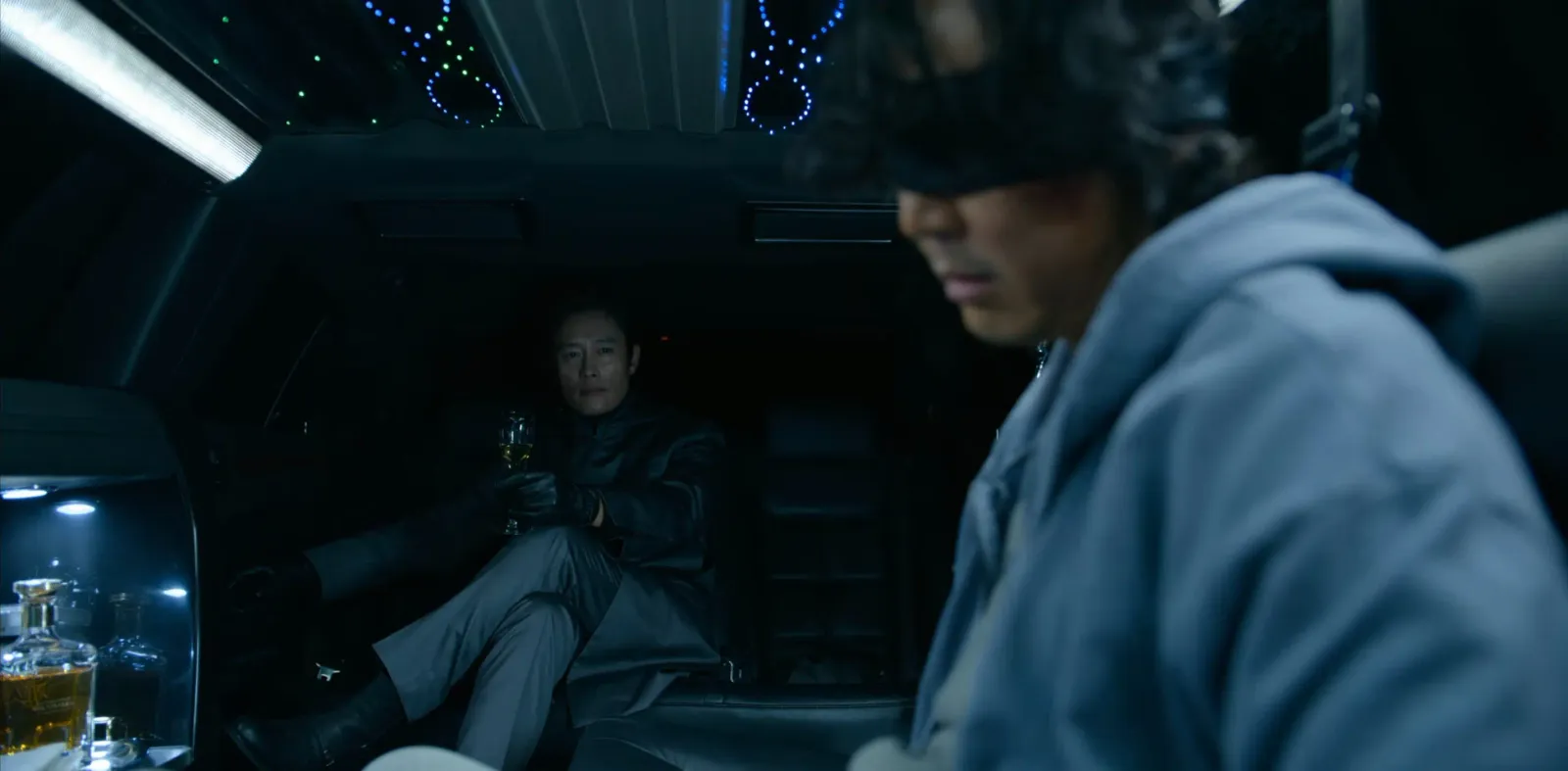
Before we get into season 3, let's momentarily go back to season 1 because it's important to establish the small beginnings of Inhun (also known as 457) as a ship. During season 1, Gi-hun and In-ho don't share many scenes together because In-ho's role as Front Man, which means he's the organizer and overseer of the deadly competition, kept him away from the players. Though the very scenes they do share in season 1 set the stage because of the chemistry, but also due to the clear fascination In-ho has with Gi-hun, that's borderline obsessive.
Specific examples include In-ho often specifically watching Gi-hun over the high tech monitors during the games and the limo scene in which there's an incredible amount of sexual tension and intrigue. Not to mention putting the bank card with the money Gi-hun won by being the final player standing, in Gi-hun's mouth rather than his pocket. Sure, that could be cast off as something that means nothing, but if you think hard enough there's subtext to read into with that.
As soon you reach season 2 though, there's absolutely no denying how much they're drawn to one another. Whether it's how desperate Gi-hun is to find him for more than a year of his life and dreaming about him before and after he reenters the games or In-ho keeping tabs on him, as well there being even more tension in their second limo scene. Despite how In-ho infiltrates the games and some people perceive that as solely manipulation, it's very clear in their interactions regarding In-ho's enjoyment of being that close to Gi-hun. As well as how Gi-hun becomes incredibly close to the Young-il persona that In-ho crafted in a very short amount of time.

If you take a moment to compare their interactions with others versus each other, there's a very clear distinction to be found. While In-ho slithers into Gi-hun's inner circle and puts on a performance, his connection with Gi-hun isn't part of the performance. Hiding the dark parts of himself and pretending to be a player is where the deception lies. But the pull in terms of Gi-hun being the light to In-ho's darkness is very much baked into the narrative. Lee Byung-hun even said something similar regarding In-ho being the darkness and Gi-hun being the light.
The chemistry between Lee Jung-jae and Lee Byung-hun does play into the intensity of the ship, but it's clear that everyone understood that there's a complexity to the relationship. And it's not a boring villain trying to kill the protagonist just because they're the protagonist. In fact, if In-ho desired for Gi-hun to die, he had plenty of opportunities to make that happen in season 2. Instead, he goes along with Gi-hun's plan to take down the Front Man, kills his own employees throughout the attempted rebellion, and struggles when Gi-hun gives him an extra magazine to keep himself safe.
It's almost silly to pass off the intentional staring or gazing at each other's lips, the late night conversation they have, the panic that Gi-hun experiences during Mingle when In-ho isn't with him, the subtle way that In-ho essentially asks Gi-hun out (there's no denying that it can be read that way), or any of the other moments throughout season 2. The ways in which their relationship is the center of focus is hard not to notice. And the popularity of them as a ship is based in the text and the subtext.
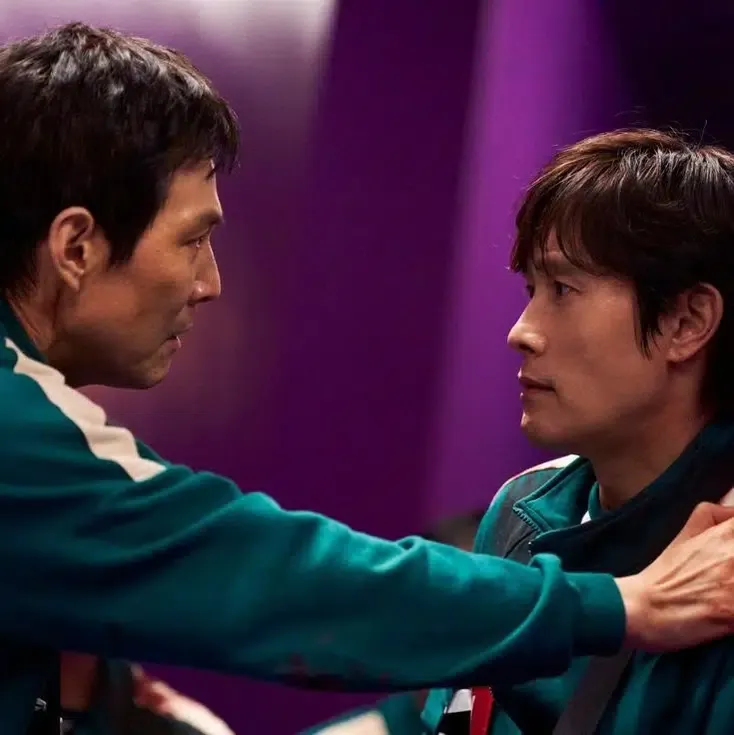
Instead of the ship being merely being about two hot men getting together, it's also a tragic story because of Gi-hun's death and In-ho faking his own as Young-il until he reveals his face to Gi-hun during their incredibly short confrontation in season 3. A scene that's also filled with tension because Gi-hun should want him dead (especially as he killed Gi-hun's longtime best friend in the season 2 finale), but he can barely bring himself to try anything. The season fails to give us what we wanted, but there's a bit to discuss as far the final season goes.
In-ho returning to his position as the Front Man isn't full of gloating and or satisfaction in terms of tricking Gi-hun into believing he was a player. When we do see his face without the mask throughout the entire season, In-ho looks miserable. He's too far over the deep end and in a way too cowardly to even give himself what he really wants. Gi-hun remains just too far out of reach for him again until he dies. And his death causes a very noticeably sad reaction for In-ho, one that's filled with regret of what he caused all on his own.

The Korean games end because In-ho decides that after Gi-hun's death and before the show ends, In-ho goes out of his way to deliver the remaining of his winnings and Gi-hun's player jacket (which he kept for 6 months, unwashed) to his daughter. Denying that he'll always remember Gi-hun, will always mourn him, and wishes things turned out differently is almost pointless in this case.
There's no happiness for either of them in this ship because of their circumstances and who In-ho was at the end of the day. Gi-hun found himself drawn to the very man he was hunting and was supposed to hate. And In-ho found himself feeling something for the first time in a long time because of one man. When you look at their relationship through the lens of being a shipper, it's that much more rich of a story. There's love there and it's not healthy, but it's there and it goes to show how a ship can change your experience with media.
You can watch the entire series on Netflix.
(image credit: Netflix)




Comments 2