GUIDO: THE HERO WHO SHOWED US THAT LIFE IS BEAUTIFUL.
General Reviews
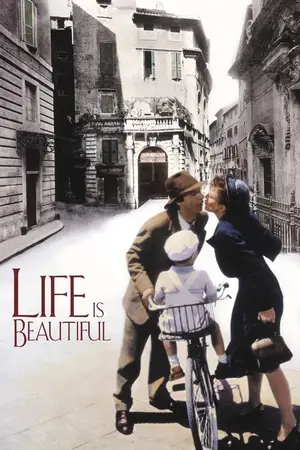
Cinema gives us an endless number of faces, talents, and stories that pass through our lives and that, perhaps, with time, we forget. But there's a minority of performances that, because of their power, their authenticity, and the profound lesson they give us, stay etched in our memory forever. For me, that was the moment I first saw an actor I knew nothing about, in a movie I had no reference for: Roberto Benigni in Life Is Beautiful.

This was not just the experience of watching a movie; it was a revelation. His performance gave me a life lesson about overcoming, love, optimism, and struggle. In a world where everything turned dark and brutal, Benigni’s character, Guido Orefice, became a light. He taught me, with his overflowing personality and humanity, that no matter how bad the situation gets, life always has something beautiful to appreciate and value.
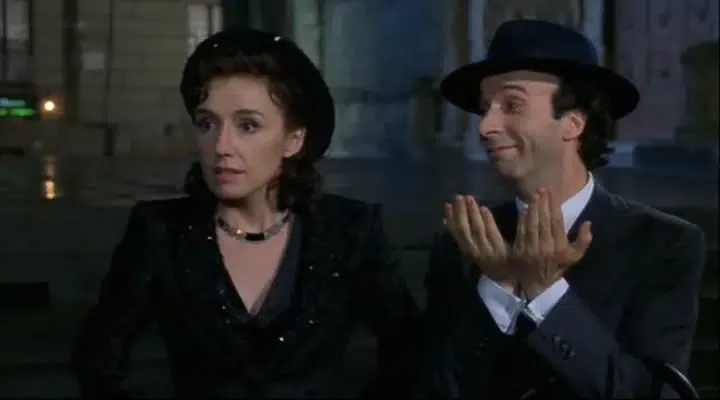
The mastery of Benigni in this role doesn’t just lie in his ability to make people laugh. What makes his performance so unforgettable is his capacity to use comedy as a shield, a tool for survival. In the face of the most unimaginable tragedy, he built a game for his son, a parallel universe of fantasy where the cruelty of the concentration camp was just a test you had to pass to win a big tank. That performance wasn't just about humor; it was an act of pure love, of a father who refused to let darkness swallow his son’s innocence. It was the most beautiful manifestation of personality and struggle.
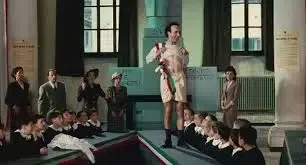
His optimism wasn't naive; it was a courageous choice. It was a resistance to despair. Every smile, every gesture, every playful word was an act of defiance against hate. It was a reminder that, even in the worst circumstances, we can choose how we react, how we protect those we love, and how we keep hope alive. And for me, who had never heard of him before, it was like discovering a new beacon in the world of cinema, an artist who could communicate such a profound message with a disarming honesty and an unparalleled tact.

The film's context, the Holocaust, makes Benigni's performance even more powerful. Instead of focusing on explicit brutality, the director made the brave decision to show terror through the eyes of a child, protected by his father's imagination. And that's the key. The film doesn't minimize the horror; it confronts it with the most formidable weapon: love. Benigni's performance is the vehicle for that idea, and it is what makes this movie, with all its pain, one of the most optimistic stories ever told.

His performance taught me about overcoming. Guido doesn't just survive; he refuses to be annihilated by the situation. It's a lesson on how to maintain our essence, our humanity, and our dignity even when everything around us is designed to strip us of them. On the train, in the camp, and in every moment of his captivity, his character is an inexhaustible source of hope. Benigni’s performance shows us that true overcoming is not just about surviving, but about emotionally thriving despite the circumstances.

It also taught me about love. The love for his wife Dora, who joins him at the camp, is a moving story that gives a new meaning to family bonds. His love for his son, Giosuè, is the driving force of the story, the reason he invents the game. Through his performance, Benigni shows us that love is not just a feeling but an act of will, an act of protection, and an act of sacrifice.

And finally, I learned about the struggle. The struggle not only to survive but to maintain an indomitable spirit. Every time Guido salutes an officer with a smile, every time he runs to find his wife, or every time he whispers a white lie to his son, he's fighting his own war. Benigni’s performance tells us that the greatest struggle is the one fought within ourselves, to preserve our joy and our hope. And in his struggle, he became a hero.

The film's climax, in which Guido walks to his death with his peculiar stride and a smile on his face, is one of the most powerful scenes in the history of cinema. That moment, where he shows us that his final sacrifice was a last act of love for his son, is a reminder that life is always beautiful, even in death. And that's why, for me, this movie is a masterpiece. It’s a movie that, thanks to Roberto Benigni's performance, gave me a lesson I apply not only to film but to my own life.

In a world full of cynicism, Benigni's performance in Life Is Beautiful is a beacon. It showed me that true art is not just about talent, but about the ability to use that talent to convey a profound and moving human truth. That's the performance I'm still thinking about. A performance that opened my eyes to an actor, a movie, and a lesson I will never, ever forget.




Comments 2