The Most Fun You Slept On: The Punk Noir Bubblegum of | Atomic Blonde
Recommendations
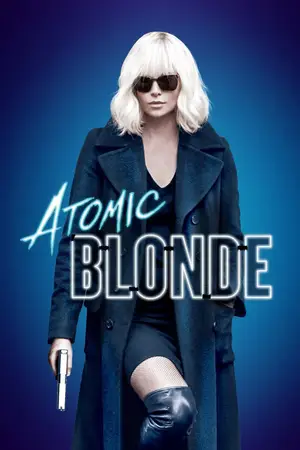
What a rush. Atomic Blonde refuses to be background noise; it seizes the room with color-rhythm, bodies in motion, and a soundtrack that keeps winking like a club light you can’t ignore. It is political in atmosphere and attitude, but its politics arrive through texture and timing rather than speeches. The film’s pact is simple: style will do the heavy lifting, and style will be enough. And then it keeps its word.
From the first frames the movie announces a rule that doubles as a dare: trust no one. Taken seriously, that line doesn’t shrink the story, it dilates it. A prohibition is also an invitation. The instant we are told to withhold trust, the contrarian mind starts hunting for a person, an image, a gesture worthy of disobedience. The film knows this about us. It makes suspicion the arena and lets desire do the work. We scan faces the way a safecracker listens for the tumblers, attuned to micro-beats of honesty inside a genre built on practiced deceit.
All of it is carried by an orchestration that feels comic-panel deliberate. Shot choices land like punctuation, the edits glide like a practiced pickpocket. Transitions click from one action to the next with a confidence that reads almost musical. You can feel the crew counting. Hit, slide, hush, explode. The fight design respects gravity and ignores mercy. Impact is earned. Damage matters. Violence isn’t a mood, it is a solution deployed with surgical brevity, disrupting a situation and closing it before it can rot and return.
The look tastes like sour candy. Surfaces glisten with sugar-acid brightness; frames feel lacquered without becoming airless. The compositions aren’t merely clean, they are intentional in the way a dancer’s stillness is intentional, charged by what comes next. The lighting teams paint contrast with the pulp ferocity of Sin City while the momentum of the cuts occasionally echoes Edgar Wright’s metronomic wit. Add a splash of Nicolas Winding Refn’s color audacity and you get a joint vision where pop brashness and nocturnal noir hold hands. The result is punk noir bubblegum: chewy, spiky, fluorescent, a little goth at the edges, always tasty.
Typography becomes a character. The film does the spy-movie roll call of places and times, yet it resists the stale stamp and opts for graffiti and paint, location cards as attitude. Information doesn’t interrupt the movie; it struts through it. Even the close-quarters work respects the illusion of place. Period vistas bloom behind faces without feeling like a digital apology. The textures line up, the light sits where it should, and belief follows.
Sound is the secret skeleton. Strings tangle with dance tempos, New Order-ish pulses flirt with violins, drops land on punches, silences hold while a body sways and then break when the blade does. It is not wall-to-wall noise; it is choreography. When the cut and the beat agree, satisfaction doubles. When they split, tension multiplies. Either way the audience pays attention because the ears are telling the eyes what the next second might cost.
The underwater sequence proves the commitment. You can read the cold in the eyes, watch bubbles cling to peach fuzz, feel the weight of the medium drag on every gesture. There is no cheat in the sensation. The texture of water is not pasted on top; it saturates the moment, and everything else, stakes, tone, tempo, stays in tune. That balance is the film’s quiet boast: it can layer difficulty without losing flavor.
Costume, makeup, and stunt teams write their own literature across skin and fabric. Leather and chrome, bruise and blood, the sheen of sweat at the edge of a breath that might be the last, each detail arrives persuasive. The action reads as earned rather than invincible spectacle. It remains over the top while keeping the floor of consequence in view. Anyone can fall. That possibility is the oxygen of suspense.
Underneath the swagger lives a thesis I love: the emotionally unavailable noir figure is genderless. Severity is a costume anyone can wear convincingly if the story respects their severity. In this film it does. The persona is not apology or novelty; it is competence. Cold does not need a Y chromosome, and the movie never begs permission for that fact. It simply demonstrates it until doubt gets bored and leaves.
There is also a sly generosity toward the viewer’s appetite for mystery. As the puzzle pieces turn, the film trusts us to enjoy the game without hand-holding. We are allowed to be wrong, to suspect the wrong ally, to build an argument in our heads and watch it collapse with an elegant thud. Suspense, here, isn’t a hallway of jump scares. It is a studio where inference and misdirection spar until one lands clean.
If the film had only delivered its color and cruelty, it would still have been a snack worth the calories. But what impressed me was the integration. The cuts don’t just decorate the punches; they guide our breath. The songs don’t merely needle-drop; they argue with the scene and win on timing. The typography doesn’t label; it performs. The camera doesn’t ogle; it composes. The result is a machine for pleasure that refuses to be ashamed of its engineering.
I keep thinking about how rare it is for a slick, candy-coated actioner to be this carefully built. The craft is meticulous and, often, very funny in its confidence. It lets danger live in the frame while bathing that frame in nightclub polish, and it never forgets that we came for an adventure. In the lineage of stylish, violent fun, my mind jumped to Polar with Mads Mikkelsen, not as a one-to-one map, but as a neighboring country on the same continent of controlled excess.
So, yes, call it extravagant, call it pop, call it a spy story with a wicked grin. For me it is a proof. Proof that intention can be louder than exposition. Proof that choreography can be character. Proof that trust is the most delicious game a movie can play with its audience. Atomic Blonde tells us not to trust anyone. I take the note, and then I trust the film. It earns that betrayal of its opening command with style, with precision, and with that sugar-acid high that lingers after the music fades.









Comments 6