The Master and The Invisible Man: A Primer on PTA and Pynchon
General Reviews

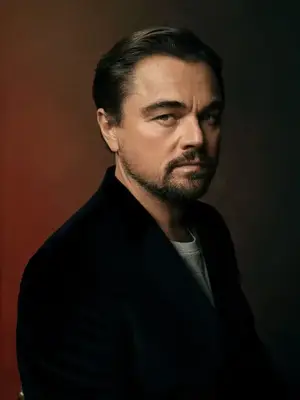
Paul Thomas Anderson (PTA) , director of such classics as Boogie Nights, Magnolia, There Will Be Blood and the filmic adaptation of the Thomas Pynchon novel: Inherent Vice, starring Joaquin Phoenix . This fall PTA is releasing a new film, entitled: One Battle After Another, based on Pynchon's novel Vineland, starring Leonardo DiCaprio. It is not super remarkable that a filmmaker adapts multiple novels from the same author and notable examples include:
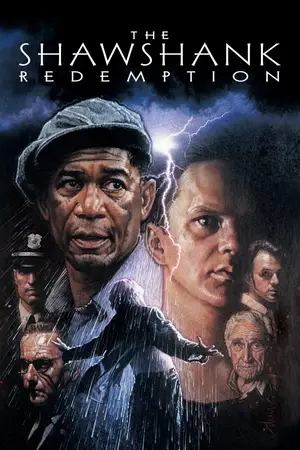
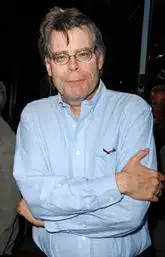
- Frank Darabont and Stephen King
- The Shawshank Redemption
- The Green Mile
- The Mist
- Martin Scorsese and Nicholas Pileggi
- Goodfellas
- Casino
- David Lean and Charles Dickens
- Great Expectations
- Oliver Twist
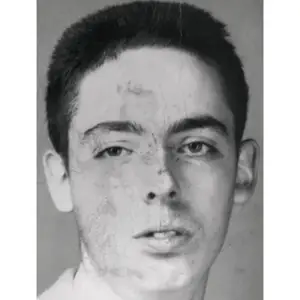
If you know anything about these films, the source material and their respective creators I think you can see how these great directors chose to adapt works that spoke to their own sensibilities. And in that, to me, the pairing of Pynchon and PTA is remarkably well met. Pynchon, an author whose reclusive nature makes J.D. Salinger look like a tik tok influencer, is known for crafting dense, labyrinthine stories with multiple complex characters, time lines, influences, meanings and red herrings. This is all written in a style and tone that has dialogue sounding like it was written by the Coen Brothers having a beer with Jack Kerouac, while being surrounded by prose that James Joyce might have had a hard time following. PTA directs films that are so visually stimulating and rife with deeper meanings and hypnotic suggestions to questions that may not have any answers, or only answers that lead to deeper questions about ourselves, our past and our fates.

I read Pynchon's first book V the Summer I broke broke my leg, almost ten years ago now, and despite having a lot of spare time it took me all Summer to read. The story is nigh on incomprehensible and to even glean any type of insight into it the reader must be educated in late 19th and early 20th century history, as well as the geographical ramifications of WW1. Full disclosure I used a guide. The story follows two seemingly disparate storylines, not to mention variable timelines, before they eventually converge in a way that I would have thought totally impossible when I started the book. What is V? is a pretty apt way to even describe what the book is about, in that the whole thing is a long question. Pynchon is the type of writer to write a party scene, invite you into the backstory and character details of 30 people with his lyrically confusing poetry prose and then completely abandon everything he just gave you an introduction to. It often has the effect of leaving you mesmerized and thinking: what the fuck was that about? Which is exactly the feeling I had after I watched Inherent Vice for the first time.
Despite enjoying most of his films, There Will be Blood particularly, PTA was not a director that I was fascinated with until I saw Inherent Vice. I think I had initially written it off as a Big Lebowski clone, but after finally watching it I was awestruck. Normally I know what's going on, what happened, who's who in a film, but here I was gob smacked by how little I actually understood the movie. It just so happened that I watched it for the first time only a month before breaking my leg and so my fascination with Pynchon, if not PTA, began right before I was about to be immobilized for 3 months. That Summer I watched Inherent Vice 3 more times before I finally got it, and through getting the movie I was able to better understand Pynchon's work, style and literary methods.
PTA very clearly has an affinity for Pynchon. In a 2015 article for Vice he stated: Any time a new book of Pynchon’s has come out—at least since I’ve been around—it’s like I hang the “Do Not Disturb” sign on the door and don’t come out until it’s done. So he's clearly really engaged with the author's work. He also matches up with Pynchon in that he is a distinct stylist who can be clearly identified through their work, as well as the audacity and depth of the methods used for such material. Much like Pynchon, PTA does not spoon feed you the meanings or ideas of his films, it is subtextual and cooked directly into the material itself, you need to taste the idea and identify it, or you could just swallow and move on. The meanings and ideas of The Master or Phantom Thread require almost as much brain power from the audience member as it would for a reader of V. A PTA film can leave you feeling unsettled, perhaps looking for more meaning than you were able to draw from the material itself. Then there's the nature of potentially hidden symbolism that pervades both artists work, so much so that people have made entire careers attempting to speculate just what Pynchon or PTA is really trying to say in his novels and film writers are still exhuming PTA's past works and performing serious post mortem dissections all these years later.
I am currently in the process of finishing reading Inherent Vice the novel and then I'll be writing a piece comparing the film and the book; examining how PTA adapted such a trippy piece of material, by such an iconoclast author into a film that, from my reading so far, almost identically mirrors the source material.
Following this I will be ripping through Vineland, the novel that the new film, One Battle After Another, is based on and performing the same analysis of book and film. However here I will also contrast the differences between the adaptations of the work. What did PTA change this time if anything? How were the film's productions different? Vineland and Inherent Vice are different stories in terms aesthetics, tone, themes and characters; Inherent Vice is a hippy stoner detective story and Vineland is about former anti-authority rebels who are haunted by their past - but maybe there are more hidden connections than I think?
Consider this piece a primer. If you're new to Pynchon, or even PTA, maybe this is the nudge to get you started on your own research, reading and viewing. I invite you to join me on this journey into the minds and methods of two artists that consistently shake expectations, defy complete definition and are infamous for their style, wit and textured subconscious invading material. Groovy huh?
“Why should things be easy to understand?”
― Thomas Pynchon







Comments 4