SOVEREIGN: The States are not United (Part One)
Sociocultural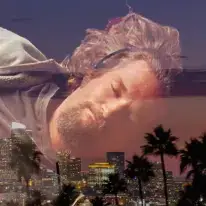
North America.
Yankeeland, as we call it in Argentina.
“The Land of Opportunity,” as the boldest like to paraphrase.
The United States of America. Or simply… the United States.
Although maybe not so united, if we’re being honest.
There are countless ways to name the most popular country on the planet (and as I write that, the famous ‘for everything else, there’s MasterCard’ commercial jingle from the ‘90s instantly pops into my head — just one more cultural export that reminds me of the Yankee blood running through my veins), and perhaps just as many ways to define it. From this corner of the hemisphere, when we think of the “typical American citizen,” we might picture someone who lives in a perfectly manicured home straight out of The Sims, always stocked with jugs of orange juice and milk in the fridge. Someone who smiles behind the wheel, listens to music without bothering anyone (and if he does, the other guy just gives him a knowing smile), always flashes gleaming white teeth, and mows the lawn at 8 a.m. every Sunday.
This is just one… let’s call it appreciation? of many possible versions — others might phrase it differently — but most of them orbit around this same image of a “normal, kind, and endlessly generous” citizen. A mold most of us, whether we admit it or not, have been conditioned to admire.

Of course, all of this is nothing more than a medley of what films, video games, marketing, and social media have been feeding us for decades. Like a rusted clamp that slowly squeezes the last bits of our patriotism. And yet, paradoxically — or perhaps very deliberately — they’ve always slipped in the idea that there are many Americas. One alternative version, which cinema has eagerly embraced, is a place where hatred spreads like a deadly virus at 200 kilometers per hour, where inequality can be measured in a few footsteps on the streets of Los Angeles… and where individuals erupt in the worst ways imaginable.
This whole aura of negativity — born out of the so-called “freedoms” that some believe they inherently possess just by being born in a country that sells itself as the ideal place to “do whatever you want” — exists and echoes in almost every society, across every continent, country, city, or town. No one is exempt from living in a community — let’s say, one with more than five hundred people — without seeing unrest, fights, or senseless deaths. No one.
The real surprise — or more accurately, the shock — lies in how these acts of extreme violence clash with the idealized image that the United States has carefully and commercially crafted. It’s an image the country doesn’t even care to defend anymore, especially not in the Global South. And this gap between the myth and the reality breeds a kind of collective discomfort about what we believe America to be. Or, more disturbingly, what America really is. So, how does a film analysis fit into this long-winded preamble?

A MAN AND A THOUSAND BULLETS.
The first image that struck me from Christian Swegal’s debut feature was the one you see above. It’s honest, and yet deeply unsettling. It invites us to reflect, even without knowing the context or motivations behind it. That’s the power of a single, stark image — modest in mise-en-scène but rich in possibilities.
How do we interpret it? And more importantly, why do we interpret it that way? Who is he? But again — what drove him to that level of violence?
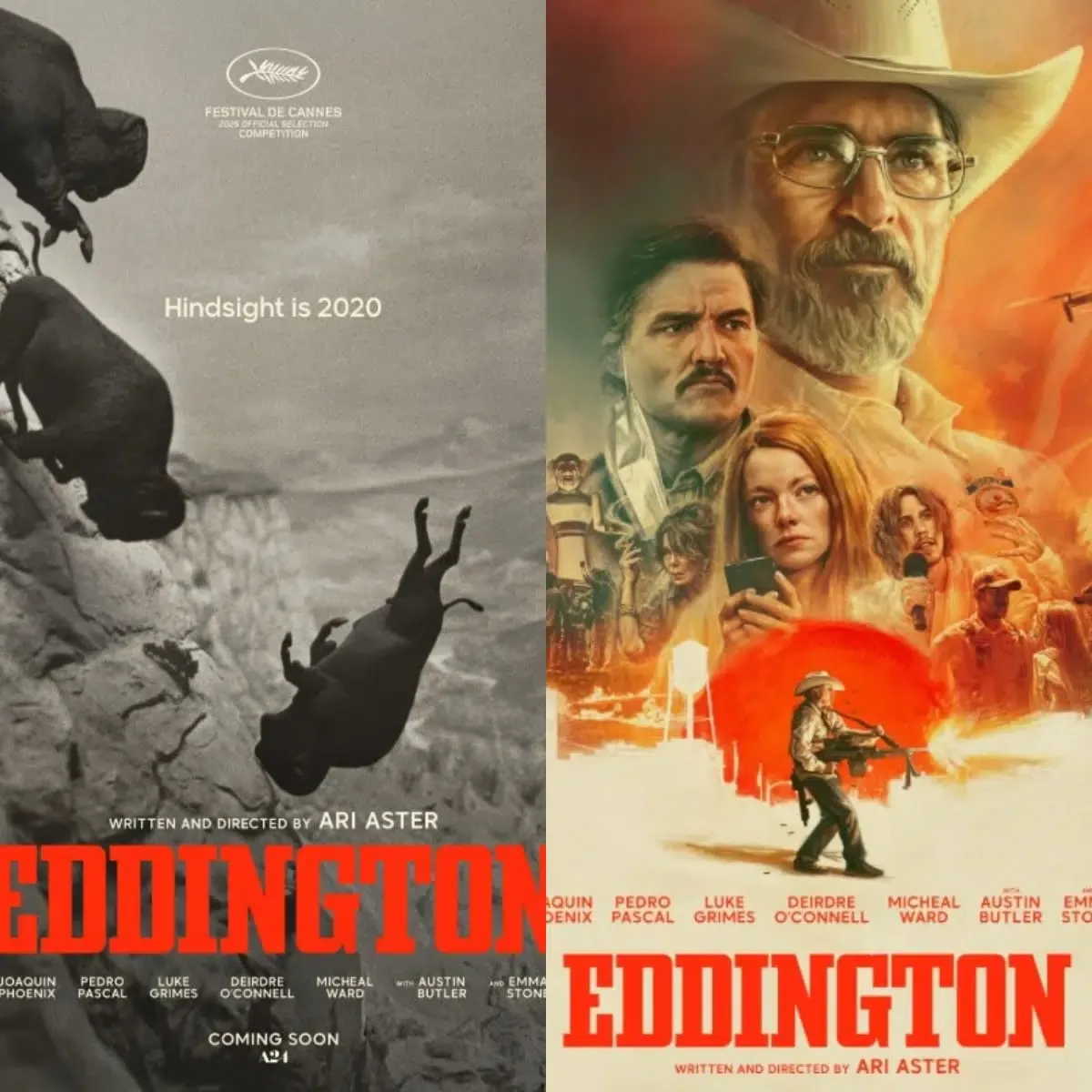
It’s a cropped section of the official poster, which doesn’t lean on the generic formulas favored by most studios and marketing teams. In fact, and this is almost an unavoidable parallel, Ari Aster’s new neo-Western that premiered in Cannes just a few months ago — produced by the indie house that would follow him off a cliff — tried something similar for its teaser poster. But thanks to the parade of Hollywood stars in its cast, they ultimately fell back on the familiar Western handbook with a more “modern” flair. Whether I’ll care about the poster or what Aster’s film leaves me with is something only time will tell.
But back to this image — it’s raw. A man with nothing to lose (or at least that’s what I sensed, not having seen the film yet) aims his rifle at something — or someone — just outside the frame. And this is crucial: that space outside the frame, that off-screen territory, is where his radical ideology festers, where his political crusade is waged, where the consequences of his decisions are born.
His vehicle — or “transport,” as he defiantly calls it, rejecting any term sanctioned by a government he deeply despises — lies partly wrecked, offering us a hint of what’s happened. Or perhaps it’s a metaphor — unclear, yes, but visible if we dare to look deeper. His hatred, wherever it’s aimed, lies so tightly coiled that it only becomes visible when he chooses to unleash it — at which point, he becomes the center of the frame. It’s a cry for individualism, cynically disguised as collective rebellion. A rebellion tailor-made for these “modern times.”

The real story of this self-proclaimed “sovereign” named Jerry Kane, who on May 20, 2010, alongside his son Joseph T. Kane — the sole heir to his ideology — unleashed an unavoidable wave of violence after what we might generously call a routine traffic stop by two police officers on a busy highway, is the perfect embodiment of this bloody individualism. A wake-up call to anyone who dares question how the world works — or worse, tries to infiltrate it with a set of rules scribbled in a notebook hidden up their sleeve. Lurking. Waiting for the right moment to impose their own system. Screaming symbolically into the wind, with nothing to lose but their own dignity.
Director Christian Swegal presents in parallel the tense and complex relationship between Jerry and his son, alongside the much more relaxed bond between Police Chief John Bouchart (Dennis Quaid) and his son Adam, who is about to graduate from the academy and follow in his father’s footsteps. It’s fascinating how this idea of “following footsteps” plays out in such drastically different ways.

While John gently pressures Adam to obey protocol and stay within the bounds of law enforcement, Jerry chooses to homeschool his son, filling his head with convoluted arguments to justify why he shouldn’t repay a bank loan — arguments that reek more of toxic masculinity than logic. Just one of many symptoms of his all-consuming contempt for anyone who doesn’t live by his law. A contempt that began the day his father told him teachers were lying to him.
“I’ve spent my whole life trying to figure out what the lie was,” Jerry says.
That tug-of-war between double moralities pulled him down a road with no return — and ironically, he never did find out what the lie was.
During that journey — spiritual, if you can even call it that — he adopted the U.S. Constitution as his flag, his bible, his encyclopedia. Nick Offerman plays this deeply peculiar man with extraordinary precision — an actor who can switch between tenderness and menace in the blink of an eye, sometimes within the same scene. His Jerry Kane tries to embody a superheroic figure for his son, who, as adolescence approaches, begins to question some of his father’s more extreme “educational” methods. Jacob Tremblay — almost unrecognizable, making me wonder how so much time has passed since Room — plays Joseph, a confused pre-teen who imitates his father right down to the military-style haircut.

The film takes us through stunning landscapes bursting with life. We glimpse real humanity in Joseph’s eyes as he tries to bond with a neighbor who barely notices him after the first ten minutes. We’re offered tender lessons masked as affection. And we’re left with questions that could keep us thinking for days.
But slowly, inevitably, the film pulls us off that hopeful boat. It yanks us away from that false promise. There is no possible resolution where no shared understanding ever existed.
My eyes bleed from so much hate, and more than ever I know that from now on, (North)America will never look the same to me again. It breaks my heart.
How did we ever get here?
by J





Comments 3