Superman (2025) and Man of Steel: A tale of two masculinities
Sociocultural
Spider-Man was the superhero of my childhood. Superman was the superhero of my young adulthood. I got really into Supes around 2015, when I was turning 18 years old. This is a crucial time for a young man. My actions and thoughts were unconsciously pushing me to one big question: what kind of man am I going to become?
I recently saw James Gunn’s Superman and I loved it. That’s definitely the Superman I fell in love with. Back in 2015, I got lost in the character by reading all the classics. My gateway was American Alien, a beautiful anthology that portrays the character in different moments of his life. Then I got into the big names: All-Star Superman, Superman for All Seasons, Secret Identity, Last Son, Red Son, Kingdom Come, etc. But my first approach to the character was a fleeting obsession with Superman Returns back in 2006 and, of course, a polarizing take from 2013 called Man of Steel.

2013 seems like a million years ago. We were coming off the Dark Knight trilogy, which was acclaimed for, among other things, its more grounded approach to Batman’s story. This was also continuing the long line of conflicted heroes and antiheroes that became so popular in a post 9/11 society, with the United States coming to terms with the fact that their perception as the “good guys” of the world was much more complicated than that. Suddenly, the optimistic and smiling Superman didn’t make sense in our time. To some, the only natural conclusion was that he wouldn’t be trusted, and that he wouldn’t trust us. How could a truly good superhero exist in a world so riddled with wickedness?
I should start by saying that I think Man of Steel is an awful interpretation of the character. I’m also about to have some pretty major takes on the character’s masculinity. I want to be clear that I don’t think liking Man of Steel means that you ascribe to every idea I’m going to mention. But I do think there’s a big contingent of people that use Cavill’s Superman as proof that our ideas of masculinity as a society were healthier then and have gone downhill ever since. I couldn’t disagree more.

Man of Steel has two main elements: shame and power. On one side, the main tension of the movie is if/when should Clark reveal his powers. He’s afraid of showing who he is because his dad believes he will be judged, mischaracterized, and turned into a monster by society. In our world, that’s called shame. Clark acts with the detachment of a man afraid to be himself because of the patriarchal constraints that rob him of his true emotions. He doesn’t speak much, he doesn’t trust the help of other people, he doesn’t fully smile unless he’s with his mom. Unfortunately, his dad is proven right in the sequel, where Clark is treated harshly due to his “misunderstood” actions and his status as a god among men. Man of Steel’s Superman is the perfect pariah for the lonely edgelord: a hero who claims to have good intentions but that is hesitant to act kindly because he feels judged and shamed by the world around him.
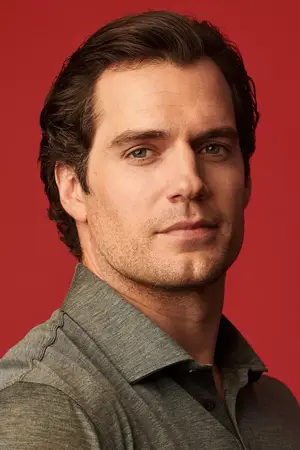
He also happens to be insanely powerful and look like Henry Cavill. This film is above everything a power fantasy. Henry Cavill fits perfectly the hegemonic male ideal, at least seen from the eyes of other men. He has the kind of physique that a lot of men aspire to have in the hopes of being attractive to women, regardless of whether that's actually what women find attractive or not. His introduction quickly pans down to show you his abs as he’s saving the other manly men from the oil rig. His suit is fitted to display every muscle. The only significant military woman in the movie, Major Carrie Farris, can’t help but smile at the end of the film because of how hot Superman is. He’s aspirational and relatable in every patriarchal way: the loneliness that patriarchy provokes, with the power and aesthetics it promises.

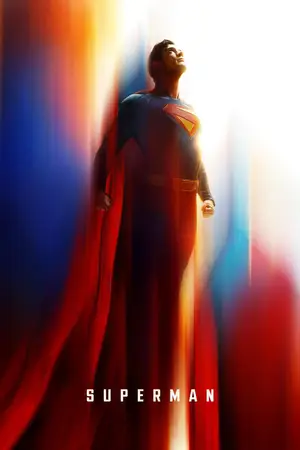
Loneliness is a core trait of Superman, but I think approaching that aspect of the character without his inherent love for life and humanity is pointless. That’s where James Gunn’s interpretation of the character flies. Gunn’s Clark is badly hurt at the beginning of the movie, which I think is a genius move that gives the story stakes and presents a Superman that’s not afraid to be vulnerable on-screen. He makes mistakes, he still doesn’t know how to have a discussion with Lois Lane, but there’s one undeniable thing present in every scene: he’s kind, he loves humanity, he loves this world, and he wants to do the right thing every single time no matter what.
Corenswet is pitch perfect as Superman. He displays the full range of his emotions. He looks comfortable in his own skin. He smiles, he jokes, he gets angry, he cries. His suit is not fitted to perfection, but it has that colour, whimsy, and lightheartedness that puts children at ease in front of so much power. He learns people’s names, has a relationship with the humans that he saves, and cares for every life around him, including animals. He’s compassionate even to the monsters that show up to terrorize Metropolis. He’s strong, but his body is never showcased as an out of reach God. The radical idea in this version of the story is that we can all be like him.

Man of Steel’s Pa Kent teaches his son that he should hide himself and be afraid of the world. Clark only gets empowered and decides to help humanity once Jor-El tells him that he sent him to Earth for that reason. 2025’s Jor-El does the opposite, he sent Kal to dominate. I think this is another stroke of genius from James Gunn. He has given Clark a choice that every man has to make at one point or another: either follow the path of dominance and power set by the patriarchy, or create instead a path of love. Gunn’s Pa Kent, a man depicted as sensitive and fully grounded in his love for his family, tells Clark to be himself and follow his own moral compass in spite of what his patriarchal figures tell him. If we are going to grow and improve as men, this is a lesson we need to take to heart.
When men claim that the change from Cavill’s to Corenswet’s Superman is a representation of the downfall of masculinity, they don’t realize that their hyper-masculine Superman is precisely as miserable and lonely as he is because of that toxic masculinity represented through his jadedness. Choosing to see beauty in the world and rejecting the demands of toxic masculinity frees you to be yourself, to live your emotions as fully as you are able, to find your people, and develop meaningful relationships. I think in a world full of ambiguous moralities and tormented personalities, it’s truly refreshing to see a story about a superhero who embodies his values, wears his heart on his sleeve, and lives a full life, free of the torment of toxic masculinity.





Comments 2