Machines, Class, and Architecture: Metropolis vs Psycho-Pass
Sociocultural
When I first watched Metropolis and later Psycho-Pass, I was struck not only by their shared visions of dystopian futures, but by how both stories use architecture, class structures, and the presence of machines to explore deeper questions about human agency and social control. In this piece, I want to reflect on the visual and ideological parallels between these two works, separated by almost a century but deeply connected through their portrayal of power, technology, and rebellion.

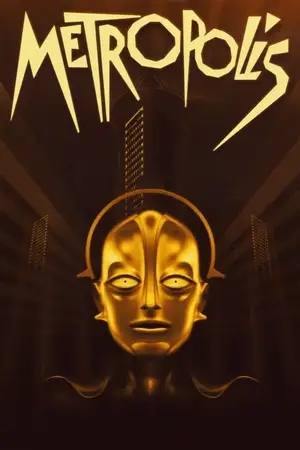
This film, released in 1927, highlights the stark contrast between different social classes. It depicts an industrial proletarian sector controlled by the upper class, who live several levels above them, at the tops of skyscrapers, surrounded by urban landscapes that represent the highest level of technological advancement. Set in the year 2026, the proletariat rises up, led by a robot (with a human appearance) that eventually spirals out of control. The workers first rebel against the machine, then against those who control it, and finally against the physical object that represents it.

What distinguishes humans from other species is their ability to massively produce their own resources, their material life. This suggests that we do not only produce our physical needs but also our ideas and mental representations. However, this has never happened in a context of equality, and thus material life remains conditioned by the development of productive forces.
The working sector is made up of people completely deprived of pleasure and leisure. Their 10-hour workdays are followed by an existence underground, where they can only sleep, confined to spaces with no air or natural light. They have no place to be human. They lose all human qualities, and at that point, this alienated society, exploited by precarious labor, can be compared to the machines that perform tasks for society, soulless objects.

The driving force of human history has been—and will continue to be—class struggle: a constant conflict between people who are essentially equal, but who have had different opportunities. In the film, a third actor is added to the equation: the machine (Hel). It replaces Maria, a woman who wanted workers to recover their faith and hope.

From the beginning, the proletarian revolution is linked to the Catholic Church. Meetings take place in catacombs, reminiscent of early Christian gatherings in ancient Rome. Several images of crosses appear as well, suggesting the presence of a past civilization and the belief that “the past was always better.”

Later on, the bourgeoisie gives the robot Maria's appearance and decides to incite a revolution among the workers, but in a controlled way. The climax comes when this situation gets out of hand, and the bourgeoisie must ally with the proletariat to confront the machine.
I believe the consequences of a machine depend entirely on who controls it, and therefore, criticism should be directed at the person, not the machine.
This definition led me to compare certain aspects of Metropolis with a 2012 anime series titled Psycho-Pass.

In a “near future” (2116), it is possible to measure a person's mental state, personality, and criminal tendencies through a psycho-somatic scanner that analyzes brain functions as well as other biological and chemical processes in the body.

The "Sybil System", or in Metropolis, the elite ruling class, controls the movements of the population by measuring each citizen’s mental state and determining their proper function within the system. In both cases, we see how human thought and will can be manipulated by machines, or rather, by those who control them. Once again, we return to the issue of class stratification, since this system generates inequality, which in turn triggers rebellions that challenge the legitimacy of a machine-led system.

While both Metropolis and Psycho-Pass show that the machine is superior and could potentially overcome humanity, they present very different perspectives on the role and nature of technology. In Metropolis, the machine is directly targeted as the enemy, playing into the idea that machines could betray and defeat us, Babylon was drunk on blood. In Psycho-Pass, the focus is placed on human responsibility, on those who control the machine.
Ultimately, the moral of Metropolis is that if humanity unites, it can defeat the machine in the event of a rebellion. However, it does not address the issue of human responsibility in the machine’s actions. Artificial intelligence may be a double-edged sword, but it is essential to consider who designed it, and what values and risks they were willing to accept.
“... and no man shall be able to distinguish machine-being from human-being!”
Not only do both works present conceptual and ideological parallels, but they also share a similar urban aesthetic: skyscrapers in utopian urban settings, elevated transit routes reminiscent of modernist urban planning, and extravagant buildings that place both productions within the cyberpunk category.

The scene depicting the construction of the Tower of Babel represents the birth of the system that governs Metropolis. Its construction could not be completed without foreign labor. Those who conceived the tower never shared the dream with those who had to build it, and the rest of the film showcases the vast class divide that resulted from that moment.

The cinematography in this scene uses shots of exhausted workers, ending with the word BABEL drenched in blood. This powerfully conveys, even in silence, the suffering endured by the proletariat, the society below, and the suffering that will persist as long as the system remains this rigidly vertical. I interpret this scene as a metaphor for the oppression the bourgeoisie has exerted on the proletariat since the very beginning

Even in the most representative depictions of futuristic cities, both directors were influenced by the idea of the “gothic city,” showing how certain films from the modernist movement established a visual legacy that continues to shape cinematic portrayals of the cities of tomorrow.
Host of Embers


Comments 1