What does it mean to be Spiderman?
General Reviews
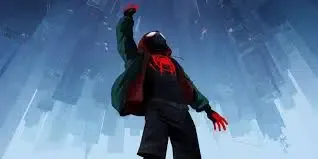
In Spider-Man: Into the Spider-Verse, there’s a moment that hovers between gravity and grace, between fear that paralyzes and freedom that soars. When Miles Morales jumps from a Brooklyn skyscraper, it’s not just an action beat; it’s a cinematic hymn, a visual declaration of what it means to wear the mask. This “leap of faith” doesn’t just dazzle, it becomes the soul of the story. This emotional and philosophical center redefines Spider-Man for a new generation, earning its place as one of the most iconic moments in the history of superhero cinema.
The Weight Before the Fall
Miles doesn’t leap with confidence. He falls into that moment from a place of heartbreak and rejection. The path to that rooftop is built on loss. The death of his Uncle Aaron( the Prowler) is a tectonic shift in his world. Aaron wasn’t just family; he was the one who truly saw Miles for who he was and who believed in him without conditions. He spotted the spark, even when Miles himself was invisible. Where Miles’ father pushed him toward structure, Aaron offered space to just be. His last words, “You’re the best of all of us”, aren’t just comfort. They become a weight, an impossible expectation planted in the rubble of grief.
And then comes the rejection of a different kind. Hoping for guidance, Miles turns to the other Spider-People (Gwen, Peter B. Parker, and the rest), but instead of support, he’s cast out. They see someone raw, unpredictable, not ready. Their response isn’t training, it’s restraint. They tie him to a chair. “You’re not ready,” they tell him. The words isolate him even more than the ropes do. He becomes an outsider among outsiders. His reflection aligning with the Spider-Man mask in a subway window isn’t a victory, it’s a quiet, terrifying moment of realization. No one is coming to save him. This leap doesn’t rise from heroism. It’s a push away from a looming sense of failure, of being completely and utterly alone.

Faith: What Makes the Hero, Not the Power
Into the Spider-Verse breaks down the usual superhero origin story. Miles doesn’t become Spider-Man through control of his powers; his webs fail, and his hands slip. Instead, the film argues that Spider-Man is about something far more fragile and more powerful: faith. Peter B. Parker’s advice lands force: “That’s all it is, Miles. A leap of faith.” That’s the key. Heroism might look like courage, but being Spider-Man is believing in yourself when everything inside you says you shouldn’t.
It echoes Joseph Campbell’s Hero’s Journey. Miles lives the “Refusal of the Call,” then dwells in the “Belly of the Whale,” drowning in grief and self-doubt. The leap becomes his “Crossing of the Threshold.” The magical aid in his journey isn’t a weapon or a spell; it’s the memory of Aaron’s belief, the echo of those final words. Faith, here, is an action taken without certainty. Miles doesn’t know if his powers will work. He doesn’t know if he’ll survive. The close-up of his fingers cracking glass as he jumps captures the sheer fear. He leaps not because he’s sure, but because he’s terrified and chooses to do it anyway. That is what transforms him.

Visual Poetry
What makes the leap unforgettable is how the film shows it, how it takes inner change and turns it into visual music. The animation doesn’t just move, it mirrors Miles’ shifting heart and mind.
The moment the camera flips upside down is nothing short of magic. As Miles falls, the screen inverts, suddenly, he’s not falling. He’s rising. That trick becomes a statement. The fall becomes an ascent. The grief and fear that weighed him down begin to lift. Dutch angles beforehand make everything feel tilted and unstable. The city looms above, indifferent and vast. Miles is a speck, swallowed by space.
But once he believes, everything shifts. The animation bends with him. New York’s straight lines warp and twist. The city pulses like graffiti, alive, moving with its rhythm. Space becomes a canvas, not a cage. Like Cubist art, the visual style fractures and reforms to reflect who Miles is: the student, the artist, the grieving kid, now fused into something whole. Frame rates adjust, showing his jittery fear smoothing into fluid control. The cold, blue city begins to glow, propelling him forward.

Color as Storytelling
Color in Spider-Verse doesn’t just decorate, it narrates. The leap is the climax of a story told through hue and tone. Before the jump, blue dominates. It’s the color of sirens, shadows, loneliness, cold classrooms, and the sky that never ends. It reflects Miles’ fear and grief, especially over Aaron. Red, Spider-Man’s traditional color, is distant, out of reach. Miles’ palette, purples from Aaron’s hoodie, and muted shades reflect his confusion and lack of identity.
But when he leaps, the color world explodes. The blue fades. Reds and purples erupt from below, surging up to meet him. The warmth doesn’t just light the scene; it shows what’s changed inside him. The city, once uncaring, now mirrors his courage. As he swings through the streets, bathed in red and gold, even the sky changes; it welcomes him.
His suit, too, speaks. Gone is the borrowed red-and-blue. He makes his own: black and red. The black carries all the pain, fear, and growth he’s endured; he owns it now. The red, once alien, is now his, sharpened and focused. It’s a suit not passed down but forged, proof that he’s no copy, but his kind of Spider-Man.
The Soul of the Mask
What makes the leap so powerful is how it redefines heroism. It strips it down to something anyone can feel: the fear of the unknown and the courage to jump anyway.
Miles isn’t perfect. His next moves are messy. His swing is clumsy. But he chose to leap, and that choice is everything. That’s the power. Not perfection, but the will to try when you’re scared out of your mind. It’s messy, human, real. That leap becomes a metaphor, not just for Miles’ growth, but for the whole idea of Spider-Man.
The movie’s core idea, “Anyone can wear the mask”, finds its truth here. Not in powers. Not in destiny. But in the bravery to take that leap. That connects all the Spiders (Gwen, Peter, Peni, Noir, even Spider-Ham). Faith is the thread that links them.

The Sound of the Fall
Miles’ leap of faith doesn’t end with a punch or a pose. It lingers. It resonates because it’s built on vulnerability, not bravado. On faith, not certainty. It’s not about spectacle, it’s about truth. That upside-down shot, that color bloom, that surreal motion, they all lead to one moment: fear, faced head-on.
When Miles swings over the city that once swallowed him, its lights seem to catch him and hold him. That’s not just a victory, it’s a myth reborn. Spider-Man becomes more than a hero. He becomes a symbol for anyone who’s ever stood on the edge of the unknown, shaking, and still jumped.
The glass breaks. The world turns. Miles rises.
And in that instant between doubt and destiny, Into the Spider-Verse gives us its deepest truth: that the core of Spider-Man, the reason he endures, isn’t strength or skill, but the courage to take that first, terrifying, beautiful leap. The one anyone can make. The one that changes everything.



Comments 7