Blade Runner - Tears in the rain: when the villain becomes a human.
General Reviews
By: Fernando Ramírez Vanegas.
here are films that mark us for their plot, others for their images, but there are some that do it for a single scene. A scene that changes everything you had understood until that moment. Blade Runner, directed by Ridley Scott in 1982, is one of those films. And Roy Batty's death is that epic scene full of emotions and a lot of meaning. Roy Batty is played by Rutger Hauer, throughout the film is an antagonist: cold, calculator and unstoppable. An advanced replicant, scheduled to kill, who enjoys hunting as a cat would do when the mouse plays with its food, which in this case is Rick Deckard played by Harrison Ford. This film not only speaks of the future, talks about us. Of who we are and what it really means to be human. The story revolves around Rick Deckard, a hunter of replicating artificial beings with almost indistinguishable human aspects that have escaped from the space colonies and seek to survive. Within this group of androids is Roy Batty, an evolved replicant and group leader who flee looking for answers to their existence. Throughout the film, Roy is shown as an unstoppable and dangerous being. Almost invincible.

But all this changes in climax. In the bowels of an abandoned building, in the middle of a rainy night, Roy had Deckard to his mercy. He could kill him. It is easy to imagine how this scene would end in any other film, one last confrontation, explosion of strength, victory of the hero or the villain. But something unexpected happens here. Roy doesn't kill Deckard. Save it. Under the rain that dark night, Roy holds a white dove in his hands. His life is about to end. The latter weigh like minutes. And then he says something that I freeze my guts.

"I have seen things that you could never have imagined. Flame combat ships in the depth of Orion. I have seen lightning glowing in the dark near the door of Tannhäuser. All those moments will be lost in time ... just like tears in the rain. The time of dying came."

And the question is: what happened here? How is it possible that a synthetic being who has killed, manipulated and persecuted, becomes so deeply human in his last words? Roy was not only saying goodbye in a masterful and elegant way. He is recording and remembering that, although he was created artificially, he lived, felt, He dreamed and was afraid like any human being. And that in his last moments he would face death with dignity. The scene moved me deeply since the first time I saw her. It was not just the poetics of his words, nor the melancholic atmosphere of rain or dove. It was the way Roy, at his last moment, It made us ask who really was the monster. He, who was looking to continue living? Or do we create conscious beings and deny them the right to exist? The interesting thing about this sequence is its way of challenging the rules of traditional cinema.

The villain does not die defeated. Nor die with anxietary revenge. He dies in peace. With a look that seems to say: "I already understood." He understood that no matter how much you fight against fate, in the end, we are all ephemeral. And at that time, we spectators remain in the rain, mute before an awkward truth: the replicants are not just machines. They are mirrors. They represent our doubts, our desires and our mortality. I have had moments in my life where I felt that everything was lost in time as tears in the rain. Moments where I understood that many experiences, how intense they were, would be alone in my memory. Without witnesses or evidence. Only I would know what they meant. Roy Batty, for me at that time he became a philosopher, poet and an authentic human being. Because that's what it always was. Or what he learned to be. This scene marked me because it made me rethink what it means to be human. It is not the blood, nor the years, not even the conscience that defines us. It is the ability to feel that every moment matters. To know that, although nothing lasts forever, everything can make sense.
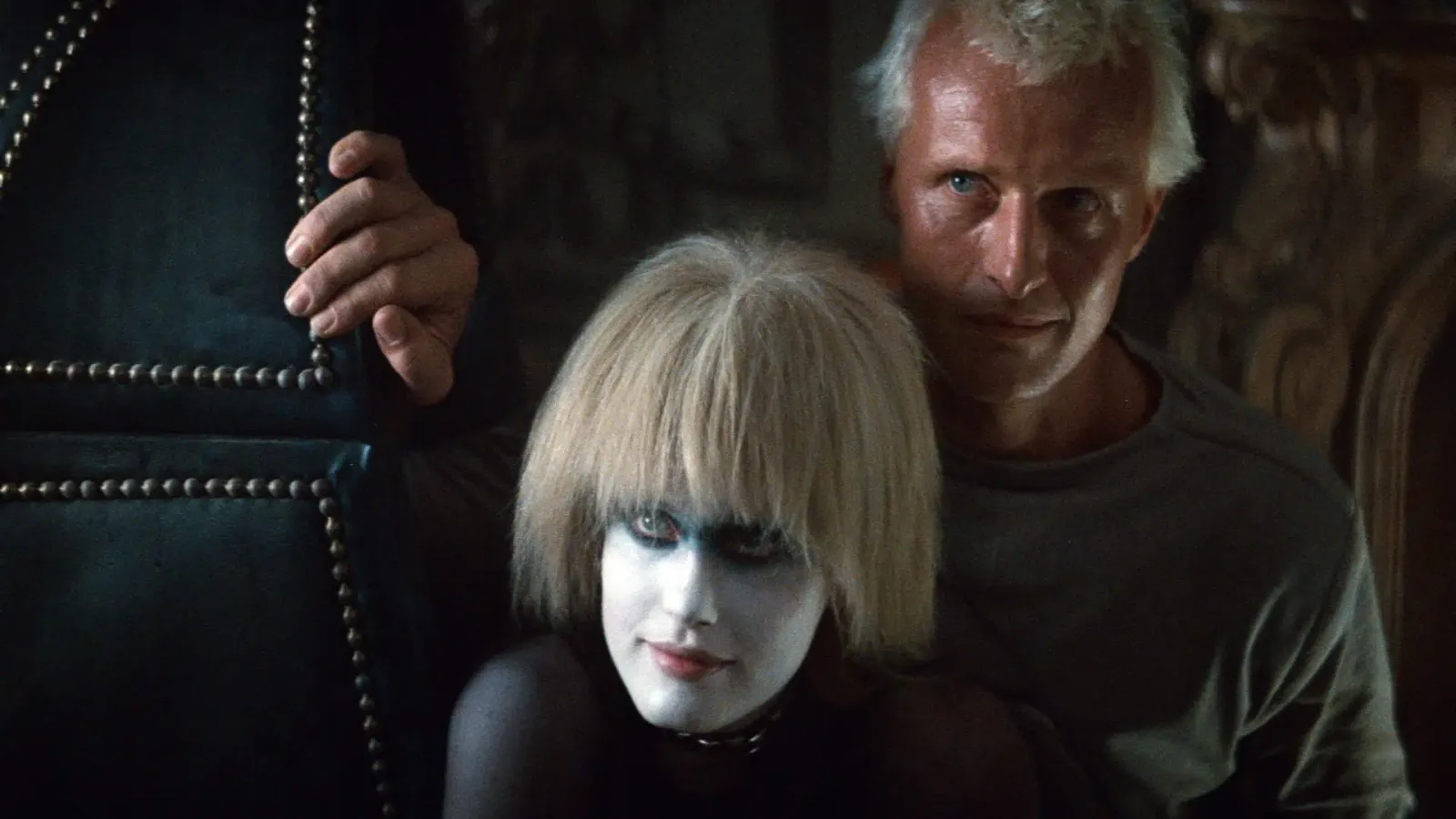
In that end, Blade Runner ceases to be just a science fiction story. It becomes a meditation on identity, death, compassion and redemption. And Roy Batty, the villain, ends up being the most human character of all. Therefore, every time I see Blade Runner, I can't help stopping me in this scene. I repeat it again and again. I wonder what things have I seen, that others have not been able to see. And I think that one day, I will say goodbye. I hope to do it with the same peace, the same dignity, the same clarity with which Roy released the dove and closed his eyes. The true miracle of Blade Runner is not technology or futuristic aesthetics. It is this: to make us human again, through one that was never made of flesh, but of circuits.
Thank you for getting here and reading my article, I hope you enjoyed this review and reflection which enjoy writing for you. I hope they support me with their lights and likes.
Comments 13