Perpetual Ignition: Growth Is a Constant on the F1 Circuit
General Reviews
For maximum immersion, please play the above as you read
Childhood ends many times. A first heartbreak, a first rebellion, a first funeral: each one snaps another vertebra in the cartoon spine of youth. Cinema usually drops the checkered flag on adolescence at eighteen. Win the championship, kiss your sweetheart, roll credits. F1: The Movie rips that myth from the asphalt. Director Joseph Kosinski parks the viewer in the cockpit beside veteran racer Sonny Hayes (Brad Pitt) and demands a question louder than the super engines: What if coming of age has no finish line?

Coming of age, the film insists, is not a race you graduate from; it is an endurance series measured in mechanical sympathy, emotional telemetry, and pit lane discipline. Sonny Hayes is no glossy idol, he's a mentor with a misfire, a weather beaten piston still thumping long after the gasket blew. He carries a photograph of his absentee father as a silent metronome of loss. As a compulsive gambler with an appetite for risk, Senior Hayes shaped his son's reflexes long before the first ignition.
He imprinted on Sonny two lessons: stakes make life vivid, and leaving is easier than staying. Those rules echo in Sonny’s restless career and his addiction to winning at any cost. Pitt plays him with a tremor of grief that never resolves. Even when champagne detonates on the podium, Hayes walks with the posture of a man still waiting for permission to celebrate. Every win is only another lap around the same unhealed absence, proof that adulthood can wear the face of a boy asking, Did I do well, Dad?
Across the garage stands Joshua Pearce (Damson Idris), the rookie who treats every camera flash like divine light. He is quick, loud, magnificent, and still half-child. Pride smothers patience; tantrums ripple over team radios the way heat ripples above exhaust pipes. Hayes answers him with one mantra: “Everything else is noise”. The line lands like Stoic scripture, remove the externals and what remains is self-command.The elder driver is not preaching serenity; he is wrestling it. His stillness is practiced, not innate, and that truth makes him the only role model Pearce will emulate.

The film braids two maternal presences around this reluctant father-son dyad. Team director Kate McKenna drags both drivers into a mediation huddle that feels less like sports strategy and more like family therapy. She mothers the quarrel, splicing discipline with tenderness, while Pearce’s biological mother chirps through earpieces, haunting him with expectations. It sketches a Freudian chassis: mother as conscience, father as absence, track as testing ground.


The screenplay treats maturity like tire compound: always degrading, always needing change. Sonny demonstrates excellence yet remains incomplete. He knows how to disappear into silence because that is how his father occupied space, by leaving it. He models completeness, yet the closer he gets to victory the louder his own void wails. A psychologist might call this identity foreclosure postponed, the adult who excels publicly but stays unfinished privately. Each lap becomes a Möbius strip: the endpoint spirals back to the start. Winning is merely a breather, never a terminus.
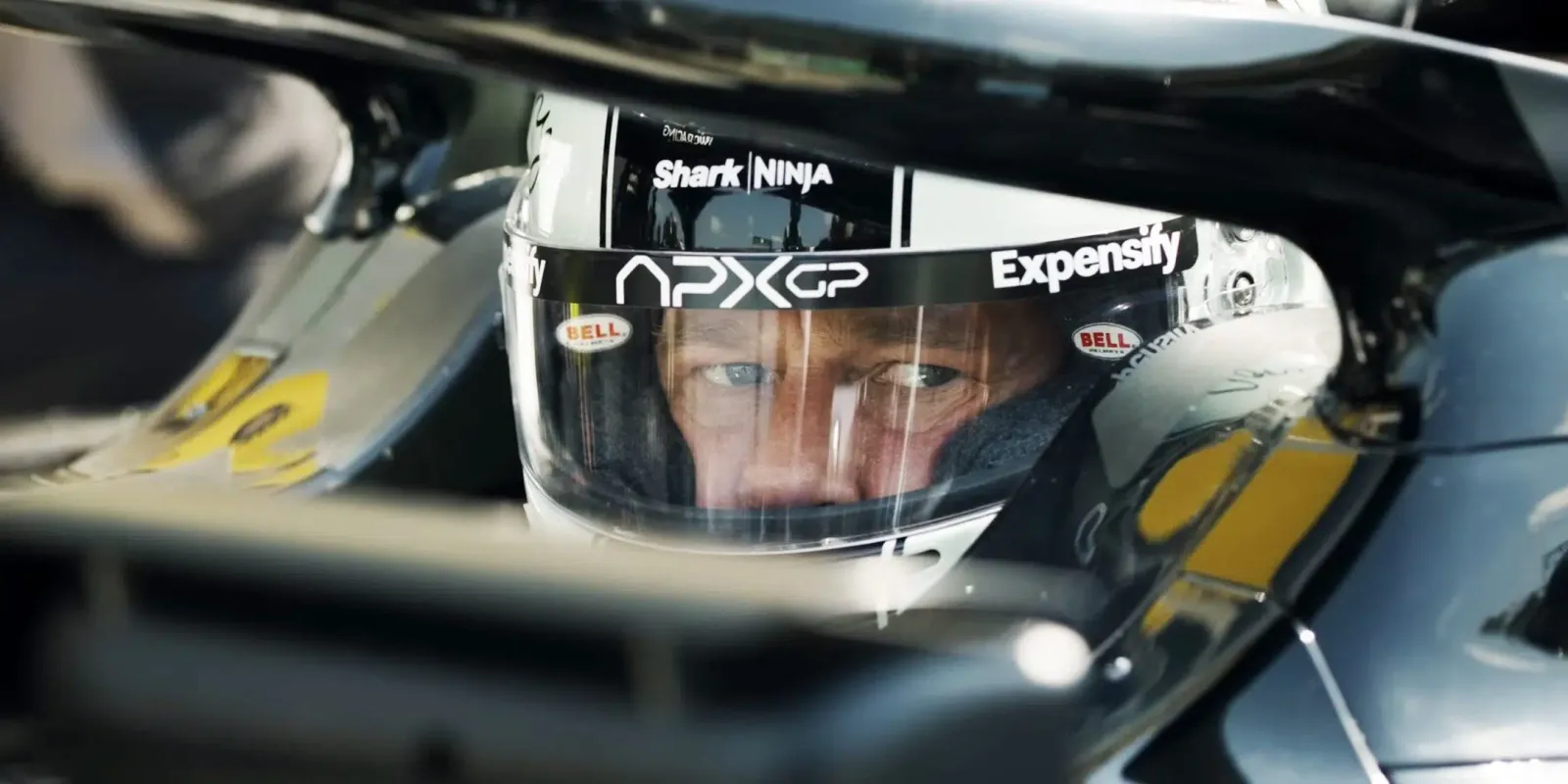
Pearce watches Hayes and recognises a map of what not to do. In that moment he truly begins to grow, imitating not the victories but the discipline behind them. Virtue is a habit, F1 translates the maxim into gasoline choreography. The season rolls forward. When Pearce finally mimics Hayes’s calm, braking early, ignoring jeers, the boy’s hubris molts. Real adulthood, the movie argues, is not freedom from rules but stewardship of them. He is not surrendering ambition; he is learning its cost, realising that true speed lives somewhere beyond applause. In that dawning humility the young driver passes a threshold more important than any chequered flag: he accepts that the father shaped wisdom he mocked was wisdom all along.
Most sports dramas conclude at the instant of triumph, freezing the hero in Olympian amber. F1: The Movie rejects that myth. It proposes adulthood as iterative software, forever updating. The wheel turns; the driver adapts or spirals. Viewers who carry unfinished parental conversations, or who realise that birthdays did not automatically grant them wisdom, will feel the film’s turbulent slipstream long after the credits.

Kosinski delivers a spectacle of chrome and nerve, but beneath the kinetic glare lies a sober dissertation on masculine inheritance, grief maintenance, and the slow geometry of character. One that asks older audiences where their growth curve currently slopes, and challenges younger viewers to hear counsel before the crash barrier does the talking. Hayes, Pearce, McKenna, and the unseen fathers and mothers are held together by a centrifuge of perpetual improvement. The moral glints between sparks on the brake discs: Coming of age is not a race. It is the lifelong discipline of keeping the engine warm, the mirrors clean, and the courage to pit when the tyres have nothing left.









Comments 0
No comments yet.