Oedipal Echoes and the Unfathered Son: The Weeknd and the Broken Mirror of Masculinity
General Reviews
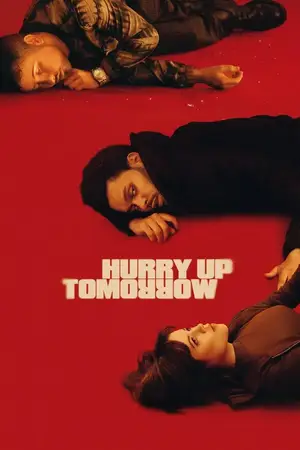
Cinema, at its most deranged, lets us witness someone else’s dream without waking, lets us trace the contours of a psyche not our own. Hurry Up Tomorrow is one of those rare films that feels less authored than exorcised: the screen becomes a confession booth, the audience complicit voyeurs. What we watch is not mere fiction, nor simple biography, but something closer to psychic autopsy, pop stardom ritually vivisected, masculinity stripped and made grotesque.
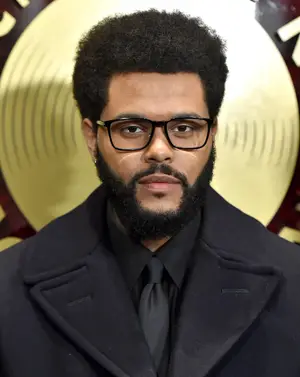
Abel Tesfaye (The Weeknd) is not playing a role so much as summoning one. He channels a man obsessed with self-ascension, a false god both adored and abhorred, wielding charisma like a broken blade. His performance is not acting but invocation; every humiliation, every vacancy, is burned into his movements. Here is the myth of the flawed idol, a worshipped figure who despises his own reflection, caught eternally between godhood and ruin.
But the family architecture, for once, is not defined by maternal absence, but by the spectral void left by a father who was never really there. The Weeknd, raised by his mother and grandmother, is an unsonned man, his masculine self sculpted out of lack. There’s no mother wound here; it’s the father-wound, Jungian shadow work with a missing patriarch. Every woman he loves becomes a reflection not of maternal abandonment, but of the hollowness left by his father’s absence, of what he’s reaching for and can never claim.

In Hurry Up Tomorrow, Jenna Ortega’s character stings not because she’s the goddess-mother archetype, but because she’s forced to carry the mythic charge of every absence and every failed inheritance. She is wound, mirror, accuser, and scapegoat. When Tesfaye’s character lashes out, falls short, or succumbs to his shadow, he becomes both Oedipus and Narcissus, longing for a wholeness he cannot describe, recreating the same violence of absence that birthed him. His sins against her are sins against himself; each cruelty, a confession of lack, an act of unfiliation, a desperate prayer to be made whole by someone who cannot give what was never given.
The film thrums with that ancient ache: the son who cannot become a man except by failing, who searches for initiation rites in all the wrong places; sex, music, adoration, confession. The Weeknd’s character isn’t just failing as a lover or a man, he’s failing at the primal duty of not becoming the source of his own trauma, the anti-father who infects every subsequent relationship with original sin.
What the film gets right, what makes it unsettling and oddly necessary, is its refusal to offer simple blame or redemption. This isn’t therapy, it’s confession. Shadow work means touching the wound, not just naming it. And in Hurry Up Tomorrow, every wound is a family portrait, blurred by neon and regret. The visuals slash through with narcotic beauty: concert spectacles, nightmares, the color palette of lost time. The music carries you through, but it’s the empathy, gutted, unvarnished, that lingers. For anyone haunted by the ghosts of unbuilt manhood, Hurry Up Tomorrow is a hymn, a warning, and a baptism by neon fire.




Comments 3