Carol: A Story of Love and Triumph
General Reviews
From Acapulco, Gro, Mexico, to the entire world:
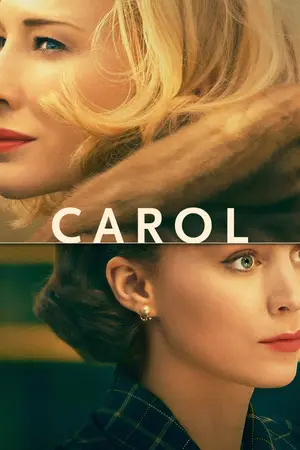
Film: Carol | Genre: Romance/Drama | Year: 2015 | Director: Todd Haynes | Country: USA | Duration: 118 minutes

Carol introduces us to two women at pivotal crossroads in their lives. Carol Aird, a wealthy woman on the brink of divorce, is trapped in a loveless marriage, with her daughter as her only source of light but no true happiness. Therese Belivet, a young department store clerk with dreams of becoming a professional photographer, feels stuck, unable to take the leap in her career or relationships. Their chance encounter sparks a subtle game of seduction, woven with unspoken words and glances that convey the unspeakable, until love blossoms into a passionate yet challenging romance, constrained by the repressive norms of the 1950s. The brilliance of Carol lies in its ability to transcend mere sensationalism (sexual scenes).

It is also a story of personal triumph. Therese, inspired by her admiration for Carol and the pain of not being able to be fully with her, finds the strength to step out of her comfort zone. Subconsciously, she aspires to match Carol’s stature—not in a material sense, but emotionally and professionally—pushing herself to pursue her dreams as a photographer. This nuance transforms Carol into a film that not only celebrates love but also the growth that comes from loving oneself through another.
A Poetic Ending That Speaks Without Words
SPOILER: The ending of Carol is a moment of pure cinematic poetry. Without the need for dialogue, a single glance between Carol and Therese bursts with unspoken understanding. It’s a silent response, laden with hope and certainty, that you only grasp if you’ve connected with the profound bond that unites them. It’s a sublime ending that leaves your heart racing. True love doesn’t need to be shouted; it only requires souls that recognize each other in a glance.

Carol and the Evolution of Cinema
Carol is more than a film; it’s a time machine that transports us to the 1950s while also serving as a mirror of the present, reflecting how cinema evolves to give voice to stories once silenced. As a society, we’ve reached a point of fighting for the freedom to love, yet the battle against prejudice persists.
Through the love that binds Carol and Therese, cinema reinvents itself, breaks barriers, and starts anew, weaving a tapestry where each era leaves its mark. Discussing lesbian love today is a triumph, but Carol reminds us not to forget the cost of that journey.

Conclusion: A Love That Illuminates the Soul
Carol is a dream woven with threads of desire, courage, and triumph. It’s my comfort film because it makes me dream of a love that defies time, and aspirational because it shows that authentic love pushes us to become better. With stellar performances, a delicate narrative, and impeccable direction, this film is a cornerstone of romantic cinema, proving that love between women is as natural, profound, and universal as any other. It’s a work that isn’t just watched but felt—a visual poem that illuminates the soul. As Alejandro Sanz sings: “If you look at me, I’ll teach you to say ‘I love you’ without speaking,” capturing the magic of expressing love through a glance. This reminds us that, in the silence of a look, love can say everything.
Read me again while playing this song that reminds me of true love—enjoy it until dawn!
[If you enjoyed it, I made you think, sparked a conversation, or want me to keep writing, give me a like, hit the light, and let me know what you think!]
By: Alma Raquel Alonso Lucena
Engineer, Podcaster, and Film Lover
Instagram: Almiux_Alonso
Instagram Podcast: expresandocomunidad
Follow me on YouTube: Expresando Comunidad | Click here:
♀️🔗https://youtube.com/@expresandocomunidad-aral?si=UBTbzsmhn-fZi4mN




Comments 2