Bridget Jones at 50: A Life Worth Stealing?
General Reviews

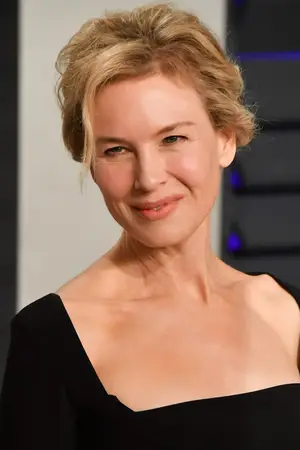
There’s no millennial girl who hasn’t seen Bridget Jones’s Diary (2001), but not everyone has followed up with the sequels. At least, I didn’t. Now it’s 2025, and when Bridget Jones: Mad About the Boy came out, I suddenly realized there was a second and third movie that I had completely missed. Where was I all these years? Busy with life, I guess. But jumping straight from the first movie to the fourth? That was a shock. Because in my mind, Bridget was still the slightly chubby, thirty-something woman struggling through the awkwardness of adulthood. And now? She’s still beautiful, sure, still full of life, but I found myself wondering—did the actress (Renée Zellweger) wear aging makeup for this? Is she really supposed to be this old now?
And then it hits me: she’s my mom’s age.
Watching Bridget Jone: Mad About the Boy, I kept thinking about my mother. Our relationship has always been tense, and it has only started to ease in the past two years. The catalyst is her menopause. She retired two years ago, closing the chapter on a three-decade-long career as an accountant— a job she stuck with not out of passion for numbers and financial reports, but because it was familiar, stable, and paid well (which I’ve always known).
So, my dad and I thought she’d finally enjoy the freedom to travel, relax, and embrace life. Instead, her health and mental state took a nosedive. First, it was knee pain—she constantly felt like she was on the verge of falling. Then came insomnia, night sweats, and a deep exhaustion she couldn’t shake. Now, it’s chronic throat discomfort; she describes it as having something stuck in her throat, making it hard to swallow, sometimes even breathe. She has seen countless doctors and has tried all medicine including traditional Chinese herbs—yet every test comes back normal. The final diagnosis is the symptoms are caused by hormonal changes and mental stress.
I suggested therapy, even medication, knowing that mental distress can manifest in physical symptoms. But she refused. In my society, mental health is still a taboo subject—especially for older generations, who see seeking help as a sign of weakness. My mother insists she just has to endure menopause and eventually, it’ll pass. But how long will that take? No one knows.
My mother is in her early fifties—Bridget Jones’ age. And yet, their lives couldn’t be more different.

In Bridget Jones 4, Mark Darcy (Colin Firth) is gone. He died in a humanitarian mission abroad, leaving Bridget to raise their two kids alone. Her life is a chaotic whirlwind of parenting, juggling a return to work as a TV producer, and fighting off loneliness. Then comes Roxster (Leo Woodall), a 29-year-old park ranger. They have a fleeting romance that ultimately fails because, well, he’s still just a boy. Then enters Mr. Walliker (Chiwetel Ejiofor), a schoolteacher, someone stable and reliable—her real match. Through it all, she has her usual band of misfit friends and, of course, the ever-charming Daniel Cleaver (Hugh Grant), now rebranded as her best platonic companion.
Is this what life at 50 is supposed to look like? It doesn’t seem all that different from being 30. Sure, it’s a movie, a work of idealized and romanticized fiction. But there’s a lesson in it.
I look at my mom’s life. She never built a solid support system outside of her work and family. For over 30 years, her identity was tied to her job, to financial stability, to providing for us. She has been the backbone of our home—in many ways, we have our condo because of her. But beyond that? No personal hobbies nor deep friendships outside of work. The moment she retired, she fell into a void.
Bridget, on the other hand, built a safety net—friends, career, personal resilience. Yes, her life is messy, but it’s full. She has a job she enjoys, a social circle that, while chaotic, keeps her engaged. She doesn’t tie her self-worth to any one role—not just as a mother, a widow, or an employee. That's why she keeps moving forward.

So what does it take to live like Bridget Jones at 50? A solid support system. One that includes:
Good Physical and Mental Health –BJ’s approach to weight loss is truly unique among all chick flick heroines. She’s always wanted to shed a few pounds, but she’s never sacrificed her well-being for it. She doesn’t starve herself, punish her body, or obsess over an unattainable ideal. At the end of the day, she loves herself as she is—flaws, curves, and all.
Friends – People who stick around, even through life’s messiest phases.
A Career or Passion – Something to wake up for, beyond just obligations.
As you can see, I didn’t include “family” here—I prefer A Meaningful Connection with Others instead. I know I’m unlikely to have children, largely because of my own experiences with family. But that doesn’t mean we should despair if we don’t build a traditional family or raise kids. It doesn't have to be a husband or children, but rather something—or someone—that brings warmth into our lives. My mother has me, but I don’t think I’ve ever truly been a supportive presence for her. Our relationship has always been difficult. What I mean is, we don’t need to have kids just to ensure there’s someone to look after us when we’re old. What matters is nurturing connections that make life feel full and meaningful—not because we expect anything in return, but simply because they enrich our existence. Because they make life worth living.
We might not all be able to replicate Bridget’s life, but the takeaway is clear: life at 50 isn’t meant to be a slow decline. It can still be just as vibrant, just as full of romance, career highs and lows, and self-discovery as it was at 30. The key difference is whether we’ve built the right foundation to sustain it.
We've spent years debating whether Mark Darcy or Daniel Cleaver is the better man, but the real role model has always been Bridget Jones herself. Her fifties made me rethink my mother's life—and my own future. If I want to live like her at 50, I'd better start planning now.







Comments 0
No comments yet.