Be My Valentine, Party Girl
General Reviews

Be My Valentine, Party Girl
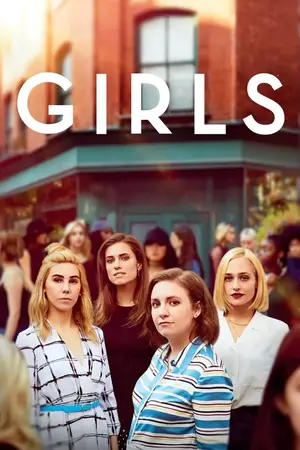
I first glimpsed her in an episode of Girls (Lena Dunham, 2012), when Hannah Horvath returns to her childhood bedroom. As Hannah lies on her bed, the camera catches a poster on the slanted ceiling above — a single image overlooking years of teenage dreams and uncertainties. Through Hannah’s perspective, I could just make out two words: “Parker Posey.” I hit pause, drawn to this talisman of a different kind of New York story. That moment launched me on a quest that felt appropriately meta — searching for a movie about a woman who would eventually find her calling in the art of search and classification systems. The movie was Party Girl (1995), and its protagonist Mary (Parker Posey) would become my topmost fictional crush.

If Carrie Bradshaw is the ultimate ‘90s New York fashion icon, then Mary is her cooler, more enigmatic downtown cousin. In the wonderland of house DJs and club kids that is her 1995 Manhattan, Mary moves through life in a carefully curated wardrobe of designer clothes. Her fashion sense is both precise and rebellious. We first meet her in a striking red dress, commanding the room with stacks of cash in hand, before she’s whisked away by the police for throwing an illegal party. As the story unfolds, we see her in an array of bolder looks: a red, doll-collared wool coat paired with blue silk gloves; a black fitted T-shirt with flared sleeves and white piping; and a white turtleneck sweater paired with leather pants. Mary challenges the notion of “fashion rules.” When Derrick (Anthony DeSando) rifles through her denim collection, she snaps, “Don’t mix those up! They’re in order!” — a moment that presages her future calling with delightful irony.
It is this same precision that makes her daily falafel order (“Can I have a falafel with hot sauce, a side order of baba ghanoush, and a seltzer, please?”) sound like poetry. It is when Mary sold her precious Gaultier jacket and when she breaks into the library at night to study the Dewey Decimal System that truly captivates me. It’s such a Mary moment — slightly illegal, totally dedicated, and somehow both ridiculous and admirable. She turns what could be a dry academic exercise into a kind of performance art, and that’s exactly what makes her irresistible. She celebrates by jumping on the book cart, spinning, sliding; dancing on the giant desk, turning the library into her personal nightclub.

She is a modern Sisyphus who makes pushing books up the mountain look like the most glamorous task in the world. She explains reference materials with unexpected sensuality. Somehow, it reminds me of Mukōda Kuniko’s novel The Woman Next Door, where a man recites train station names with such tenderness that it becomes an inadvertent serenade. The way she pronounces each step — “First place to look would be here. It’s updated yearly. I can also check the most recent amendments...” — carries the same hypnotic rhythm as “Ueno. Oku. Akabane...” It’s no surprise that this scene ends with Mary and Mustafa (Omar Townsend) making love among the stacks — her technical explanations were already a kind of foreplay.
Mary’s authenticity shines brightest in moments of awkward sincerity, like when she accompanies Rene (Donna Mitchell) to an AA meeting. In her delicate floral-striped suit and white V-neck knitwear, she looks every bit the supportive friend, but it’s her unfiltered reaction that makes me fall harder. While former alcoholics chain-smoke around her — trading one addiction for another — she coughs and squirms, finally escaping with a perfectly timed “I need a drink.” It’s exactly the wrong thing to say, and exactly the right Mary way to say it — her wit as sharp as her vintage Chanel cuts. She doesn’t pretend to be comfortable when she isn’t, doesn’t feign politeness when discomfort overwhelms her. Like her unchanging falafel order, she remains steadfastly herself, even in spaces where she doesn’t quite fit. It’s this commitment to her own truth, however awkward or inappropriate, that makes her so magnetically real.

Dating Mary would mean embracing the beautiful chaos of her contradictions. When she notices that the annoying guy who came to ask about Hannah Arendt had deliberately messed up the order of the books, she loses her temper. I love her bravery, stubbornness and irritability. Then in her apartment, she turns her kitchen into a dance studio, humming Middle Eastern tunes while attempting to bake. When the pound cake emerges as charcoal, her melodramatic despair about dying alone in the subway is as cute as Leo’s (Guillermo Diaz) practical suggestion to “just scrape it.” One moment she’s breaking into Leo’s shower, playfully fighting over body wash before declaring their kiss “incest”; the next, she’s meticulously organizing his thousands of vinyl records by the Dewey Decimal System. She brings the same intensity to both righteous anger and comic vulnerability.
She’s the girl who will always order the same thing but somehow make each day feel new. She’s the one who can’t bake a pound cake without nearly burning down her apartment but can catalog an entire vinyl collection perfectly. She might shelve her books with scientific precision, but she still dances while doing it. She’s constantly in motion between extremes: anarchic party girl and meticulous librarian, vintage fashion plate and dedicated scholar, quick-tempered defender of order and spontaneous instigator of chaos. In a world of dating app profiles that promise “adventure” and “fun,” Mary offers something rarer: true originality. So yes, this Valentine’s Day, I would swipe right on Mary, not because she fits neatly into any category of who I should be attracted to, but because she makes categories themselves seem delightfully irrelevant. In her world, the Dewey Decimal System can be sexy, a falafel order can be poetry, and love, like knowledge, transcends all classification systems.
References
[1] Aronstein, A. 2012. I’m So Anxious: The Complementary Themes of ‘Louie’ and ‘Girls’. [Online]. [Accessed 8 February 2025]. Available from: https://www.vulture.com/2012/12/play-nice-girls-and-boys-the-complimentary-themes-of-louie-and-girls.html
[2] Gracewood, G. 2023. Reading is Sexy: Party Girl’s filmmakers share production memories while reading Letterboxd reviews. [Online]. [Accessed 7 February 2025]. Available from: https://letterboxd.com/journal/party-girl-letterboxd-reviews-Daisy-von-Scherler-Mayer/
[3] Mukōda, K. 2021. The Woman Next Door. Translated by A.R. Monroe-Sheridan. Kumamoto: Kurodahan Press. Rife, K. 2023. Punk Rock and Party Girls: on shelves and screens this month. [Online]. [Accessed 7 February 2025]. Available from: https://letterboxd.com/journal/punk-rock-and-party-girls/
written by Bonnie
THE DISSIDENTS are a collective of cinephiles dedicated to articulate our perspectives on cinema through writing and other means. We believe that the assessments of films should be determined by individuals instead of academic institutions. We prioritize powerful statements over impartial viewpoints, and the responsibility to criticize over the right to praise. We do not acknowledge the hierarchy between appreciators and creators or between enthusiasts and insiders. We must define and defend our own cinema. |




Comments 5