The Great Grinch Showdown!
Recommendations
‘Tis the season, Peliplaters. This week, whether we like it or not, is Christmas. It's the time of the year for Mariah Carey, eggnog and the Grinch. I love the Grinch. He's an antihero. The challenge is choosing which adaptation to watch. There are three options. How to choose? Do you go for the cartoon classic, the live-action comedy or the new-age illumination? In order to decide which Grinch is best, I sat down and watched all three, back to back to back. What I discovered were generational differences. Let's start with the original adaptation.
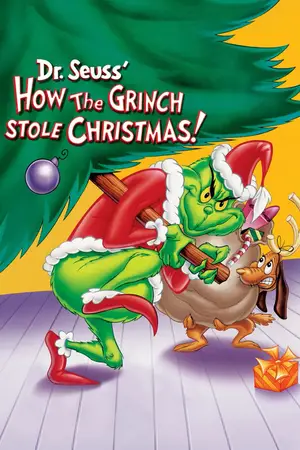
How the Grinch Stole Christmas! (1966)
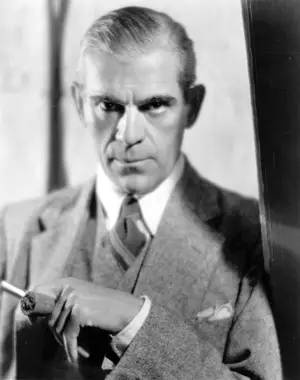
Boris Karloff narrates and voices the Grinch. You may recognize Karloff as cinema's most famous Frankenstein. I guess studio execs in the 60s thought all green monsters were the same. Karloff's baritone voice has aged like wine. Something in the crackle of the recording makes for perfect listening on Christmas night.
There's neither a cliché back story nor a real wrong that needs righting. The Whos are musical, and they love games and gadgets. The noises from the Whos' rhythmic instruments and wonky contraptions drive the Grinch so mad that he decides to steal all of their goods. It plays like the world's greatest noise complaint.
The Grinch has his faithful companion, Max. Overworked and underappreciated, Max wins our hearts and makes us smile when things go his way. He's the perfect, cheerful foil to this mean and grouchy Grinch. Although the Grinch is mean to Max, the dog also provides the Grinch with his greatest inspiration.

There's a lot of campy flair, in this adaptation. It has a built-in commercial break. It reuses the same shots multiple times, such as the Grinch slithering on the floor and the bags soaring out of the chimney. There's a nice double-exposure shot. After the credits roll, there's a unique MGM logo. The vivid, changing colours during the Grinch's revelation, representing the opening of this denizen's world view, are unforgettable. This is largely due to the animator and director, Chuck Jones, who is famous for his work with Looney Tunes.
Finally, one can't forget to mention this adaptation's length. Christmas is a hectic time and, by the time I sit down to watch something on Christmas night, I'm gouged on turkey and alcohol. Therefore, this jaunt to Whoville lasting only 26 minutes is perfect. It's unlikely that I'll fall asleep and it should, probably, hold everyone's attention.
Dr. Seuss' How the Grinch Stole Christmas (2000)
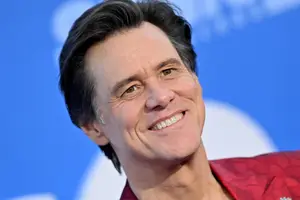
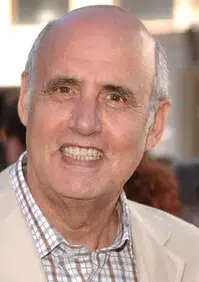
Has anyone else noticed how this movie went from being an annoying spinoff to a Christmas classic? Our shorter attention spans must have made us more welcoming to Jim Carrey's outrageous, fast-paced humour. Many think this version is the best. It certainly has skill attached to it, akin to the 1966 version. Ron Howard directs and it co-stars Molly Shannon and Jeffrey Tambor.
The Whos in this version are more annoying than in the original. They lose their music and, instead, the rhythm of Whoville is created through cashing registers and money exchanges. It's a Whoville that has lost the meaning of Christmas. This is personified in the lost and disillusioned Cindy Lou Who, who, in this version, is much older than two. Although older than the original, Taylor Momsen's Cindy Lou is stylistically iconic, especially her cup-half-filled-of-eggnog hat.

This movie tells us how the Grinch became so mean. They attribute his foul disposition to a childhood embarrassment, for he loves the sensational Martha May Whovier but his own misjudgment allows his bullies, like Augustus May Who, to get under his skin. This embarrassment sends the Grinch up Mt. Crumpit where he has lived in perpetuity.
This version's best character addition is Martha May. The perfect Who (at least according to Betty Lou Who), Martha uses a gatling gun to put up her Christmas lights. She's in love with the Grinch and her character provides a great deal of comedy, whether that's losing her focus during an interview or quietly dolling herself up when she hears the Grinch is coming to town. Admittedly, considering the family-friendly nature of Dr. Seuss, it's a bit odd to see the Grinch sexualized. For him to even have a sex drive brings up a lot of questions.
Max is back, and treated as badly as ever. However, this Max has a stronger moral code than the cartoon's dog. This Max knows how to handle the Grinch when he's being extra mean. Like when Grinchy can't decide whether to go to the Whobilation or not, Max pulls the lever and sends the Grinch to the festivities. This leads us to the Cheermeister sequence, which is not in the original, but is full of wild Carrey antics and strange Who traditions.
This movie is more of a comedy than a musical. The Grinch's sleep sedative is a hammer. His GOATed daily schedule includes time to wallow in self pity, stare into the abyss and jazzercise. The Grinch trying to scare Cindy Lou is a meme for when people tell you not to rile up the dog. The aforementioned Whobilation is hilarious. The songs, like “Where Are You, Christmas?" and Carrey's rendition of “You're A Mean One, Mr. Grinch” are some of the weakest in the franchise.
This version is a bit exhausting. There's a scene where the Grinch turns on multiple blenders full of screws and bolts. There's also a long closeup of the Grinch having multiple puddings shoved down his throat. It's all a little excessive and there does come times where I get tired of the hair-brained antics. However, at the end of the day, this movie is still a lot of fun.
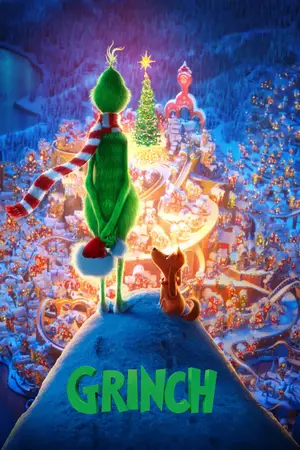
Dr. Seuss' The Grinch (2018)
Before I watched, I knew very little, other than that Tyler, the Creator was involved with the soundtrack. It turns out, this is the highest grossing Christmas movie of all time! I guess I'm late to the party.
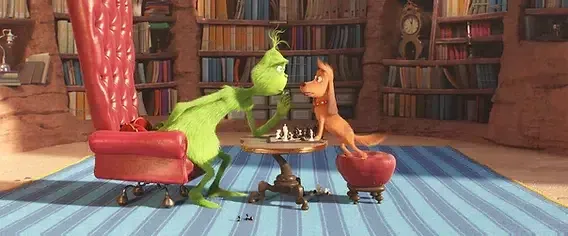
Illumination, the studio behind the Minions, produced. Compared with the 1966 version, this animation is more fluid and bright. Pharrell provides the narration. His silky voice does a great job, but it's not better than Karloff's. However, I'll say he's better than Anthony Hopkins who narrates the 2000 version. Hannibal Lecter? At Christmas time? Whose idea was that? This movie also has much clearer influences, like West Side Story and The Nightmare Before Christmas.
These Whos don't have whacked-out instruments like in 1966 and they don't ostracize the Grinch like they do in 2000. Instead, they are friendly, calmer and welcoming, but they still love their contraptions and cheer. Kenan Thompson voices a new Who, Bricklebaum, who is friends with the Grinch, much to the Grinch's chagrin. He neither has a moral obligation to love Grinch nor does he have the childlike naivete to not know any better. Bricklebaum simply likes the Grinch for who he is, and I appreciated this sentiment.
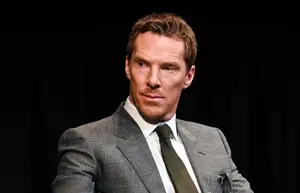
The consumerism that was dreamed of in 1966 and loathed in 2000 finally wins out in 2018. The Grinch lives in a pretty swanky place. Whereas Karloff's Grinch had a barebones lair and Carrey's was an industrial mess, Benedict Cumberbatch's Grinch has a homey abode. This Grinch must be doing quite well for himself. In fact, all the Whos live in gorgeous homes. Their Christmas lights are vibrant and plentiful. Everyone has excess of what they need. Even the Grinch's sled, which was a wooden slab in 1966 and an oil-fueled monstrosity in 2000, is gold trimmed in 2018.
Compared with the vile 1966 version and the outlandish 2000 version, this Grinch is a much more chill guy. He walks amongst the Whos without scaring them. He has classy, Scottish-inspired style. For the most part, he minds his own business. This Grinch is more depressed than mean. Since no one cared for him when he was growing up and nobody bought him presents, he hates Christmas and lives in seclusion. Although he says he's mean, his actions do not often match his words. He shows a great deal of sympathy to a reindeer that he befriends. This makes the Grinch more palatable, but it also lessens his character arc. The point of the Grinch story is to see his heart grow three sizes. If his heart is always big, then growth is less needed.
Max is here, of course, but the Grinch is much nicer to him. In the 2000 movie, the Grinch comes up with his devious plan to steal Christmas after he throws Max into a snow bank. When he retrieves the dog, the snow on Max's face conjures the idea that Grinch should pose as Santa Clause. And, in 1966, the Grinch, in a vile mood, backs Max up until the snow engulfs the poor dog; when Max emerges, his snow beard inspires the Grinch. Not in this version! The Grinch comes up with his big idea all on his own. This allows the story to continue while diminishing the movie's animal cruelty, but Max loses some of his influence because he does not inspire the movie's inciting incident.
In conclusion, which Grinch you watch this Christmas will be up to your personal taste. If you want something that is short, tells the essential story and has a certain level of nostalgia, than I suggest the 1966 version. If you want something more feature length with lots of comedy (sometimes too much comedy; it can get annoying) and some top talent, then watch the 2000 version. And, if you want a Grinch that is nicer and more vibrant, then watch the 2018 version.
And, if you're sick of all three of these movies, there's always the book.








Comments 2