The modern fear of giving movies an ending
Narrative

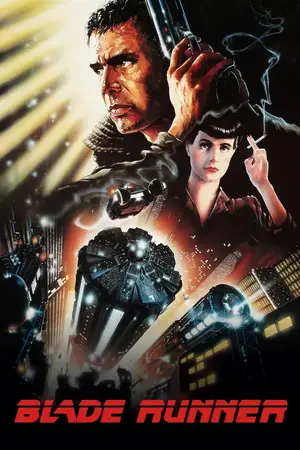
Since I started watching movies—back in the mid-nineties, when everything seemed happier, little birds sang and I attentively listened to cricket sounds during summer mornings—I always had the idea that the most important element of a film was its ending. For example, when I watched Jurassic Park for the first time and felt that, with just a few glances at the protagonists' faces, I understood everything and words weren't necessary to describe a feeling or thought. Or take the ending of Blade Runner, where Rick Deckard hears the mysterious Gaff's iconic line in a flashback: "It's too bad she won't live. But then again, who does?" Several years later, when I was just starting to ask myself existential questions, this quote made me understand that human beings aren't exceptional at all.
What's the best way to end a movie? In my opinion, there's no definite formula and more so because I think cinema should be reinvented constantly. Nonetheless, I can affirm that this is intrinsically related to the message and feelings the director wants to convey to the audience—whether it's through an open ending that invites new possibilities into the narrative or a closed ending in which everything fits perfectly. In addition, one of the most important aspects is understanding when it's necessary to bring things to a close. A pretty recurrent pattern in modern movies—or, at least, that I've noticed—is the fact that many directors seem to be scared of giving their works an ending, as if they had an inner voice telling them: “We have so much more to tell.”

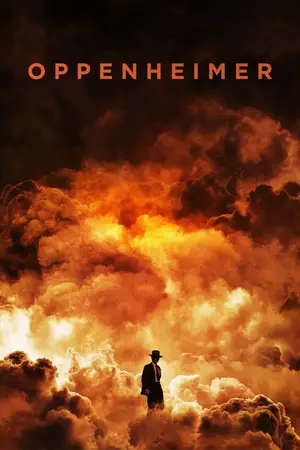
Oppenheimer's ending was the one that resonated with me the most this past time. Even though I don't consider the movie one of my favorites, I do recognize the effective power of its final images: Cillian Murphy's character, destroyed by what he has caused, reveals to Einstein that, according to him, there's an unstoppable chain reaction that will change the course of history forever. Robert imagines a future that's already here in our time—a world burning because of his creation for over 70 years. But what if Nolan had chosen to end the movie at the conference, where the protagonist is applauded by everyone and his creation's consequences are visible in the drawn faces of those that naively believe in their victory, mixing euphoria with horror? I think the story would have been different and, even though they would have had to remove the whole black and white segment with Lewis Strauss, it could have been equally powerful.

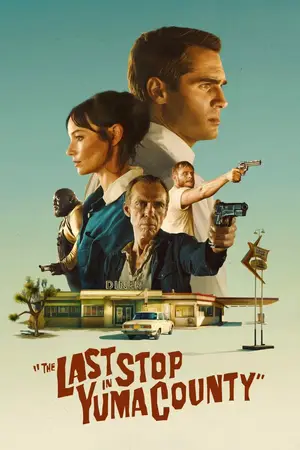
Yes, this article is titled "The modern fear of giving movies an ending," but it could also be named "A guide on how NOT to end a movie," though it may come across too cocky. If you thoroughly think about it, do you remember the last ending that left you actually petrified, immobile and in total agony, wondering and trying to decipher everything you had just seen, all while feeling caught in a weird yet gratifying confusion? Two out of my three favorite movies of the year have shocking endings that left me thinking for days. Firstly, in Heretic, not everything we see is real, and the film intertwines the concept of faith with a metaphysical dimension that petrified me in my seat for several minutes. Secondly, in The Last Stop in Yuma County, situations one weirder than the other precede the ending, which made me believe for a second that, many times, life itself doesn't make sense.

Regarding endings in mainstream cinema, I would say that Denis Villeneuve has managed to replace Nolan as the master of "closing" a story, partly thanks to his tonal understanding. Oppenheimer is the story of a man who was gifted with gods' fire. Nonetheless, the story also has so many subplots—and a protagonist whose moral development is, in my opinion, too grey. So, by the time Nolan decides to present Goransson's epic soundtrack at the end with a vision of a chaotic future, everything feels diffused and it's unclear what the director actually wanted to tell us.
In Dune: Part Two, Villeneuve's last work, the protagonist's journey is shaped by social and political struggles, framed as a type of character study that makes him much more… attractive, so to speak. By the time we witness the final scene, the emotion is genuine and Paul Atreides' decision feels like a dagger in our chests —raw and real. Could Denis have ended his epic science-fiction work in one of the preceding scenes? No, all roads lead to this moment. Why, then, did he feel the need to tell J. Robert Oppenheimer's whole story, almost up to his final days? If we resort to the most logical explanation, both cases are adaptations in which the directors strongly held onto the source material. Nonetheless, by now, Nolan is Hollywood's most powerful filmmaker so he could have done as he pleased but, even so, with every new release, he prefers to be gradually pretentious.
Posted on DECEMBER 17, 2024, 01:53 AM | UTC-GMT -3
If you liked this article remember to give it a 👉 LIKE, put it in your FAVORITES, COMMENT 🗣️ , and FOLLOW ME for more movie and series content 📽





Comments 1