Coexisting with Heresy: Typological Axes of Folk Horror
General Reviews

Coexisting with Heresy: Typological Axes of Folk Horror
In the consistently straightforward tone typical of the genre, the two veterans, Jay and Gal (who have found new work) traverse the narrow Gothic waterways of 1970s alternative British cinema style and enter a natural wilderness. Their conversation takes a bizarre turn towards their third assassination target — a Member of Parliament with a heretical leader-like presence — while the film’s auditory layer remains eerie, filled with natural sound effects and low-frequency ambient noise. Suddenly and unexpectedly, the film depicts an outlandish heretical sacrificial ritual, causing a rift between the two once again…
Even if this section could mark a tonal shift in the film, it’s likely that in Kill List, perhaps as the two protagonists drive through the industrial landscapes of the standard northern English style after completing their second mission, displaying signs of some military after-effects, or even as early as when they visit the organization’s client to receive their assignment, viewers can easily sense that each part of the film gradually aligns itself with a replication of the 1970s-80s British folk horror genre. And, of course, the scene I described at the start signals an irrevocable blood pact/curse-like trajectory (just like the POV shots in The Wicker Man (1973) — even understandable as a demystification of the subject, supplemented by natural phenomena captured through camera work; a sense transmitted from its vintage staging). Given that the film was released in 2011, a year when the social realities under the Conservative government became evident, one might wonder if the creators aimed to reflect a certain social realism of the 1970s. We may never know. If nostalgia and delusional storytelling are a consistent style of the genre-horror films jointly created by Ben Wheatley and his wife Amy Jump, then the understated realism segments that continuously maintain a sense of the unknown are what set Kill List apart from their other films — the degree of tonal distortion here seems more tied to an obsession with 70s cinema (including the political similarities of the time). It is so much so that within this narrative structure, devoid of any intertextuality or complexity, in this mode rooted in replication rather than originality, the illusory, delusional moments abstracted from Kill List’s amalgamation of retro genres can only be explained as surrealism, even though the archetype is realism — the realism of marginal delusionists, or the reality of most British conservative political ethics. In their 2013 folk horror film, A Field in England, with a setting selection similar to Kill List, even as it adheres to a much simpler genre logic within its homage to the old days, viewers can easily trace the sources of its elements and image relations within that surface-level simplicity.
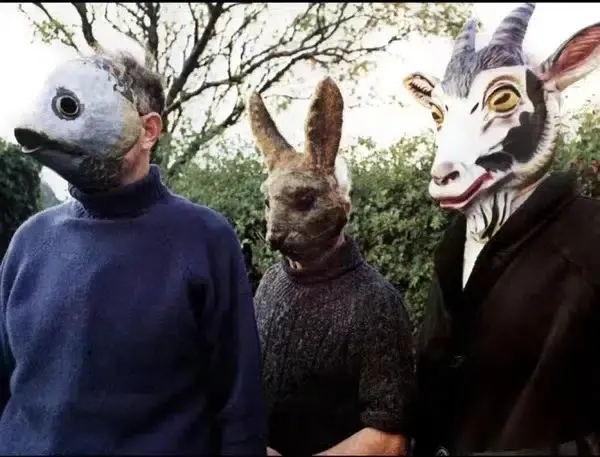
What remains consistent throughout, regardless of whether elements are added for metaphorical purposes or as a supplement to realism, is that the film’s logic consistently encapsulates genre elements without adding any pre-established setups or traces of them being removed (when Fiona mentions a management style of a company during the first dinner of the four, how could such a clever reference provide any concrete direction for subsequent developments? Similarly, Shel and the child’s conversation about "the cat hunting the rabbit" maintains an ambiguous correlation later on). Thus, it maintains a hazy yet seamless viewing experience from start to finish. Even within a framework of "nostalgic mode," it remains entirely logical, or rather, it integrates all the old things — the logic of delusionists. Initially, viewers might attribute this logic to superficial cliché, but the creator's nostalgic intent only gradually reveals itself through the understated progression. Borrowing from Jameson’s definition, the postmodern origin of "nostalgic mode" lies in the fact that, within an inherent cultural system — one that includes creators, folk foundations, and institutions — innovation has become impossible. Therefore, the only recourse is to seek a new framework where old elements are used for structural responses. Imagination has taken control. Regardless of how the axes of genre cross within this mode, whether the "old" elements refer to history or cinematic history, the genre films of the 70s and 80s that transcend or attempt to transcend reality have always affirmed this mode, while filmmakers attempting such genre explorations in the new century have become increasingly rare.
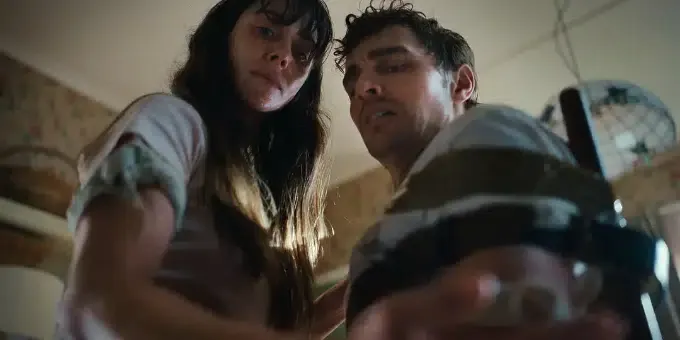
This smooth viewing experience on the surface may stem from, or be understood as, its abandonment of most previously given spaces in the flow of genre logic. Kill List opens with a classic domestic drama: a marital argument is interrupted by the arrival of two old friends, with no prior setup and no further surface-level fill-ins afterward. It isn’t until Jay’s extreme PTSD outburst at the dinner table that the genre elements begin to be slowly introduced. The visual space constantly shifts, refusing any structural or symbolic repetition. Even when Shel realizes the danger in the final sequence, the family’s setting changes from home to a wild villa of which its full extent remains unseen. Simultaneously, in this understated progression, the film's auditory space gradually links into a circular pattern: the recurring hums, low-frequency ambient noise, the folk guitar hymn that irritates Jay in the restaurant, the "pagan ritual" sound effects… Every sound seems to have the potential to echo another, or the whole, yet remains ambiguous. Key auditory elements of genre films, like gunfire, fight sounds, and the children's screams on the videotape, are flattened out. Its "nostalgic mode" is, of course, vastly different from The Shining. The Shining is a psychoanalytic text because it seeks to depict a patriarchal spatial structure through complexity, treating each genre-based "haunting" within the enclosed space as an emergence of visual order (which actually occurs in the projection of the conservative delusionist). Thus, instead of the first part of Kill List building and ultimately dismantling a family structure, it can be seen as adding a realist reference to this folk horror genre’s axis, one that maintains a mysterious quality without needing interpretation.
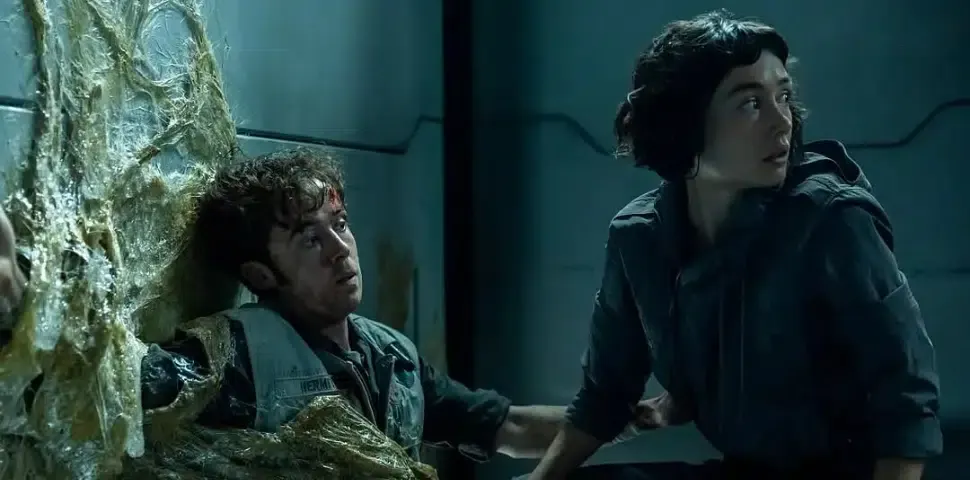
The logic comparable to the shift I mentioned at the beginning occurs intensely in almost every shot change throughout the remainder of the film, and only here did I realize that all character relationships continuously deviate or even defy common sense. Jay ignores Gal's warning and directly shoots the "religious priest," swiftly bringing about bad consequences: all the straw-faced cultists, accompanied by sharp screams, approach them in an inhuman manner, forcing them to escape into a more complex and darker Gothic underground tunnel. By this point, the audience realizes that the MP’s "followers" in this scene are assigned the concept of Romero-style replicants. Alongside its equally faithful staging, another genre element is absorbed into this bizarre flow. Gal, unfortunately, is attacked and about to bleed to death, leading Jay to mercifully shoot him to end his suffering. However, the indifferent shot-switching and staging continue, right until the film’s final minutes, where the most disturbing scene occurs: Jay, unknowingly, stabs Shel and his child to death, only to be crowned king by a group of torch-bearing "cultists," with the same symbol Fiona drew on his photo reappearing. It's nearly impossible to find a recent folk horror film with a similar logical structure — this one primarily concerns local replication. But in terms of the relationship between genre elements and narrative linearity, Josephine Decker’s 2013 film Butter on the Latch seems comparable: its narrative shifts from recognizable linearity toward surrealism, with folk mysticism playing a major disruptive role in its auditory experience. However, Decker’s debut feature leans more towards exploring experimental narrative structures and surface-level visual ambiguity. Similarly, 2007’s Puffball — a work that might be considered relatively convoluted and less textually intriguing in Nicolas Roeg’s oeuvre — attempts a weak genre exploration, though it remains overly fixated on symbolism.
In short, this film employs a genre encapsulation governed by delusionists' local intentions, replacing identity relationships with imperceptible flows and guiding it through delusional elements. The former concerns shot transitions and visual continuity, while the latter partly relates to the overall construction of the film’s auditory space. The visual style centered around the latter unfolds around the former’s natural behavioral patterns. Hence, the viewing experience of this genre film always grows more abstract/surreal (as is the inevitable outcome for delusionists), while simultaneously retaining a logical flow. While difficult to claim any surface similarity, I believe it’s slightly worthy of comparison to Atom Egoyan’s genre films from the 2010s — more specifically, the logic of their genre construction. For instance, in Devil’s Knot (2013), metal symbols and an obsession with the occult constitute a reproduction of the 90s, while the narrative logic is driven by these latent elements hidden in character behaviors, rather than any recognizable legal argument. In The Captive (2014), a multi-line timeline surrounding a "number" spirals out of control as it unfolds… Suffice it to say, Egoyan’s genre films emerged from his 90s creations, which were rooted in nostalgic and repetitive reproductions. Even though Kill List falls far short of perfection, its latter half’s multiple repetitions still allow you to glimpse the possibility of folk horror being reproduced, re-reproduced, and distanced (or nostalgic mode), and a new mechanism through which genre film engages with cultural systems and responds to the world — or perhaps simply a process.


wirtten by C89
THE DISSIDENTS are a collective of cinephiles dedicated to articulate our perspectives on cinema through writing and other means. We believe that the assessments of films should be determined by individuals instead of academic institutions. We prioritize powerful statements over impartial viewpoints, and the responsibility to criticize over the right to praise. We do not acknowledge the hierarchy between appreciators and creators or between enthusiasts and insiders. We must define and defend our own cinema. |


Comments 1