"Logan": A Bloodstained Farewell
General Reviews

Is "Logan" (2017) worth watching? It's a must-see. While Wolverine's ferocity and action-packed battles have always been his signature, and the film certainly delivers on the blood-soaked R-rated thrills that fans crave, the heart of this movie lies beyond the fight scenes. The action is merely a catalyst for the film's deeper themes.

17 Years of Bloodshed, One Final Goodbye
I first encountered Wolverine in 1999, an era dominated by icons like Superman, Batman, and Captain America. Superhero movies were still rare, far from the cultural juggernaut they would become. Many moviegoers didn't even realize that "Blade" (1998) was Marvel Studios' first cinematic venture back then.
Hugh Jackman, who had been relatively unknown before, skyrocketed to fame with the success of "X-Men," which effectively kickstarted the superhero movie boom. Though "X-Men" was an ensemble film, Jackman stood out mainly due to the actor's and his character's magnetic appeal.
Hollywood's big franchise films often create such indelible impressions of their characters that it can be challenging for audiences to see the actors in any other light. Think of Mark Hamill as Luke in Star Wars, who struggled to break out of that role, or Elijah Wood as Frodo in "The Lord of the Rings" (2001), and Linda Hamilton as Sarah Connor in "The Terminator" (1984).
But there are exceptions. Take Harrison Ford in "Star Wars" or Arnold Schwarzenegger in "The Terminator. " These actors have transcended their iconic roles, largely thanks to their star power, allowing audiences to follow them from one project to the next. Mention Harrison Ford and a slew of characters come to mind—Han Solo, Indiana Jones, Jack Ryan in "Clear and Present Danger" (1994), and Dr. Richard Kimble in "The Fugitive" (1993), to name a few.
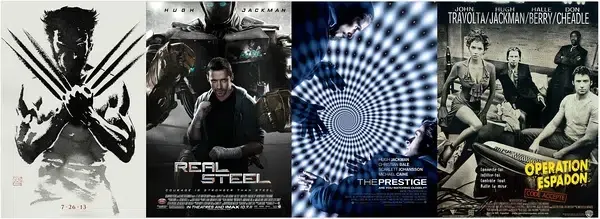
Similarly, Robert Downey Jr. is known not just as Iron Man but also as Sherlock Holmes and Charlie Chaplin; Matt Damon is remembered not only as Jason Bourne but also for his roles in "Saving Private Ryan" (1998) and "Good Will Hunting" (1997). These are the marks of a great actor—someone who captivates us in any role they take on, leaving us with lasting memories of both the character and the performer. Hugh Jackman is unquestionably in this category.
Though the "X-Men" series has occupied a significant portion of his career, Jackman hasn't relied solely on Wolverine to define his legacy. Films like "Swordfish" (2001), "The Prestige" (2006), and "Real Steel" (2011) showcase his versatility and talent, proving that he's much more than a one-character wonder. But with "Logan," " Jackman's most famous and beloved role—Wolverine—has ended.
Old Heroes, No Country
The lasting impression Hugh Jackman's Wolverine leaves on audiences is not merely due to his exceptional portrayal of the character over 17 years but also because of the way he bids farewell to this iconic role. "Logan" is heartbreaking, not just because it marks Wolverine's final stand or the tragic death of a hero, but because it painfully illustrates the bleak existence of both Wolverine and Professor X in their twilight years.
Superheroes are often defined by their battles and role in saving the world. We've seen heroes endure cruel fates—dying to save the planet, perishing alongside their foes, or turning against old allies in darkness. Even in Frank Miller's somber "Batman: The Dark Knight Returns," an aging Batman fights on, scarred but dignified. Similarly, in "X-Men: The Last Stand" (2006) and "X-Men: Days of Future Past" (2014), no matter how dark the future, the characters meet their ends as heroes, retaining a sense of divine purpose.
But in "Logan," the "divinity" is gone. The characters, once revered, now live like stray dogs, subjected to the cruelties of a world that has forgotten them. Their former superpowers have become burdens, hastening their demise rather than saving them.
This film evokes the sentiment of "No Country for Old Men" (2007), where the inevitability of aging is lamented—a fate that cannot be reversed. "Life is an accident; death is random." No one is born a superhero; the mutation of mutant genes is an accident. And no matter how powerful a hero might be, they are still subject to a higher rule—fate.

Wolverine, aged slowly and lived for two centuries, now shows his years. The Adamantium that once made him invincible is now poisoning him, much like cancer. Professor X, once wielding the world's most powerful mind, is still a mortal man, succumbing to brain degeneration and dementia in his 90s. The film even suggests that Professor X killed several mutants and X-Men during his first episode.
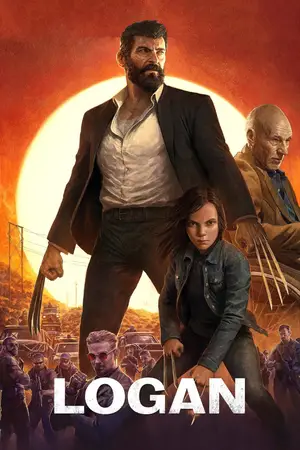
A drunken cancer patient, an older man with dementia, and a boy with albinism—this is the reality of once-glorious superheroes in the real world. The most touching moment in the film is when they find temporary shelter, a brief respite in a life where they have no place to call home. This is "Logan" 's most heartbreaking truth—the "divinity" is gone. They are just humans—not even ordinary— with tragic lives.
So, when the character X-23, Laura Kinney, appears, embodying the vigor they once had, they see in her a reflection of their past selves and the grim fate awaiting her. This is the hidden driving force behind their desperate attempt to save her, to break the cycle of mutant destiny.
The Death of Wolverine: An Era Without Heroes
In the comic world, Wolverine has long been dead. But "Logan" presents a more poignant theme—not heroic sacrifice, but the desolation of being out of place in a world that no longer needs heroes. The film's universe is one where heroes have quietly faded away. They die without grandeur, without being immortalized in the annals of history, simply returning to the dust from which they came.
The film's few action scenes give us a fleeting glimpse of the hero Wolverine once was. But is this the glorified image of a superhero? Hardly. Instead, we see a dying man, fleeing with a young girl and a paralyzed 90-year-old, fighting against forces that would see them dead. The battles are less about glory and more about survival—an older man clinging to life, struggling to survive, even as death hovers ever closer. Is this the "hero" we once idolized?

In his final fight, Wolverine injects himself with a serum—a trope often seen in action films, typically used by villains in a last-ditch effort to gain invincibility, only to be inevitably defeated by the hero. But when a protagonist resorts to such a measure, it signifies something different: the end. It's a final, desperate struggle to fulfill his last mission, to find release.
Wolverine's only remaining attachment to the world is young Laura. Once he ensures her safety, there is nothing left to hold onto. He fights not for victory but to find closure and end his journey with some dignity. It's a bittersweet farewell—heartbreaking, yet somehow fitting. The once invincible Wolverine meets his end, not as a victim of disease or fate, but in a final, brutal confrontation.
This is a world that no longer needs heroes. But we will never forget that you, Wolverine, once were one.


Comments 0
No comments yet.