Embracing the Darkness: A Journey Through Fear and Imagination
General Reviews

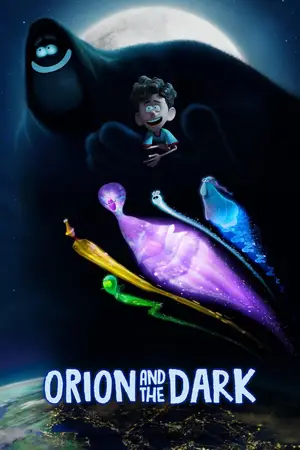
The film "Orion and the Dark" delves into confronting fears through a story told by a father to his daughter, Habasha, about his childhood fear of the dark. This fear extended to various aspects of his life, including bullying, imagined disasters, and outdoor activities. The narrative introduces spirits in pairs, symbolizing duality: Night Spirits govern darkness, Day Spirits oversee daylight, Noise Spirits control sound, and Silence Spirits manage quiet, alongside Dream Spirits and Dreamless Spirits, illustrating that thoughts, words, and actions can influence dreams, emphasizing positive beliefs.

The film explores the concept that accepting reality as it is allows us to let go of it. Emotions are formed by positive and negative energies, suggesting that suppressing negative emotions also suppresses positive ones, trapping us in a negative reality. Conversely, accepting negative emotions can release their positive counterparts, manifesting a positive reality. It suggests that the human brain struggles with ambiguity, and by framing fears as stories through diaries or drawings, the brain can process clear narratives, helping to accept and release these fears.
The protagonist's constant creation of fearful scenarios in his mind illustrates that the inner thoughts are as accurate as the physical external reality. Overcoming fear isn't about eliminating it but rather replacing the habit of fear with confidence, harnessing the power of imagination and courage to replace fearful beliefs with positive ones. The film acknowledges fear as a natural biological response but encourages befriending, rather than eliminating fear, to build a habit of confidence.

It touches on the power of manifesting thoughts, primal energy in the universe, and the importance of shifting from a competitive to a creative mindset to resonate with the universe's intangible wisdom. This creative mindset fosters harmony and coexistence, aligning with the idea that external reality is as much a dream as the internal reality. The protagonist learns to shift focus to positive aspects, like outdoor activities with Sally, to awaken from nightmares.
Addressing fear, the film introduces the concept of quantum mechanics, where each moment opens new dimensions, suggesting a flow of change rather than instantaneous results. It posits that maintaining a belief in separation from fear-inducing dimensions can prevent fear, emphasizing that unnecessary fear can be avoided by consciously choosing what to hold onto or let go in one's world.

The narrative concludes with activating a matryoshka skill involving Habasha's son in the story, indicating that healing oneself heals the family line, preventing karma transfer. The film portrays all external realities as illusions born from thoughts, urging viewers to observe which thoughts and emotions craft their reality. It suggests that new realities are not forced but emerges from a clear mind, challenging the notion that suffering is inherent to life and instead proposing that it's a result of identifying too closely with the physical self and the material world.
Carl Jung's idea that the subconscious controls life, which people call fate, encapsulates the film's message, highlighting the importance of healing oneself to heal generations.



Comments 0
No comments yet.