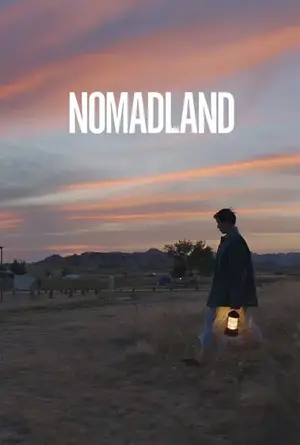
‘Nomadland’: A Journey of Failed Wanderers
General Reviews

On the surface, "Nomadland" appears to lack a concrete problem that needs addressing, yet it's evident that the characters, representing a van-dwelling lifestyle, face various challenges. While these challenges exist, the film doesn't offer direct solutions, neither within the confines of the narrative nor in the broader context of capitalism.
The story's genesis can be traced back to the impact of globalization and the 2008 financial crisis on American manufacturing. Empire, where the story unfolds, is a quintessential satellite town built around the US Gypsum Corporation. The convergence of cheaper labor in the developing world and the plummeting demand for gypsum boards after the mortgage crisis led to the strategic closure of high-cost domestic companies. This narrative mirrors the broader transition from vibrant yet insular localities to standardized modernity in the global exchange of goods—a testament to the indelible scars of modernity.

Fern, the protagonist, faces not only the disintegration of her livelihood and affluent middle-class lifestyle but also the early demise of her husband. This rupture in the intimate bonds shared with loved ones represents a primal resistance to modernity, offering a shield against external harm through intrinsic, self-serving connections.
"Nomadland" intricately woven themes of unemployment, dispossession, and the disintegration of modern nuclear families. The dissolution of the family unit, which cannot support individuals, mirrors the fading of social bonds within larger communities. As concepts of community wither, individuals retreat into imagined collectives, only to confront the stark reality of their isolated existence when faced with life's challenges alone.
Chloé Zhao's "answer" to this existential dilemma is a semi-permanent rejection of modern human civilization. The emotional resonance of Fern bidding farewell to her past life, symbolized by her return to the Empire after a journey across America in her van, evokes a visceral response that momentarily distracts from the unresolved issues.
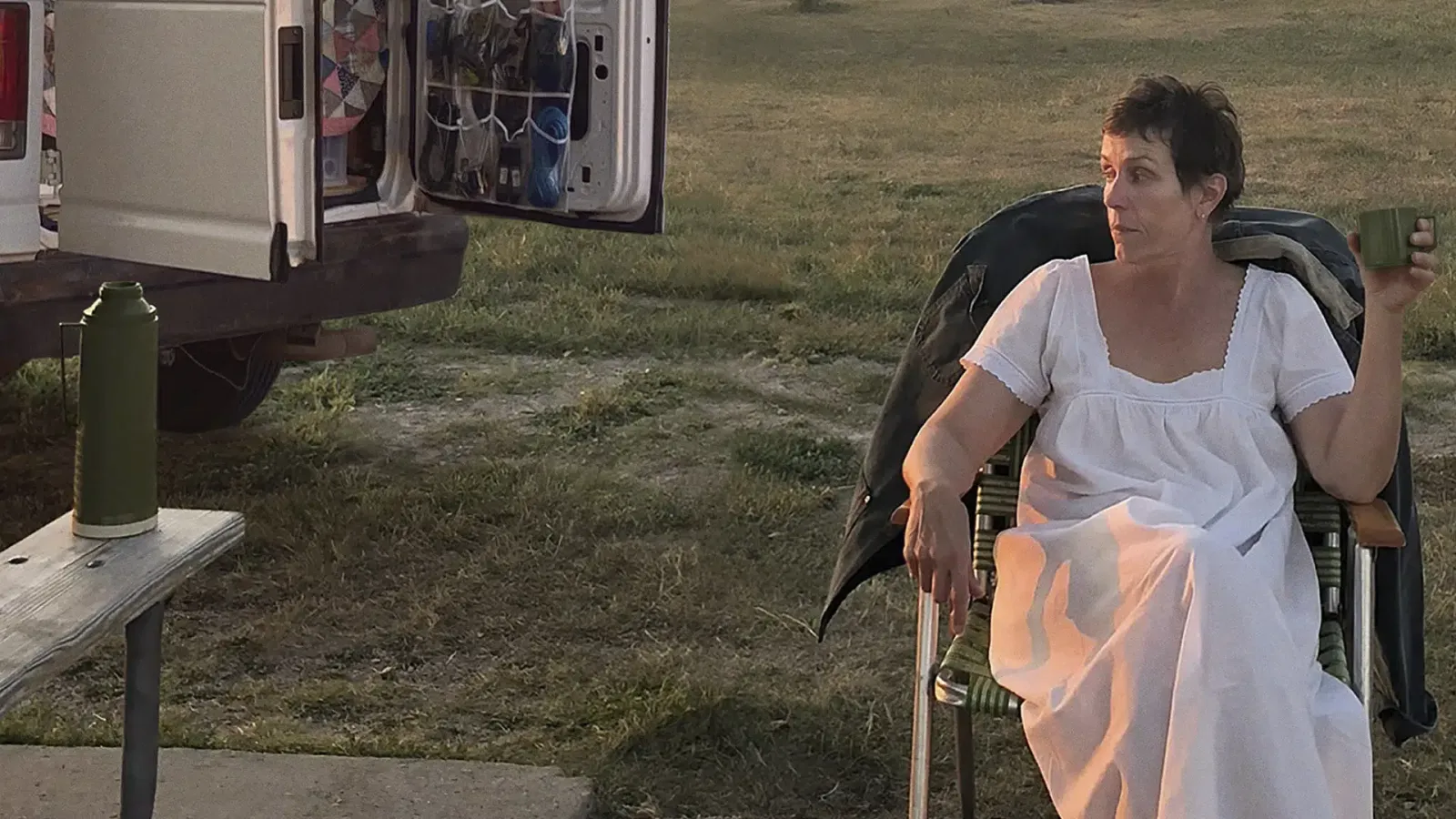
While seemingly resolving the mourning for Fern's husband and past way of life, the conclusion merely skirts around the underlying issues. The repetition of Fern's farewell to the Empire raises questions about the efficacy of these farewells: if the second farewell resolves the conflict, why couldn't the first? The "resolution" hinges on Fern's experiences during her journey. Until her nomadic lifestyle reaches its conclusion, the challenges of adapting to a new life remain trivial—a series of events and realizations stemming from the search for meaning.
Ironically, the nomadic lifestyle lacks a sense of closure, as the van ceases to be a symbol of travel once it stops moving. Memories of the journey then serve as the basis for crafting a "new" life that addresses non-existent dilemmas, ignoring the tangible hardships of reality. Returning to the Empire changes nothing—it merely serves as an emotional spectacle devoid of real significance. The actual conflict lies not in the farewells themselves but in what comes after—the inability to confront the inevitable failure of clinging to outdated forms of existence.
While the film focuses solely on Fern, its juxtapositions and narrative echoes serve as emotional scaffolding. Embracing emotion at the expense of reality leads to losing focus on the individual. Without realism and nuanced details, the audience's engagement with the narrative remains superficial, hindering any meaningful exploration of the existential themes.
This brings us to Chloé Zhao's directorial style, often compared to Ken Loach or Terrence Malick. However, while Loach's naturalistic approach is systematic and politically charged, and Malick's imagery is contemplative and existential, Zhao's editing is more casual and emotionally fleeting. While her films exhibit maturity and style, they lack the philosophical depth found in the works of Loach and Malick.
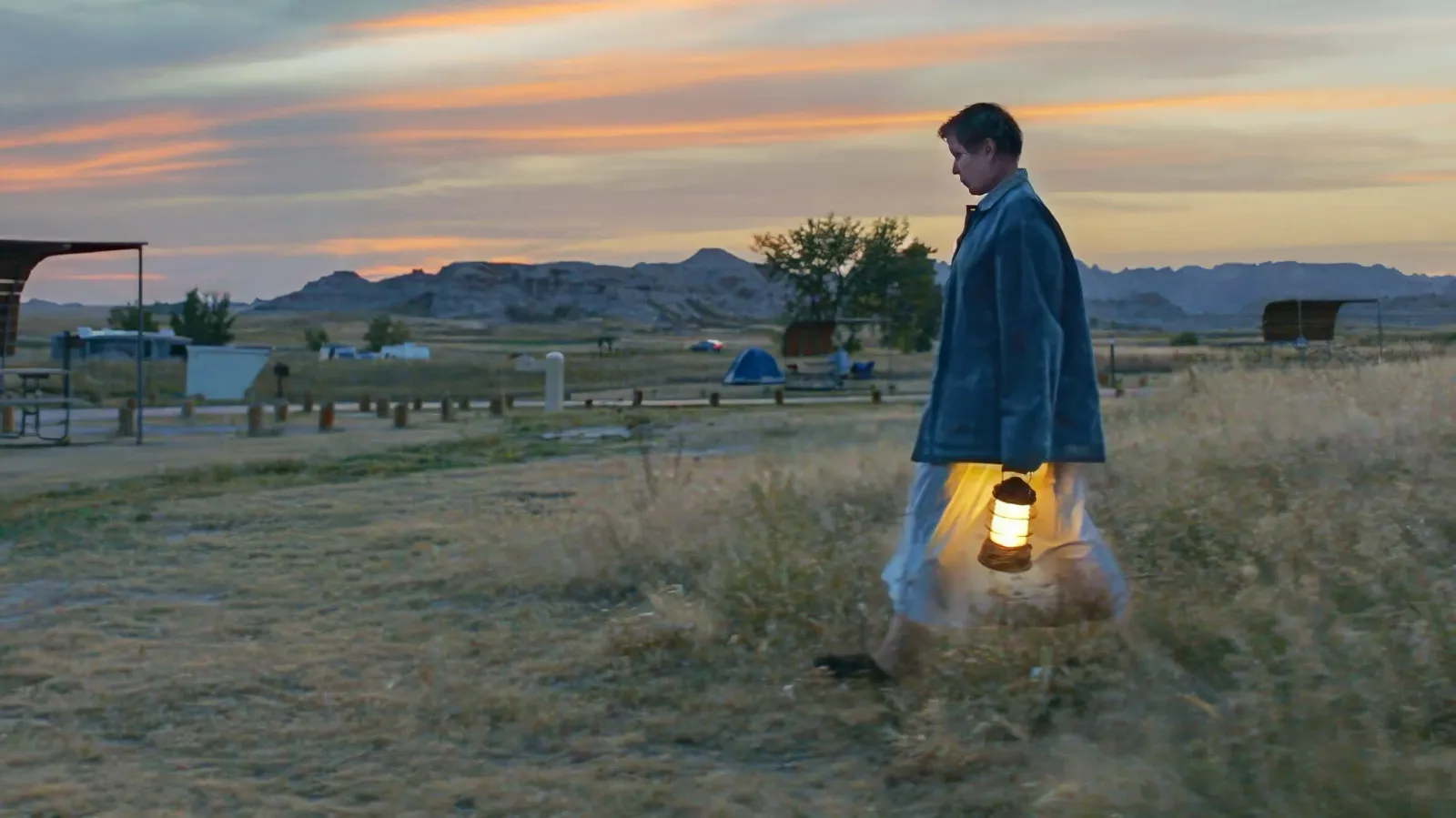
Existence precedes essence. Fern's journey is marked by a deliberate avoidance of intimacy and a reluctance to return to capitalist civilization. While her choices appear to stem from personal agency, they ultimately disregard the realities of modern life. Despite her efforts to distance herself, Fern inevitably interacts with others, engages in capitalist activities, and grapples with the certainty of returning to the Empire to confront her past.
True freedom cannot be achieved by relinquishing it entirely. The nomadic lifestyle offers no inherent meaning, merely perpetuating a superficial narrative of celebrity-led projects without substance. In the face of irreconcilable contradictions between individuals and modernity, genuine communication, trust, and the pursuit of intimacy emerge as the only viable path forward.
In the vein of mainstream American media reviewers, "Nomadland" offers a poignant exploration of modernity's pitfalls and the human quest for freedom. Fern's journey prompts audiences to ponder the complexities of existence in an ever-changing world—a journey fraught with contradictions, yet ripe with opportunities for growth and self-discovery.


Comments 0
No comments yet.