Why The Zone of Interest Earned Two Oscars?
Industry

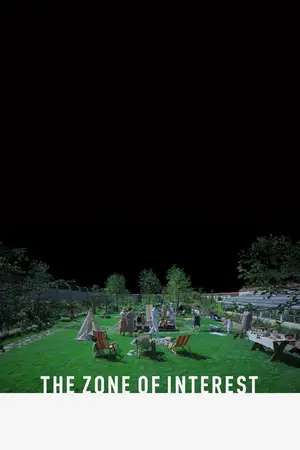
"The Zone of Interest" won two Oscars, Best International Feature Film and Best Sound Design. We can't help but ask, does this somber film about the Holocaust truly deserve such accolades from the Academy?

Renowned British filmmaker Jonathan Glazer celebrated his inaugural Academy Award win at the 96th Oscars, clinching the Best International Feature Film prize for "The Zone of Interest."
This Holocaust drama, featuring Christian Friedel and Sandra Hüller, an Oscar nominee for "Anatomy of a Fall," portrays the German Nazi commandant Rudolf Höss and his sociopathic wife Hedwig. Since winning the Grand Prize at the 2023 Cannes Film Festival, the film has steadily navigated through the awards season. Glazer loosely adapts a Martin Amis novel, crafting a poignant narrative about the Höss family's indifference to the horrors of Auschwitz just beyond their idyllic garden. While the family resides in an emotionless bubble with their three children, Jews are systematically exterminated.
The Art of Sound Design:
Living near noisy environments such as elevated train tracks, airports, or highways exposes one to constant sound bombardment, yet the brain often tunes it out. Our ability to filter information is extensive, a quality often exemplified in exceptional sound design. In his work on “Nope,” sound designer Johnnie Burn deliberately eliminated many environmental and incidental sounds typical of a California canyon to focus the audience's attention on the unsettling, off-kilter sounds that hint at the film’s antagonist's presence.
However, in “The Zone of Interest,” Burn, along with director Jonathan Glazer and editor Paul Watts, faces a completely different, almost contradictory challenge. The film delves into the dissonance between the Höss family's daily lives and their deliberate avoidance of acknowledging the mass murders occurring meters from their home in Auschwitz, where Rudolf Höss (Christian Friedel) serves as commandant. We witness their determined efforts to numb themselves to the atrocities sustaining their existence. They may have blocked out the sounds, but the audience has not.

Adding sound to the distant, surveillance-like scenes depicting the daily lives of the Höss family proved to be much more challenging than anticipated. Burn painstakingly compiled a 600-page research document covering various aspects, from the types of vehicles passing through the industrial murder hub of Auschwitz to witness testimonies detailing the events unfolding at the camp day in and day out.
Situated no more than 80 yards from the meticulously cultivated garden tended by Hedwig Höss (Sandra Hüller) was Block 11, the structure where prisoners were "tried" for criminal offenses and subsequently executed. According to director Jonathan Glazer, an average of 60 to 80 gunshots from the firing squad could be heard emanating from that block every day. Crafting sounds that conveyed a sense of violence on such a scale without desensitizing the audience posed a constant challenge for Burn.
Initially, Burn struggled with capturing the sounds emanating from Auschwitz. However, after a test screening, production designer Chris Oddy pulled Burn aside to inform him that the environment was much busier than depicted through sound. "There was a significant influx of people and activity daily, and although Jon and I were aware of this through our research, we were perhaps too cautious with the sound application; it felt somewhat disrespectful. So, we revisited the approach and added more layers," Burn explained. "We settled on the concept of a continuous backdrop of machinery noise, including the crematorium. The subsequent screening was remarkable; while the script had always conveyed this contrast, experiencing it firsthand was profound."
Aside from the constant machinery hum, there is a consistent auditory representation of human suffering that Burn believed couldn't be authentically captured by simply recording performers in a studio to loop background audio. Burn and his sound team spent months traversing Europe in search of moments of intense sound that would accurately convey the atmosphere.
Best International Feature explained:

“Zone of Interest” refrains from depicting these horrors on screen, opting instead to rely on Johnnie Burn’s Oscar-nominated sound design to convey the chilling reality through screams, gunfire, and the rumbling of furnaces, heard just beyond the concertina wire lining the camp’s walls.
Friedel spent many hours and endured 30 takes to capture the climactic moment when the Commandant dry-heaves on a stairwell while returning to Auschwitz after a brief relocation. “He believes he's sick in a way, or I don't know, but here the body might be trying to expel this man from itself. The body speaks the truth, and he's battling his mind, grappling with his darkness. Perhaps he recognizes his guilt, perhaps he comprehends the magnitude of his actions, yet he doesn't feel remorse. He persists. History repeats, and we turn a blind eye to the atrocities. We compartmentalize.”
"The Zone of Interest" deftly sidesteps the pitfalls of typical historical dramas, offering a deeply unsettling portrayal of the Holocaust era. The film's refusal to sanitize or romanticize its subject matter sets it apart, plunging viewers into the moral abyss of Nazi Germany without flinching. Through the unflinching performances of its cast, led by Christian Friedel and Sandra Hüller, the movie explores the complexities of complicity, guilt, and denial amidst the horrors of Auschwitz. Friedel's portrayal of the Commandant's inner turmoil, particularly in moments of physical repulsion, highlights the film's refusal to offer easy answers or comfortable resolutions. Instead, "The Zone of Interest" confronts its audience with uncomfortable truths about human nature and the banality of evil, challenging viewers to confront the darkest chapters of history without the safety net of distance or detachment. In doing so, it emerges as a profoundly unsettling and essential cinematic experience.






Comments 0
No comments yet.