Goncharov: Scorsese's film that never was?

I don’t really like awards shows. At the end of the day, they just feel like a bunch of rich and powerful people getting together to pat each other on the back, overlooking many indie movies that are more deserving of recognition. Then again, maybe if I were part of the echo chamber I might feel a bit differently about how self-congratulating it is. Given that I like watching movies more than I like making them, though, that’s rather unlikely.
Unlikely, but not impossible. Let me explain.
A Long-Lost Scorsese Film?
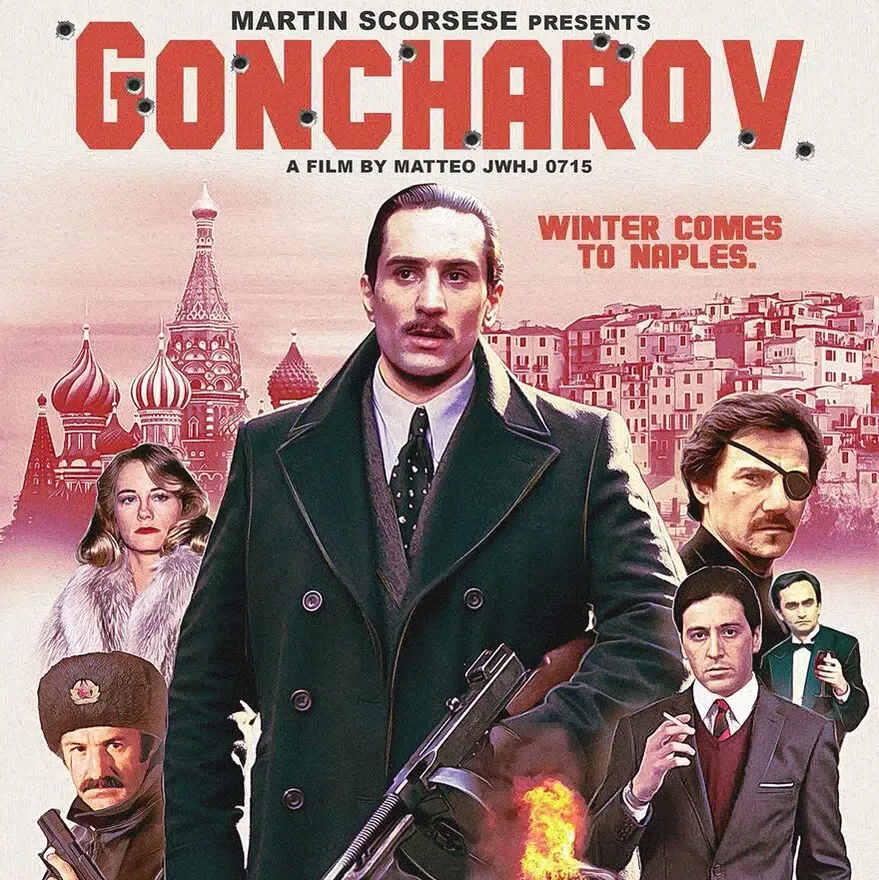
The most fascinating thing happened in November 2022 : a long-lost Martin Scorsese movie was rediscovered. Given how many awards the man’s won (including potentially this year for Killers of the Flower Moon), it’s hard to imagine one of his films being forgotten like that. Yet there it was, Goncharov, a 1973 film that was apparently “the greatest mafia movie ever made”. Set in Naples, it’s a subversively queer-coded story about Russian and Italian mobsters, starring big names like Robert De Niro and Al Pacino.
Unfortunately, due to Goncharov being lost for so long, some of the details weren’t quite as clear as would be ideal. When the film was first rediscovered on Tumblr, there was significant debate over whether Scorsese was the director or producer, as another (far more mysterious) man seemed to be credited as director as well : Matteo JWHJ0715.
Pretty unique last name, right? If AI were credited for the films they created, it’s not impossible that we’d see names like that, but that seems pretty unlikely for a film from 1973...
Goncharov : When Fiction Becomes Fact

Which makes sense, because Goncharov isn’t real, actually… or it wasn’t, until it was. When I say that the film was rediscovered on Tumblr, what actually happened was that someone had bought knockoff boots, only to find that the brand-name tag wasn’t just a simple misspelling à la “Guccy” or “Balencaga” but rather a bizarre description of a Scorsese film from another universe : the now-infamous Goncharov.
What was going through the mind of the boot’s designer will probably forever remain a mystery, but what isn’t a mystery is that Tumblr saw an opportunity and took it. See, there’s a… well, I guess I could say an artistic movement of sorts? It’s called unreality, wherein people basically “take the joke too far”, pretending that something fake is 100% real. Goncharov was an unreality goldmine - there were enough basic details to establish a baseline agreed-upon premise, after which the users could create fake summaries, analyses, posters, and even musical scores and fanfiction for the film.
Obviously, the joke would run out someday. Eventually, the fake-canon would be solid enough that there wasn’t much left to add. Eventually, too many people would know the movie was fake and the joy of tricking others would be gone. And eventually, the internet would simply move on.
Not before Francesca Scorsese texted her dad about it though, getting the response “Yes. I made that film years ago.”

Wider Implications?

All this might seem like just a funny little story to you, but it isn’t, or at least it doesn’t have to be. I might be a bit biased as a fan of Dungeons & Dragons liveplays like Dimension 20, but Goncharov feels like more evidence of a growing trend I’ve been noticing : collaborative narrative stories. Calling it a new trend would be a bit stupid, though. It’s more like going back to how stories were historically created by a group of bored people sitting around a fire and slowly adding to the plot.
Regardless, Goncharov just goes to show that collaborative storytelling projects are not only enjoyable to make but can also be incredibly rich and detailed. Everyone complains these days about the “Marvelisation” of cinema or how all movies seem to be just the same bland, easy-to-market fare. Imagine, though, if someone were actually brave enough to make Goncharov as real as it pretended to be. With so many voices coming together, it’s hard to imagine the result would be anything but unique, not to mention that a story created by open collaboration has an audience almost built into it by its very nature.
I don’t think Goncharov is the final step in this journey. To create a sustainable collaborative storytelling community, there needs to be platforms that faciliate the process and a system in place to reward creators. I think we’re on our way there, though, so don’t be surprised if you see films that started as collaborative creative writing exercises someday. Maybe with time, the collaboration won't be limited to writing either, with all aspects of the film being "crowdsourced". All I hope is that they manage to beat out regurgitated AI drivel. Who knows, maybe we’ll even see a fake Scorsese film actually directed by Scorsese someday.


Comments 0
No comments yet.