"Onward": The Courage to Move Forward
General Reviews
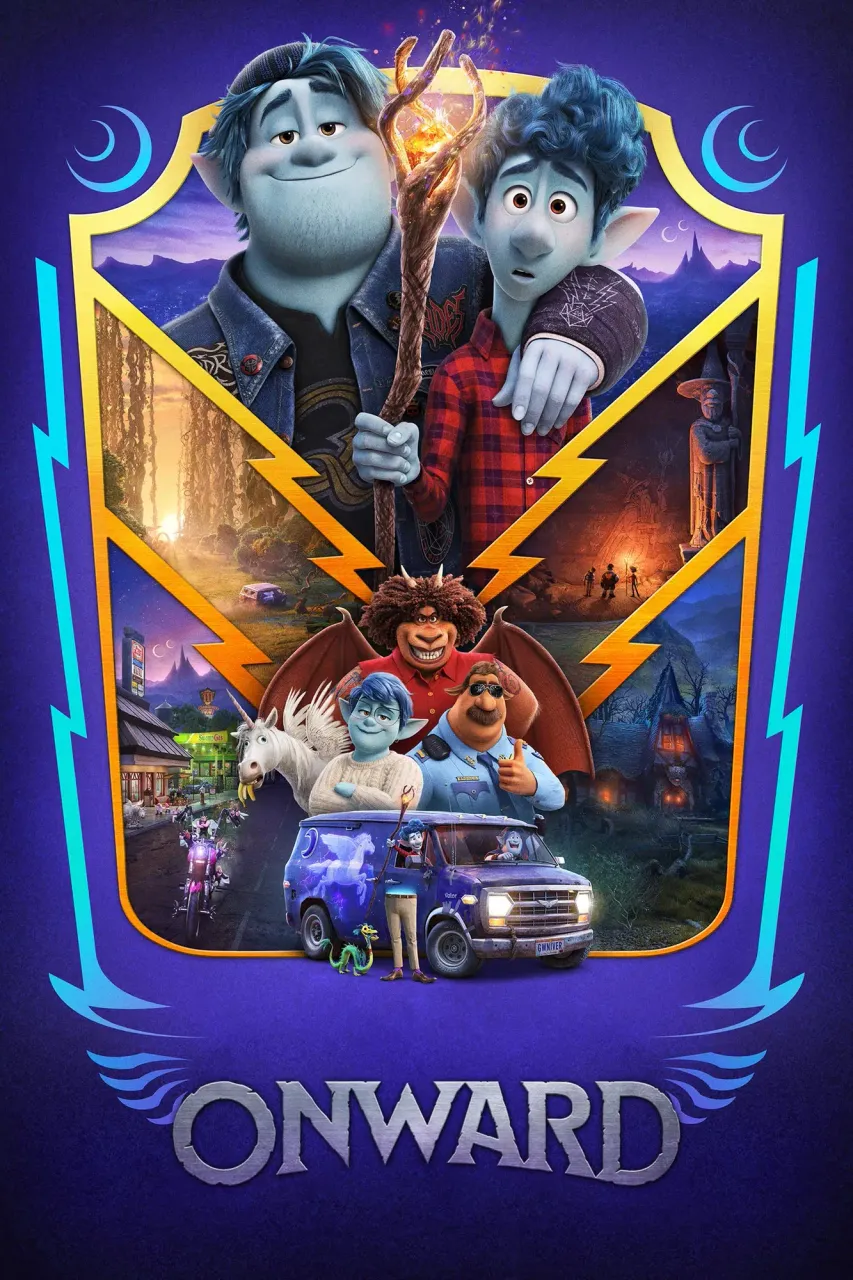
After the heartwarming "Coco" in 2017, Pixar, known for its creativity, hasn't produced an original animation for over two years. Serving as a return to originality for Pixar, the new film "Onward" is released at a time when audiences are starting to tire of various sequels. Naturally, it carries the most fervent expectations, after all, this is Pixar. As soon as that iconic desk lamp comes to life in the opening, it takes the audience back to a world filled with imagination and warmth.
At first glance, the story of "Onward" sounds novel: two elf brothers attempt to resurrect their father for a day but only manage to restore half of him. To bring their father back in full, the two brothers embark on a magical adventure with their father's half-body within a limited 24-hour timeframe.
However, for those seeking the purest originality in "Onward," they may be slightly disappointed to find that the magical new world with crescent-shaped wheels in "Onward" doesn't seem to offer any particularly eye-catching innovations. Instead, the entire film is marked by various traces of pop culture references and a collage of fantasy elements.

The setting in "Onward," featuring a world with robed wizards, ancient spells, and half-orcs, feels like a mixture of "The Lord of the Rings" and "Harry Potter," with a touch of Arthurian legend. The central storyline of two brothers embarking on an adventure to bring back their deceased loved one, involving magic and the body, carries shades of "Fullmetal Alchemist." The character development of the older brother, Barley, who transforms after escaping from the deathbed of a loved one and later grows through reconciliation, is a character trope reminiscent of "Guardians of the Galaxy."
Furthermore, the card game on Barley's table perfectly replicates "Dungeons & Dragons." Ian's cassette tapes and the suburban family life exude an 80s nostalgia in the style of Spielberg. The tomb raiding and canyon crossing pay homage to "Indiana Jones." The father's half-body, dragged around by a dog leash, echoes the style of body comedy seen in "Weekend at Bernie's."
One of Pixar's most acclaimed abilities is their imaginative and meticulously crafted world-building. The afterlife closely tied to memories in "Coco," the fully realized post-apocalyptic future in "Wall-E," and the scientifically grounded internal brain systems in "Inside Out" all showcase imaginative and creative dreamscapes with well-defined rules. However, the world-building in "Onward" does seem somewhat lacking by Pixar's standards. While the numerous homages and Easter eggs offer some subtle viewing pleasures, for audiences who have seen "too much," "Onward" may only score a marginal pass.

However, it's important to note that not making it into the top tier by Pixar's high standards doesn't mean "Onward" is a poor film. On the contrary, even if it's an old wine in a new bottle, Pixar has the magic to pour this wine into a delicate and quirky little bottle, turning it into a potion mixed with tears, growth, lightning, and fire.
The title "Onward" perfectly represents the film's core: moving forward. The "Onward" here is not as simple as shifting into the forward gear as seen in Barley's patched-up van. Although the film uses the framework of a traditional road movie, this forward movement is not an all-out acceleration, but a weighted progress slowed down by the baggage of lost loved ones, past selves, childhood regrets, and adolescent self-closure. The entire journey in "Onward" is a retrospective filled with regrets and melancholy. It aims to explore how the old world, carried forward by technological advancements, and the individual burdened with emotional baggage, reconcile with the past, make compromises, yet ultimately retain a part of stubbornness and innocence.
The relationship between technology and society is one of the central themes in the entire Pixar series, and "Onward" continues this discussion in a light-hearted manner. In "Onward," the world where the main characters live was once a world of magic, but convenient technology gradually replaced the elusive magic. Electricity replaced the sparks at the tip of wands, planes replaced the wings of fairies, and cars, with their narrow spaces, trapped the towering centaurs. The magical creatures-filled Middle-earth became a mundane suburban area not much different from modern America, with only the fancy Gothic font on fast-food restaurant signs retaining a hint of the old world.
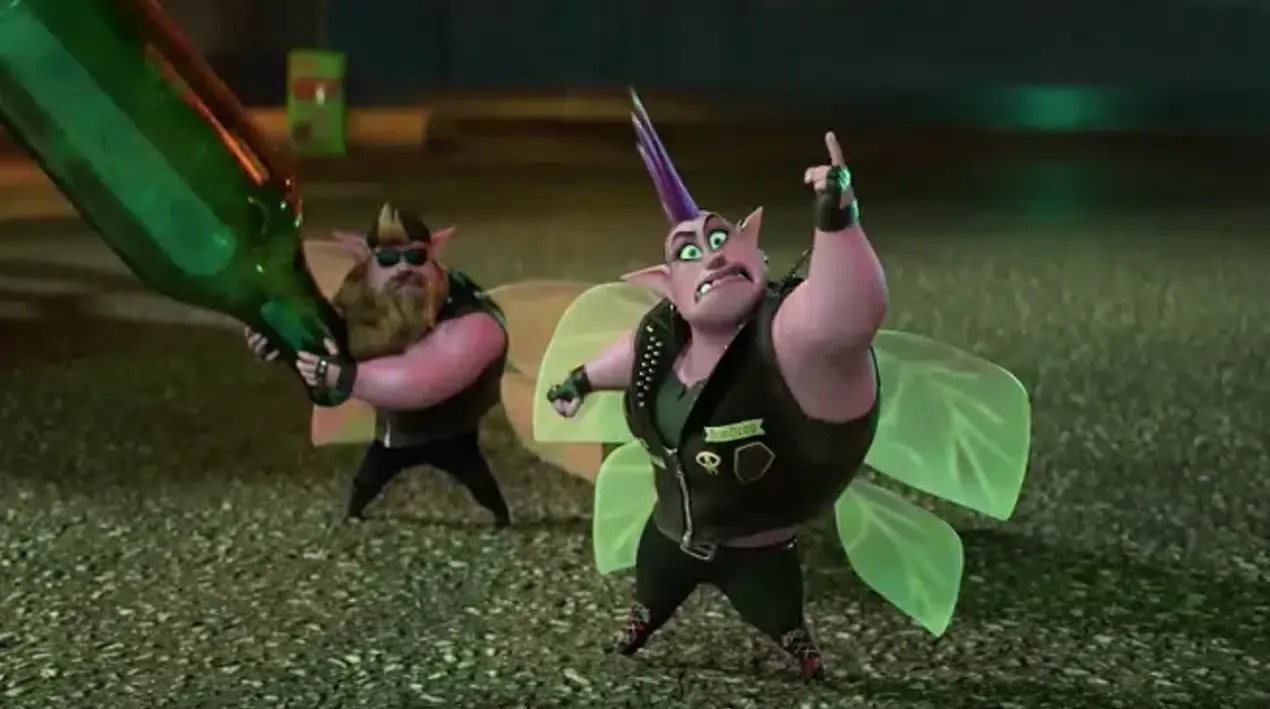
Many of the supporting characters in "Onward" are used to illustrate the theme of "onward" through the collision of the new and old worlds. Characters like the centaur police officer Bronco, who is used to driving, and the motorcycle punk fairy who's forgotten how to fly, can be grouped together. They ultimately return to running and flying, regaining some instincts that cannot be forgotten in a world that has already transformed.
Another important group of supporting characters includes the elf mother and the scorpion-lioness sister who runs a themed restaurant. If the keyword for the former group of characters is "instinct," then the key phrase for these two middle-aged sisters who help each other throughout the story is "self." In the story, the mother transforms from a housewife who does daily workouts with the TV into a dragon-slaying warrior. Even though she eventually returns to her cozy mushroom-shaped home and becomes a loving mother, she continues to maintain her training with the massive sword. As for the legendary lioness, she is one of the most outstanding supporting characters in "Onward." She changes from being synonymous with soaring danger to a cautious restaurant owner. After tearing up everything to return to a life of adventure, she finds balance at the end of the journey by returning to the restaurant and blending the spirit of adventure with daily life.

Perhaps this is the dilemma of all adults: as we inevitably head toward mediocrity, we are always being pulled along by our youthful, daring, and carefree selves. Only by retaining some fragments of our past selves, those who have experienced good times in their middle age can gather the courage to move forward with self-assuredness. From these specific supporting characters to the broader world, in a society that is rapidly advancing and seeking efficiency and convenience, the significant friction between technology and tradition must be lubricated with a glimmer of old magic.
For the two main characters in "Onward," the concept of "onward" holds more specific and personal meanings. For Barley, his path to growth faces two obstacles. On the one hand, as someone who is passionate about magic but lacks talent, seen as somewhat of a nerdy outcast by outsiders, Barley needs to make his closest and most cherished younger brother accept this aspect of himself. More importantly, as a child, Barley missed the opportunity to say goodbye to his father on his deathbed due to fear. Although this guilt drove him to decide that he could not back down from anything in the future, only when he unravels this emotional knot can his fearlessness cease to be an excessive compensation under the ghostly influence of the past.
For Ian, his growth is twofold as well. The classic coming-of-age storyline explores how the teenage Ian overcomes shyness to find himself. The other part of his character development is the most emotionally touching thread throughout the film: Ian must truly step over the hurdle of never having met his father. As a posthumous child, not having any memories with his father is a significant void that continuously troubles Ian. The most outstanding aspect of the "Onward" script is that it does not easily allow Ian to make up for his regrets but rather guides him toward ultimately accepting this fact.

This might be a very valuable comfort: none of us are magical creatures, and we lack the ability to bring our departed loved ones back to life. Ian ultimately did not get to see his father, but this does not hinder him from receiving the most wonderful protection from Barley. Understanding all of this, Ian can start a new life without burdens, and we further grasp the significance of regrets, moving forward with the joy of knowing we are loved, along with the bitterness of loss.
Beyond the theme of "onward" and the intricately woven script, another highlight of "Onward" is its very sincere and subtle emotions. The story of "Onward" draws inspiration from director Dan Scanlon's personal experiences; he has a close relationship with a brother and, like the brothers in the story, experienced the loss of a father in his childhood. Infused with such personal emotions, "Onward" captures some very real and natural moments of family life, blending feelings of longing, warmth, pain, and a touch of inexplicable silliness. Ian's room with the wall of his father's photographs, the list he excitedly makes of things he wants to do with his father, and the comical dance that resolves the brothers' conflicts. These details construct a unique Lightfoot family story and evoke a universal mix of bittersweet emotions.

From my personal experience, there are two moments in "Onward" that touched me deeply. The first one is a rather evident emotional climax designed by the film when Ian, with his father's half-body, sits on the cliff and looks at the list of things he wanted to do with his father. Suddenly, he realizes that his brother Barley was there with him, helping him complete all these things. Along the way, Ian was desperately and deliberately pursuing the presence of someone who had already passed away while neglecting his brother, who had been physically present with him.
The second realization comes later in the film. Throughout the movie, the presence of the wobbly half-body of their father constantly reminds them of his absence. This absence of their father's image, coupled with the teasing of their mother's unreliable new boyfriend, seems to slowly become a silent complaint. However, after watching the movie, I realized that the voiceover introducing the magical world at the beginning of the film was their father's voice. It comes from the letter that their father left for Ian and Barley, which Ian reads aloud. But in reality, since the beginning of the film, their father has been with the audience and the two brothers. That ghostly half-body is not proof of their father's presence; it's the letter, the voice, and the intense desire to see his children that truly reflect the love and longing of a father who was never absent.

While "Onward" may not delve as deeply into the topic of death as "Coco," it still offers an encouraging perspective on dealing with death. As one wise person put it, "Life is made up of all sorts of things, both good and bad. The bad things don't make the good things unimportant, and the good things don't make the bad things any less significant." Films in the Pixar catalog often emphasize this point – not shying away from pain but amplifying all the moments worth remembering. These ongoing conversations about death, while not making loss any easier, serve as a comforting balm that we can forever rely on.


Comments 0
No comments yet.