Halloween | 15 Essential Horror Films
Recommendations

Horror films are as old as cinema itself, making it a daunting task to pinpoint the standout works from over a century of productions. For the month of October, in the spirit of Halloween, we took on the challenge! Below, we've listed 15 quintessential horror films throughout history.
THE EXORCIST

1973
Directed by: William Friedkin
While our list of 15 essential horror films might include controversial picks sparking debates among readers, there's no debating "The Exorcist." The 1973 film, directed by William Friedkin and adapted by William Peter Blatty from his own novel, wouldn't exist without its predecessors (some of which we'll mention later in the October list). Yet, it made cinema history as the first horror film to be nominated for the Best Picture Oscar, charting new territories for the genre.
Surprising its studio, which initially released "The Exorcist" in only 24 theaters, the film grossed an astonishing box office. Adjusted for inflation, its earnings rival R-rated films, nearing $1 billion. Notable as well was the audience's uproar, with reports of vomiting and fainting during screenings, and even more extreme (and unverified) reactions, including heart attacks and miscarriages. Nevertheless, the film scored 10 Oscar nominations, winning Best Screenplay and Sound Mixing.
From the pea soup vomit scene, the girl crawling upside down, the crucifix masturbation, to the infamous neck twist, "The Exorcist" left its mark with iconic scenes. Its pace and sinister atmosphere are unforgettable. Often likened to "2001: A Space Odyssey" for sci-fi or "The Godfather" for gangster films, "The Exorcist" undeniably altered demonic possession films forever.
SUSPIRIA

1977
Directed by: Dario Argento
"Dario Argento is the definitive horror master!", argues Ellen Page in a scene from "Juno" - and she's not wrong. The Italian director imprinted on global horror by popularizing giallo - provocative and stylish Italian serial killer films - alongside others like Mario Bava and Lucio Fulci. While "Deep Red" (1975), "Tenebrae" (1982), and "Phenomena" (1985) could have made our list, "Suspiria" might just be the epitome of Argento's work and technique.
The film follows Suzy (Jessica Harper), an American dancer who joins a renowned German dance academy. However, upon her arrival, murders and peculiar occurrences hint at a dark secret the school and its directors conceal. What elevates "Suspiria" is its priority on sensory experience over narrative, showcasing surreal visuals resembling a neon nightmare, accompanied by unsettling sounds and a stellar score by Goblin. It's a horror film that shines by experimenting with fear, demonstrating that discomfort can be as impactful as jump scares.
Over four decades since its debut, "Suspiria" has become a cult classic, revered beyond Italy. In 2018, a remake directed by Luca Guadagnino, starring Dakota Johnson and Tilda Swinton, was released. This new version is commendable, with a great score by Thom Yorke, but unfortunately, it exchanges the dreamlike aesthetic that made the original iconic for a more narrative-driven approach, although still delivering a remarkable film on its own terms.
THE TEXAS CHAINSAW MASSACRE

1974
Directed by: Tobe Hooper
The slasher subgenre peaked (and subsequently waned) in the 1980s. Still, that doesn't mean excellent slasher films didn't emerge earlier. In fact, Italian cinema and 70s movies paved the way for this genre. Thus, iconic slashers like Freddy Krueger and Jason wouldn't exist without Leatherface.
"The Texas Chainsaw Massacre" is groundbreaking. While most horror stories of the time were set in isolated locations, director and screenwriter Tobe Hooper brought terror to the heart of America. Following a group of young travelers, they fall prey to a deranged Texan family, pursued by a maniac wearing a stitched human face and wielding a chainsaw. Remarkably produced on a shoestring budget (between $80k-$100k) and featuring unknown actors, the result is a harrowing exploration of violence and insanity. Boosting the slasher's global popularity, the film grossed over $30 million.
From a modern perspective, especially considering the rise of the torture porn genre with films like "Saw" and "Hostel," "The Texas Chainsaw Massacre" seems moderate in its graphical violence. However, what makes it timeless is Hooper's subtle portrayal of Leatherface's brutality, choosing to show little and letting the viewer's imagination fill in the gruesome details. At the time, its gore was so extreme that it caused theater walkouts, bans in countries like Brazil, and rumors of theaters handing out vomit bags with tickets.
ROSEMARY'S BABY

1968
Directed by: Roman Polanski
Before "The Exorcist," there was "Rosemary's Baby." Despite its occult themes, it wasn't the monsters or satanic imagery that scared audiences but rather the psychological torment Rosemary (played by Mia Farrow) endured. Roman Polanski's adaptation of Ira Levin's 1967 novel remains a study in urban isolation and the paranoia of an expectant mother.
Set in a gothic New York City apartment building, the film slowly unfolds Rosemary's growing suspicions about her pregnancy and the intentions of her peculiar neighbors. The film's allure lies in its pacing and Polanski's masterful execution of suspense. By leaving much to the viewer's imagination, he lets doubt creep in: Is it all in Rosemary's head, or is a conspiracy afoot?
Its chilling climax is both a culmination of Rosemary's worst fears and an acknowledgment of the sacrifices women often make. Despite some controversial aspects of Polanski's life, there's no denying his aptitude for crafting tense, claustrophobic narratives, which "Rosemary's Baby" exemplifies.
NOSFERATU: A SYMPHONY OF HORROR

1922
Directed by: F.W. Murnau
We can't discuss essential horror films without mentioning the genre's German expressionist origins. Over a century old, F.W. Murnau's "Nosferatu: A Symphony of Horror" remains a staple. While it's an unauthorized adaptation of Bram Stoker's "Dracula," the film transforms the novel into a unique cinematic experience.
The silent film's narrative is familiar: Thomas Hutter, an estate agent, visits the reclusive Count Orlok, only to discover he's a vampire. Yet, it's Murnau's direction, using distorted sets and looming shadows, that crafts an eerie, dreamlike atmosphere. Max Schreck's portrayal of Orlok, with his rodent-like features, stands apart from other Dracula renditions, offering a haunting, otherworldly performance.
Although a court ruling in 1925 ordered all copies of "Nosferatu" to be destroyed due to copyright infringement, a few survived. Today, it's considered a masterpiece, setting the foundation for countless vampire adaptations and films emphasizing atmosphere over explicit horror.
DRAG ME TO HELL

2009
Director: Sam Raimi
The Evil Dead franchise is Sam Raimi's biggest contribution to horror, but in the early 2000s, the filmmaker stepped away from the genre to helm the Spider-Man trilogy starring Tobey Maguire. After the disappointing Spider-Man 3 in 2007, Raimi retreated from the limelight and flirted with a return to the universe that made him famous. The result came two years later, named Drag Me to Hell.
The film follows Christine (Alison Lohman), a credit analyst who, in an attempt to impress her boss, denies the mortgage extension to Mrs. Ganush (Lorna Raver). The elderly woman, feeling humiliated, curses the young woman, binding her soul to a powerful demon. This sparks a terrifying ordeal for Christine, who risks burning in hell for her mistakes. The film showcases Raimi's style at its peak, with provocative, scatological horror, and, of course, slapstick humor. It's a fairly simple film that creates an intriguing mythology while testing the viewer's tolerance and stomach.
Today, Drag Me to Hell doesn't get the recognition it deserves. However, at the time, it played a crucial role in ushering in a new golden age of horror in cinemas. The film achieved solid box office returns, showing that there was room for original ideas and a revitalization of lurid horror. But the film's most significant accomplishment is undoubtedly restoring confidence in Raimi as a genre filmmaker. Shortly after, he revived his original creation with an Evil Dead remake in 2013, directed by Fede Álvarez, and developed the TV series Ash vs. Evil Dead, and executive produced a range of significant projects like Don't Breathe and Crawl.
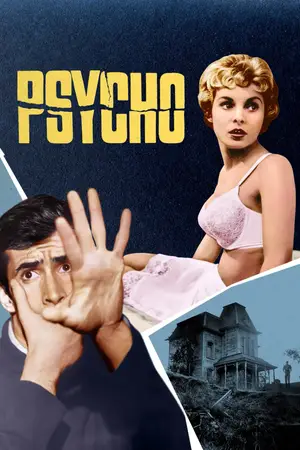
PSYCHO

1960
Director: Alfred Hitchcock
The Exorcist might be the pinnacle of horror, but no work on this list is as popular and influential as Psycho. By 1960, Alfred Hitchcock was already the Master of Suspense, having directed classics like Strangers on a Train (1951), Rear Window (1954), and Vertigo (1958). Yet, it's in recounting the events of one night at the Bates Motel that the director shows he can also deliver top-tier, heavy-hitting horror.
The plot follows Marion Crane (Janet Leigh), a secretary who embezzles money from her boss and goes on the run. On her rainy night escape, she is forced to stop at a roadside motel run by Norman Bates (Anthony Perkins). From there, things only get darker and more violent, something 1960s audiences weren't prepared to see so graphically in cinema. Psycho quite literally set a new standard for visceral horror, to the point that its iconic shower murder scene—using chocolate syrup for blood—is now an integral part of pop culture.
Despite its recognizability, Psycho remains timeless and is still an intense experience even for modern sensibilities. No matter if you know what's coming, the way Hitchcock builds tension and captures the viewer's interest is something few have managed in the years that followed.
HEREDITARY

2018
Director: Ari Aster
The most recent film on this list also marks Ari Aster's directorial debut. Furthermore, it's one of the most controversial titles in recent years. Following the trend of modern horror that prioritizes complexity, the filmmaker delves into a family broken by grief. As the story unfolds, it becomes increasingly clear that supernatural forces are also at play.
Hereditary moves at its own pace, offering an agonizing progression that emphasizes the shattered emotions of its characters more than any on-screen action (though the final moments more than make up for this). This unsettling horror is amplified by interweaving a well-acted family drama with graphic violence. It's a unique film in its genre, even more special for making its voice heard in an era dominated by cinematic franchises.
Like other films of its kind, such as The Witch, Hereditary also became a subject of the tiresome debate over whether it's truly horror. Aster's work not only fits perfectly into the genre with its satanic threats and shock commentary but does so with top-notch quality and an unforgettable impact. It's a memorable and traumatizing experience in equal measure, be it through its chilling imagery or Toni Collette's powerful performance. There's no doubt Hereditary is a modern horror classic.
JAWS

1975
Director: Steven Spielberg
There's an ongoing debate about the genre of Jaws, Steven Spielberg's classic that blurs the lines between horror and adventure. While many categorize it as a drama (or even comedy), none can deny that the suspense in Jaws is its most memorable element. It's impossible to think of Jaws without hearing John Williams' iconic notes or reliving one of cinema's greatest jump-scares when the creature finally reveals itself to the protagonists.
Jaws depicts the threat of a shark at a resort in a quiet town, and the subsequent hunt for the beast by three men: the police chief (Roy Scheider), a marine biologist (Richard Dreyfuss), and a professional hunter (Robert Shaw). The film alternates between sheer suspense, seen from the shark's perspective without revealing its form, and the direct confrontation between the men and their prey, which paces the movie's third act.
Jaws' impact on cinema is widely recognized: not only did it become one of the highest-grossing films in history (currently ranked 7th when adjusted for inflation), but it also set the stage for the summer blockbuster release strategy in the U.S., showcasing films in multiple theaters with heavy marketing. For the horror genre, its significance is even clearer. Just as many films on this list birthed new public fears, after the release of Jaws, the fear of sharks significantly rose: research in the release year indicated fewer people at beaches and an uptick in those claiming to have seen a shark.
The suspense Spielberg crafted in the first half of the movie, keeping the shark's appearance a secret, is also cited as a major influence on the slasher horror genre. The opening scene, showcasing a beachgoer's fun, the crescendoing music, and the shark's first victim, is credited as a reference for John Carpenter's Halloween, which would debut three years later.
THE CONJURING

2013
Director: James Wan
Modern commercial horror is often criticized, many times rightfully so, but this doesn't mean that some pieces lack value. In 2013, when the idea of cinematic universes was largely limited to Marvel, filmmaker James Wan - already seasoned from "Saw" and "Insidious" - imported this concept into horror. Thus emerged the first "The Conjuring," a genuine source of ideas - and money - for Warner Bros.
The plot is inspired by the exorcist couple Ed and Lorraine Warren, portrayed by Patrick Wilson and Vera Farmiga, depicting a haunting case they tackled in the 1970s. The film's narrative might be superficial, but it compensates with a "theme park ride" feel, offering one scare after another. It might be hard to conceive now, given that this universe has spawned seven films (including spin-offs) that try to emulate the style, but Wan's direction excels in establishing tension, playing with audience expectations, and sprinkling in moments of humor.
The emphasis on experience over content pairs well with Wilson and Farmiga's dynamic and chemistry. All of this contributes to "The Conjuring" being the first procedural horror on the big screen, catering both to veteran viewers seeking blockbuster genre films and newcomers with limited horror exposure. While spin-offs may have gone off-track over the years, the franchise will keep thriving as long as the intent is to entertain and frighten.
THE BABADOOK

2014
Director: Jennifer Kent
It's impressive how some of the most terrifying films in recent years come from debut directors. Just like "The Witch" by Robert Eggers and "Hereditary" by Ari Aster, "The Babadook" marked Jennifer Kent's first feature, premiering at the Sundance Festival in 2014. Joining the list of horror films that are intense dramas, it tells the story of a grieving widow and her demanding son, confronted by a mysterious book that releases a monster into their home.
With sharp direction, "The Babadook" builds suspense, keeping its monster elusive with minimal appearances and high tension, yet delivering great scares. In reality, the film delves deeper into the mother's psyche and her spiraling sanity as she grapples with the creature, making its horror more about trauma, depression, and motherhood than gratuitous haunting. Its story is so rich in symbolism that the monster even became an LGBTQ+ icon.
This Australian horror was critically acclaimed and considered one of the best films of 2014, even earning praise from the "Exorcist" director, William Friedkin. On Twitter, Friedkin thanked Kent for her work: "Thank you for the intense experience with believable characters. Rare these days."
SAW

2004
Director: James Wan
Horror had a tough time in the early 2000s. After the oversaturation of slashers in previous decades, top-tier productions waned, and quality horror was mostly found in thrillers, such as those by M. Night Shyamalan. This context makes "Saw" intriguing: breaking the thriller trend with gritty, violent horror and, unexpectedly, achieving massive success.
The film, a university project by James Wan and Leigh Whannell, adopts a "Reservoir Dogs" approach, focusing the narrative within a single location, centered on character interactions. Two men wake up chained on opposite sides of a bathroom, clueless about their situation. A corpse in the room holds a cassette player warning that things are about to get much worse unless they find a way out. This tight premise is interspersed with scenes of an outside police investigation into the killer behind the traps. Thus, the film caters both to suspense fans and those missing gore.
Ignoring how the franchise progressively became more absurd, the first "Saw" remains a quality indie horror, expertly handling a good premise on a shoestring budget through great direction and writing that blends mystery with raw violence. Plus, it's one of those rare unexpected success stories, grossing about $100 million at the box office against a mere $1.2 million production budget.
CARRIE

1976
Director: Brian De Palma
A commendable way to execute horror is by portraying human cruelty on screen. Among classic horror films, few have done this as well as "Carrie". Adapted from Stephen King's debut novel and directed by Brian De Palma, it works as horror on several levels, primarily making audiences empathize with its protagonist and reflect on the cruelty of those mocking her. This, until her final act forces viewers to recoil in witnessing its repercussions. If this wasn't enough to label "Carrie" essential, the film has the most iconic prom scene, which has been referenced, copied, and parodied countless times in cinema.
Carrie (Sissy Spacek) is a shy girl, sheltered by her fanatically religious mother (Piper Laurie), making her an easy bullying target at school. Harnessing her strength through telekinetic powers, Carrie exacts revenge when humiliated by her peers at prom. Throughout, De Palma seamlessly weaves humor, suspense, and horror in just over 90 minutes.
Though largely adhering to a teen plot, "Carrie" finds suspense in the relationship between the girl and her mother, setting a psychological horror stage in their home, shrouded in darkness and religious symbolism. However, it's the climax that turns Carrie's tale into undeniable horror, and despite how distinct its style may seem from contemporary horror, it concludes with one of cinema's most memorable jump-scares. The film's magnificence is also attributed to the standout performances of Spacek and Laurie - both Oscar-nominated for their roles - and Pino Donaggio's impeccable score.
Debated for various reasons, "Carrie" operates on so many levels that it can be considered a suspense, dark humor, or a coming-of-age story with both feminist and antifeminist interpretations. It's this complexity that ensures "Carrie" remains timeless horror.
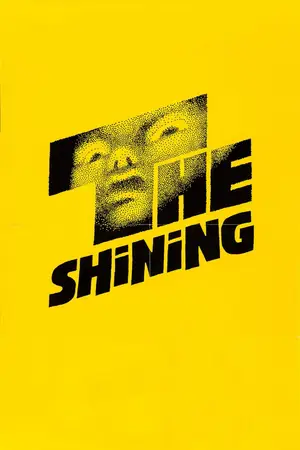
THE SHINING

1980
Director: Stanley Kubrick
Stanley Kubrick's 1980 classic is hard to put into words. Based on Stephen King's novel, it tells the tale of the Torrance family, who move into an isolated hotel during the off-season, only to confront supernatural events and personal demons. But it's not the narrative that makes "The Shining" a masterpiece. It's the immersion - Kubrick's meticulous direction, Jack Nicholson's unhinged performance, and a sense of escalating dread that grips viewers from the first frame to the last.
In the Overlook Hotel, caretaker Jack Torrance (Nicholson) slowly descends into madness, while his wife Wendy (Shelley Duvall) and son Danny (Danny Lloyd) navigate the haunting. The vast hotel, complete with mazes, grand ballrooms, and endless corridors, becomes a character in its own right. The film's horror emerges from the combination of disturbing imagery (twins in the hallway, blood gushing from elevators, and spectral guests) and the unraveling sanity of Jack.
Much has been said about "The Shining" - the hidden meanings, the conspiracy theories, the genius of Kubrick. But what's undeniable is its lasting legacy. The film's visuals, sound design, and evocative score contribute to an oppressive atmosphere. Even if you haven't seen it, you probably know some iconic moments: "Here's Johnny!", "Redrum", and the maze chase. It's a film that's been analyzed, parodied, and revered in equal measure.
Though Stephen King famously criticized this adaptation, considering it a colder take on his work, "The Shining" remains a prime example of how cinema can elevate horror to the level of art.
NIGHT OF THE LIVING DEAD

1968
Director: George A. Romero
Zombie films have been part of popular culture for decades, but they owe much of their legacy to George A. Romero's "Night of the Living Dead." This independent film, made on a modest budget, not only redefined the zombie genre but also offered a biting social commentary that's still relevant today.
A group of survivors, including Ben (Duane Jones) and Barbra (Judith O'Dea), find themselves trapped in a farmhouse, surrounded by a horde of the undead. As they fight for survival, tensions rise, and they grapple with the horrors both outside and within.
Romero's film is a masterclass in tension and claustrophobia. The black-and-white visuals add to its stark, grim atmosphere, and the zombies, though slow-moving, pose a constant, relentless threat. But what truly sets it apart is its underlying message. Released during a turbulent period in American history, the film can be read as a commentary on racism, consumerism, and societal breakdown.
The shocking ending, which leaves viewers with a bitter aftertaste, speaks to the film's enduring power and its place in the pantheon of horror classics.
These are just a few of the gems from horror cinema, each contributing in its own unique way to the legacy of the genre. As we celebrate Halloween, it's worth revisiting these classics, which continue to terrify, intrigue, and inspire filmmakers and audiences alike.





Comments 0
No comments yet.