Spider-Man: Fascism, Trauma, and Superheroes
Sociocultural
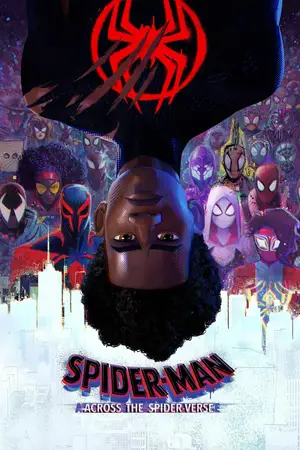
Nationalist. Totalitarian. Led by a father figure. Violent. Anyone could recognise these as the features of a fascist regime, but that’s not what I’m referring to. Instead, I’m talking about the Spider-Society from Spider-Man: Across the Spider-Verse. The film is a fun watch overall, but how it discusses fascism is what makes it really shine. From the start, the film sets up themes of authoritarianism and fascism, exploring them with nuance through its characters, their stories, and their motivations, ultimately prompting us to ask : are superheroes really as good as we think they are?

Given that Across the Spider-Verse was created after George Floyd’s murder in 2020 in a country with increasing levels of police violence, especially against young black men, it shouldn’t come as a huge surprise that the film chose to deal with a topic like fascism. The themes are introduced early in the film, though quite subtly, as Gwen’s policeman father finally discovers that she is Spider-Woman, the criminal he has been hunting down for the murder of Peter Parker. Discovering that his daughter is the person he believes to have killed Peter obviously presents a moral dilemma for him: does he arrest his daughter, who he can’t believe is a murderer? Or does he neglect his duty as a policeman? As he begins to recite the Miranda Rights to his daughter, it’s clear he’s made his choice: authoritarianism and loyalty to the state come before listening to his daughter and seeking true justice and fairness.

The question of whether real-life police are fascist isn’t one I can answer, but given the discourse around the topic, this detail lays the groundwork for a more obvious case of fascism in the Spider-Society, a facism later made even more obvious thanks to the introduction of the anti-fascist rebel Hobie. Fascism can be broadly described as (I mentioned before): a political ideology based on national or ethnic identity that tends to be authoritarian and glorify violence. All of these features are reflected in the Spider-Society: the group’s unifying identity is being Spider-People; all power is centralised in the hands of one man, Miguel O’Hara, who wants to maintain the status quo of the universe; and the group shows an appreciation for violence, not only by imprisoning those who would threaten their mission, but also by making violence and trauma as key to their identity.
The last point is, in my view, the most important aspect of Across the Spider-Verse’s story. It would be easy to make a film that just says “fascism bad”, but while Across the Spider-Verse makes it clear that the Spider-Society aren’t the glorious saviours they would portray themselves to be, it also humanises its members and shows why they are the way that they are : trauma. Beyond their identity as Spider-Beings, they are all united by their grief over the loss of their loved ones - something which Miles hasn’t experienced, making him an outsider to the group.

Schnee analysed the Spider-Society members’ orientation towards the past in contrast with Miles’ forward-thinking approach; while he uses this to examine how the characters work as an ideological continuum and avoids using direct labels, his same evidence can be used as evidence of the Spider-Society’s fascism. Humanity has an instinct to seek a reason or a meaning for pain, so after the Spider-People experienced tragic loss, they got stuck in the past and looked for an explanation. What they find is a “canon” that gives their grief meaning as they can view it as key to their growth and identity. This “true canon” then becomes the idealised world that every fascist group needs at its core, their glorious purpose, the “pure” ends they pursue for which they justify their authoritarian means.

The parallels with fascism may not be perfect, but given that even academics find it difficult to describe fascism accurately, asking a superhero film to do so might be a bit much. Regardless, that these parallels exist in the film makes it more than just topical and interesting - it also opens up deeper analysis of the superhero genre as a whole. After all, of all the Spider-Characters introduced in the Spider-Verse movies, the one who most resembled typical superheroes like Batman and Captain America was Miguel, the fascist leader himself. As a result, the audience is forced to consider that even though superheroes seem cool, they might not really be as admirable as we think. After all, they have immense power, which is subject to little to no control and used to enforce their moral code on the world through violence. They might not have all the hallmarks of fascism, but in today’s social climate, it might be time to reconsider the idolisation of what are effectively hyper-powerful, unregulated cops.
Altogether, Spider-Man: Across the Spider-Verse is an entertaining movie, not just for its ideological exploration but also because it maintains the quality of Spider-Man: Into the Spider-Verse with an interesting story and beautiful visuals. Where it decides to take its exploration of fascism is still uncertain given the film’s cliffhanger ending - an ending which I loved, even though its continuation is unfortunately delayed by the ongoing WGA strikes. Regardless, I am beyond excited to see how Beyond the Spider-Verse handles its universe-crossing fascist in Across the Spider-Verse, and though it might be a while before we see it, that just means we have more time to find solutions to real-life fascists in the meantime.


Comments 0
No comments yet.