Analysis | The Cinema of Wes Anderson
General Reviews

Wes Anderson is very shy. You might not notice this during his interviews, but the director only speaks about his movies and never delves into personal matters. This reserved behavior might indicate that the most intriguing part of his life unfolds during a film's production. Because of this, he strives to make his sets pleasant and welcoming.
Anderson has directed 10 films, including the yet-to-be-released The French Dispatch, as well as shorts and commercials for brands such as Prada, H&M, and Sony. In all his works, recurring themes like childhood nostalgia, tumultuous family relationships, and a penchant for tragicomic tales are evident.

Known for his accessible cinema, Anderson is a regular at awards like the Oscars (his movies have a total of 15 nominations) and festivals such as Venice and Berlin. Commonly, a recurring ensemble of actors can be seen in his films, including Owen Wilson, his college roommate and lifelong friend, Bill Murray, Angelica Huston, Willem Dafoe, among many others.
WES ANDERSON'S SCREENWRITING

Wes Anderson likes to have complete control over every aspect of his movies from start to finish. Therefore, he always writes or co-authors the scripts for his films.
The director doesn't limit his imagination due to budget. He writes what he desires and then adapts scenes to fit within the allocated budget. Although he seeks inspiration from books and other films, Anderson writes his own stories. His movies contain a vast amount of information, presented in a straightforward narrative.
A lot of this is because the director doesn't keep crucial plot information suspenseful. Anderson reveals everything the viewer needs to know about the story's universe upfront. His main concern is ensuring the audience easily grasps the story, even if it might seem somewhat expository.
WES ANDERSON AND THE BLENDING OF GENRES

The solid scripts crafted by Wes Anderson often fit into the bittersweet comedies inspired by screwball comedy and slapstick humor. The humor he creates encompasses both social criticism and sly self-mockery. Anderson realizes that effective visual comedy arises from compromising or contradictory situations, and he employs this in his movies.
Anderson's typical comedic setup starts with a minimalist approach, which forces his characters to be dryly humorous in deeply dramatic situations like lost children, separated lovers, and wars.
Working within this genre and influenced by names from Orson Welles to Akira Kurosawa, his movies provide escapist content. The plots aren't overly complex, but the stories possess an intriguing structure and linger in our memories.
DYSFUNCTIONAL FAMILIES AND THE RECLAIMING OF CHILDHOOD
Profoundly impacted by his parents' divorce at age eight, Wes Anderson addresses this trauma in his films. Many of the characters' struggles originate from dysfunctional family relationships. They may be ashamed of their parents, like Max Fisher in Rushmore, struggle to show affection, like the Tenenbaums, or be emotionally distant, like the siblings in The Darjeeling Limited and Steve Zissou in The Life Aquatic with Steve Zissou.
It's within these dysfunctional families that the director crafts entertainment. The conflicting relationships generate scenes that can be both dramatic and comedic. In the end, the stories inevitably lean towards a heartwarming conclusion, emphasizing the significance of family ties, no matter their nature.
THE WES ANDERSON VISUAL

However, what perhaps makes Wes Anderson's movies most easily recognizable are their visual elements. The filmmaker constructs a unique parallel world in his titles, where colors and production design play a vital role.
Often, it feels as if we've entered a dollhouse. The level of refinement and detail gives the impression that these settings are inhabited by other peculiar characters not captured on camera. Seamlessly, the sets, props, and costumes reveal much about personalities, relationships, and conflicts among characters.
In terms of color palette, often dialed up two notches from what's expected, there's a strong Art Nouveau influence. This lends the settings a vibe reminiscent of an illustrated children's book or a diorama, a device frequently utilized by Wes Anderson in production design.
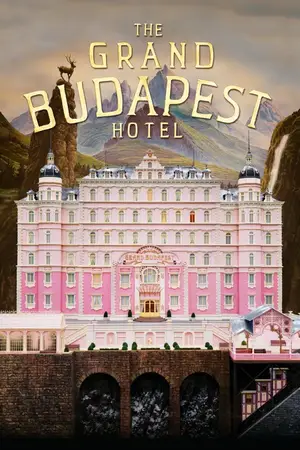
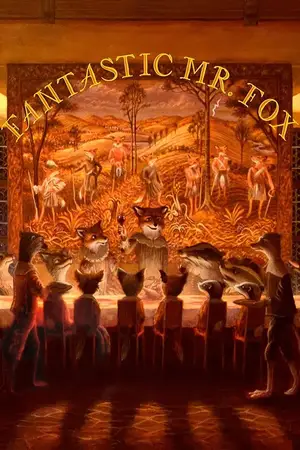
Each movie has its distinct chromatic language, with one color standing out, accompanied by others. Fantastic Mr. Fox, for instance, features earthy and yellow tones predominantly. Pink dominates The Grand Budapest Hotel, while gold shines in The Royal Tenenbaums.
With a distinct preference for pastel shades, Wes Anderson and his team also employ colors with narrative intent, associating different palettes with different historical periods.
In an interview with The Guardian, Wes Anderson stated:
“I’ve made several movies, and it's a luxury for me that they're precisely what I wanted them to be.”
While some critics may primarily notice the aesthetic qualities of the director's films, many praise the tackled themes like grief, loss, and displacement. Regardless, when watching a Wes Anderson production, we're always certain to encounter a world distinct from our own, brimming with symmetry, idiosyncrasies, and emotional impulsiveness. It's affective cinema that warmly welcomes us on challenging days.






Comments 0
No comments yet.