Before Oppenheimer| What makes the "Dark Knight" series a cinematic classic?

Introduction: This is the fifth article in the Before Oppenheimer series, which analyzes Nolan's films prior to "Oppenheimer." In the previous article, I provided a macro-level analysis of the significance of the "Dark Knight" series in Nolan's directing career. In this article, I will focus on the films themselves, examining both the highlights and drawbacks of Nolan's works in this series.
Memorable Moments
Let's discuss a few notable details from the film that left a deep impression on me.
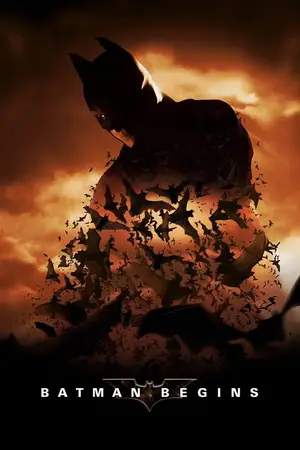
One of them is from "Batman Begins," where Alfred, the butler, kindly reminds Bruce to engage in social activities to avoid arousing suspicion. Taking his advice, Bruce confidently drives a luxurious car and arrives at a party in grand style, accompanied by a beautiful woman. However, he unexpectedly encounters his beloved Rachel at the event. Hesitant and stammering, he says, "That's not the real me." In that moment, I suddenly felt that Nolan's version of Bruce was reluctant to embrace the identity of a wealthy playboy, unlike the versions portrayed by Keaton and Bale, who were comfortable in various social settings, or Affleck's Batman, who boldly proclaimed, "I'm rich." Nolan's Bruce appeared to be playing the role of a wealthy heir, while Batman represented his true self.

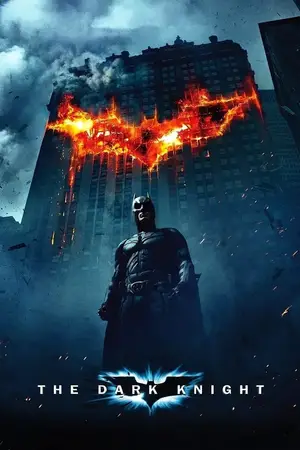
The second one is the evolution of Batman's understanding of himself.In "The Dark Knight," there are two key developments in Batman's character. Early in the film, he tells Alfred that Batman's weakness is that he can't bear to be hated. However, by the climax, the Joker shatters his ideals, and he accepts that he will be hated and hunted. He decides to endure the pain and be chased if it means protecting the citizens of the city. For Batman, the greater good of the city outweighs his own reputation as a hero.
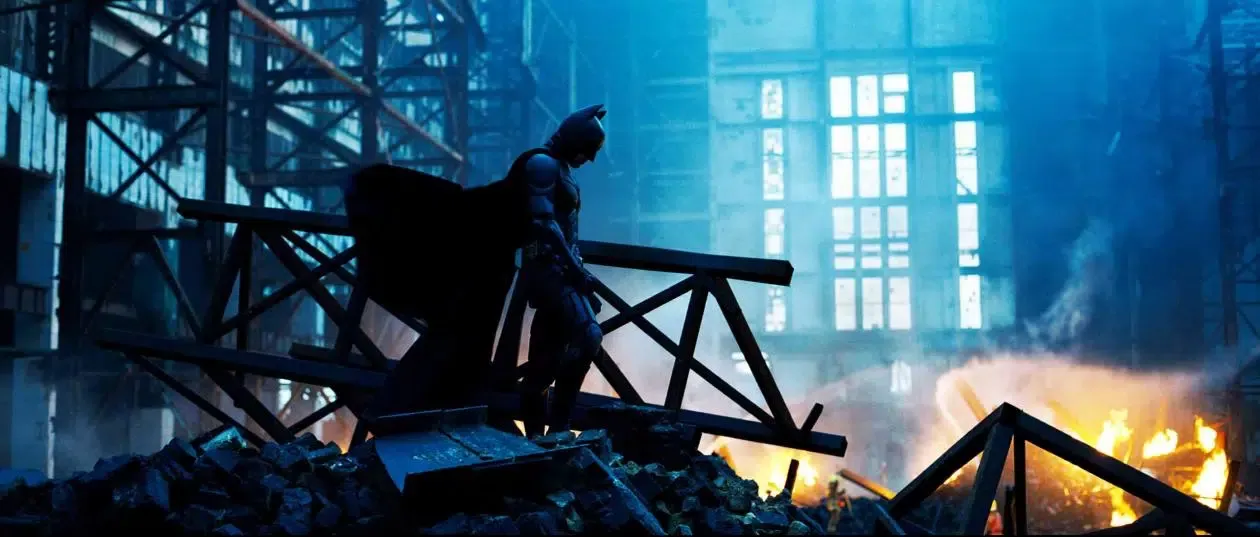
The third is the conversation in "The Dark Knight Rises" between Alfred and Bruce before Alfred's departure, which puzzled me the first time I watched it: Batman went into hiding due to his notorious reputation, but why did Bruce also choose to conceal himself? It was only after watching it a second time that I realized Rachel was the sole reason for Bruce's return to a normal life. However, this woman he deeply loved not only died but also gave her heart to Harvey Dent, who had driven Bruce into a corner. Bruce's retreat was not a passive act of self-hiding; it was a proactive choice out of despair towards his own life.

The following are two breathtaking scenes that left me in awe.
Undoubtedly, the most impactful scene is the ending of "The Dark Knight.", where I won't go into detail as it is deeply ingrained in the memories of all viewers. Batman, heavily wounded and limping, runs forward in a tragic manner. Hans Zimmer's music starts playing, and Commissioner Gordon, his voice trembling, says: "Because he's the hero Gotham deserves, but not the one it needs right now. So we'll hunt him because he can take it. Because he's not our hero. He's a silent guardian, a watchful protector. A DARK KNIGHT."

Another scene that stands out is when Batman emerges from the darkness of the ice in "The Dark Knight Rises," a remarkable embodiment of Nolan's directorial skills.
It can be seen in how he visually shrouds the entire city in darkness, creating an atmosphere of despair. It's also evident in how he gradually extinguishes all hope as the story unfolds. The special forces are killed as soon as they enter, Gordon leading the resistance loses his reputation, and his organized strike team is captured. The only sprout of hope, Blake (Robin), is also caught while trying to save the police. All the rebels are defeated, and it appears that the entire city is firmly under the enemy's control.
Who else is there? Only Batman.
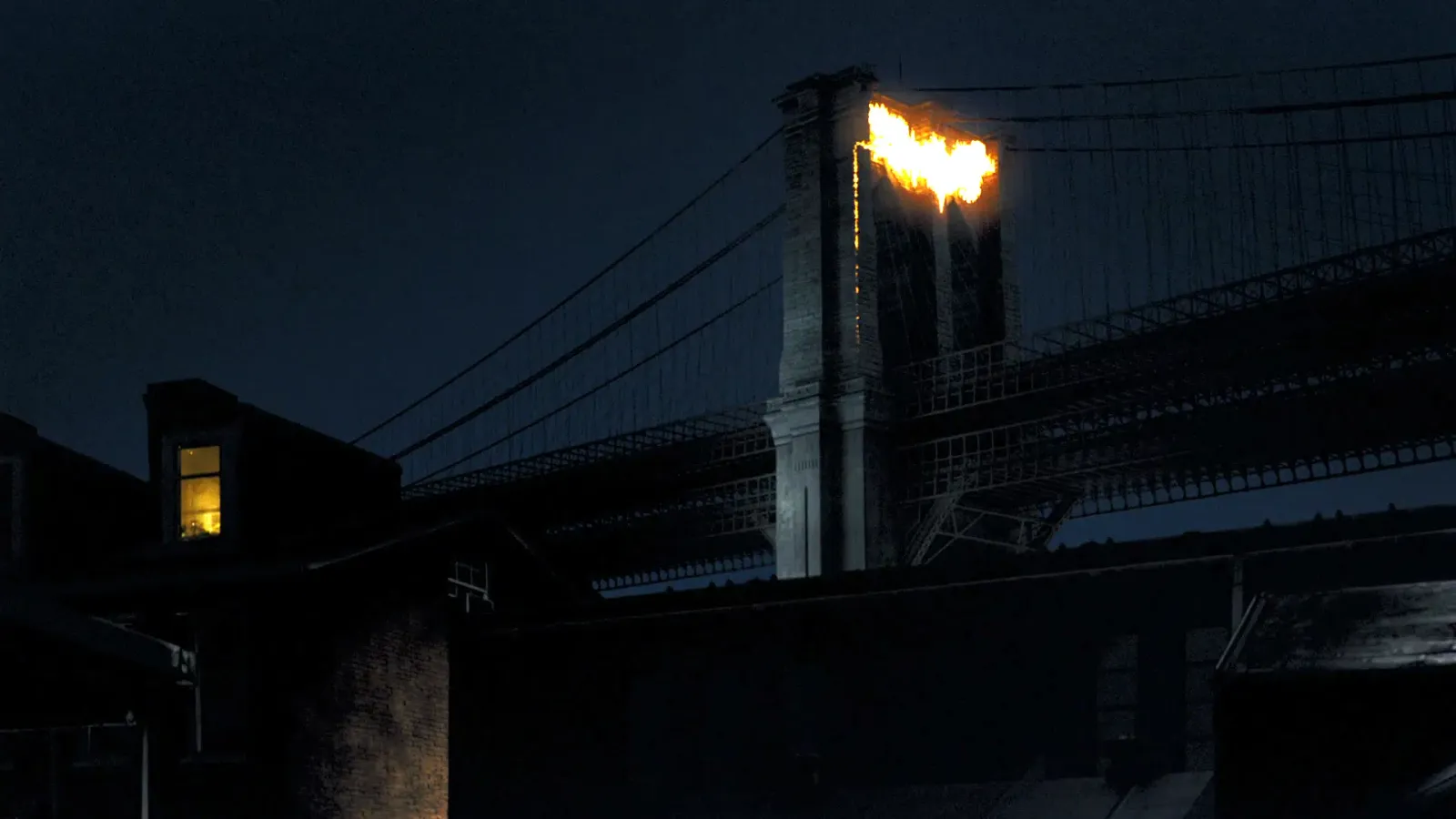
When the bat symbol lights up the Gotham sky, the city's hope is rekindled. In my opinion, Batman's entrance at that moment is more awe-inspiring than any other hero that would descend from the sky, as he brings not just combat power, but also faith and hope.
The Characters
One of Christopher Nolan's impressive abilities lies in his skill to shape a multitude of characters, each with their unique and independent personality traits. There are seldom side roles in his films; they all have varying degrees of impact on the growth and transformation of the protagonist.
Let's begin with the antagonists.
In "The Dark Knight," the Joker, portrayed by the late Heath Ledger, stands out as a haunting and unforgettable character. What makes him so impressive?
Firstly, the Joker's complete disregard for conventional morality sets him apart. Unlike typical movie villains driven by desire for power or wealth, the Joker simply seeks chaos and destruction. He has no interest in money, nor care for personal safety, as evidenced by his willingness to blow up a hospital while he is inside. This nihilistic worldview makes him a truly unpredictable and terrifying adversary.
Furthermore, the ambiguity of Joker's backstory adds to his mystique. Unlike most villains who are given detailed explanations for their evil nature, the Joker's origins remain largely unexplained. He offers different stories about his scars, leaving the audience constantly uncertain about his motives and next moves.
Additionally, the Joker's visual design is remarkable. His smeared makeup, scarred face, and iconic green hair and red lips instantly convey his madness and unpredictability. The mismatched purple suit and orange shirt, coupled with his lack of a tie or buttoned collar, further reflect his chaotic nature and disregard for societal norms.
The Joker's weaponry, such as his knife, playing cards, and chaos grenades, adds to his unpredictability and air of menace. His clown mask and painted-over truck are part of deception as a way to achieve his goals.

Although the villains in the other two films may not measure up to the Joker's level of greatness, they are still successful when compared to many other superhero movies. In "Batman Begins," the calculating and strategic Ra's al Ghul leaves a lasting impression, so does the brutal and violent Bane in "The Dark Knight Rises." Talia al Ghul's twist initially surprises the audience, but upon rewatching, one can see the many foreshadowing hints cleverly placed by Nolan.
Another vallian worth mentioning is Two-Face, a character who is often overlooked. Although heappears as a true villain for only a brief time, his transformation serves as a heavy emotional blow to viewers. This White Knight's trasition into villainy from the symbol of justice as well as his terrifying face is a merely small part of his descent. While the Joker indiscriminately massacres, and the League of Shadows seeks to destroy Gotham, Two-Face's motivations are more understandable. His actions provoke contemplation on the nature of good and evil. To some extent, Harvey's downfall is inevitable because he always held himself above others. His pride outweighed his dedication to justice and love for the city. When the Joker tears him down from his pedestal, he realizes there's no justification for his arrogance, making him seek revenge against society.
Now, let's focus on the heroic characters.
If we have to name Batman's trusted ally, Alfred is undoubtedly the first and only name that comes to mind. It is Alfred who lifts Bruce from despair, helps him get through failure and darkness. He is the one that Batman can give his back to and fight without worries, and also one who reminds Bruce to retreat from the world of threats to life back to ordianry yet happy mundanities. Throughout different periods, Alfred remains Bruce's strongest supporter and guide. I was initially puzzled by Alfred's departure in "The Dark Knight Rises." Why would Alfred leave Bruce when he needs him the most? Later, I realized it might be a kind gesture from the director, as Alfred, if he hadn't left, could have met his end at the hands of either Talia or Bane.
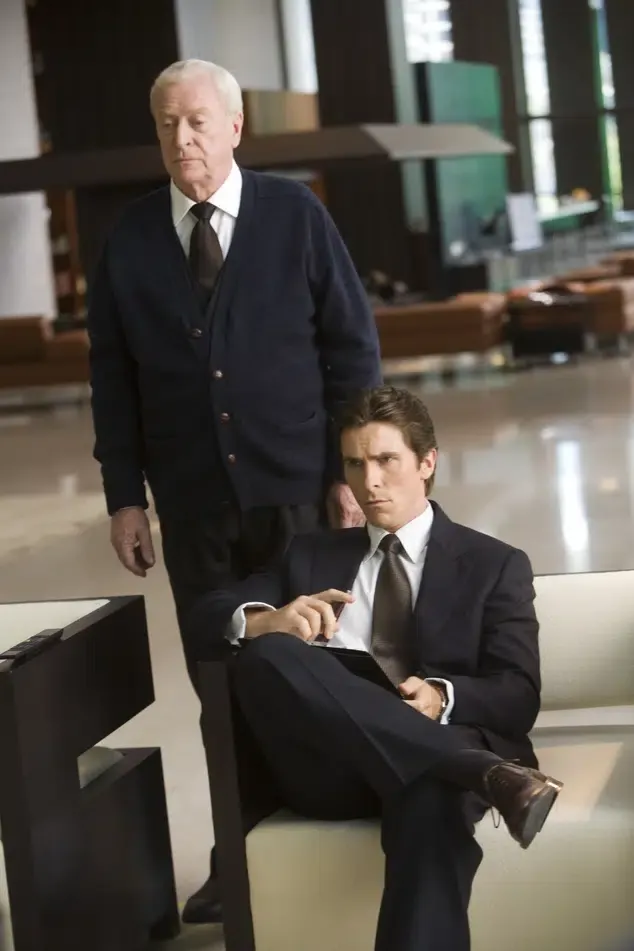
Compared to Alfred, Lucius Fox may seem a bit one-dimensional, but he still plays a significant role.
Another crucial character is Commissioner Gordon. Gary Oldman's acting is commendable because he skillfully portrays the righteous Commissioner Gordon, a far cry from the deranged officer from "Leon: The Professional." Gordon is just and kind, sometimes cowardly in the face of danger, but never gives up. In a way, he is braver than Batman because he openly declares war on all criminals in the city. Gordon and his family are constantly exposed to danger, whereas Bruce can retreat to his mansion during the day. More importantly, Gordon trusts Batman but is never reliant on him. He never gives up fighting during Batman's eight-year absence, when Gotham on the brink of destruction under the control of Bane. Compared to supporting characters in other movies who can do nothing but wait for the protagonist to save them, Gordon is undoubtedly a successfully designed character. As for Brian in the third film, despite Joseph Gordon-Levitt's impressive performance, I feel he is more like a younger version of Gordon lacking in distinctiveness.
Let's talk about a few female characters. First and foremost, Rachel, a character that appears throughout the trilogy. I particularly like the Rachel from the first film. She had a certain innocence and impulsiveness, and her words and actions had a significant impact on Bruce, making him reflect on whether it could truly solve problems through revenge and violence. This greatly inspired how he fight against the League of Shadows. The final kiss between the two before the ruins is one of the few tender moments in "Batman Begins".
However, in the second film, "The Dark Knight," this idyllic plan is shattered. The Joker's evil scheme and Harvey Dent's transformation into Two-Face push Batman to the brink. Rachel, the woman in whom Bruce places his hopes, falls in love with someone else. When Rachel dies, Bruce, still wearing the Batman suit, looks back at Alfred with a heavy heart and says, "But Harvey didn't know." I genuinely felt Bruce's pain. He gave everything to Gotham and its people, but he was left with only anguish and the heartbreaking truth.
In "The Dark Knight Rises," Anne Hathaway's Catwoman makes a stunning entrance. She is not just an eye candy, but an agile, clever heroine with sense of justice. Ultimately, her presence alongside Bruce brings a bittersweet conclusion to Batman's love story after years of heartache.
Flaws
Even the best films have their flaws, and the "Dark Knight" series is not an exception.
One of the major criticisms of the "Dark Knight" series is the predictable and formulaic structure in each installment. Specifically, each movie ends with a massive battle scene between Batman and his foes, a trope overused in the superhero genre. This predictability undermines the impact of these climactic moments and thus makes the films less engaging and exciting. These final battles feel more like they were included simply because they were expected by viewers than natural progression of the plots, which ultimately detracts from the overall quality of the films.
Additionally, the resort to physical violence and brute force further reinforces toxic masculine, sending the message that the only way to solve problems is through aggression and domination. This narrow-minded approach to conflict resolution not only limits the depth of the storytelling, but it also perpetuates harmful societal norms that have potentially damaging consequences.
Interestingly, Nolan seems to have embedded his reflections on the justifiability on the resort to violence into the story. For example, in "The Dark Knight," citizens dress up as Batman to participate in fighting crime but are finanly caught in danger. When Batman comes and gets them rescued, he is welcome by angry questioning instead of gratitude, "What gives you the right? What's the difference between you and me?" Actually eariler before when Harvey Dent was still Batman's ally, he once warned Batman with prophetic words, "One day, Batman will have to answer for the laws he's broken." However, throughout the trilogy, violence is the first resort throughout the trilogy. The few moments of reflection appear feeble in the midst of the explosive and visually stimulating scenes.

Summarize
The "Dark Knight" trilogy represents a turning point in Nolan's career as a director. Prior to this series, his films primarily delved into the darker aspects of human nature, as previously noted in articles discussing "Memento" and "Following." However, in his subsequent films, Nolan's work became increasingly commercially viable, with protagonists more of heroism and positive side of humanity.
The next article in the Oppenheimer series will examine another imaginative and commercially successful sci-fi film by Nolan: "Inception."





Comments 0
No comments yet.