'Fast & Furious': A Never-Ending Midlife Fantasy
General Reviews

The "Fast & Furious" series might be the biggest love-it-or-hate-it phenomenon in film industry. Its reputation has always been questionable, known for its simplistic and brainless nature within the action genre. However, it has undeniably been a massive box office success, grossing over $7 billion worldwide.
Compared to its predecessors, Fast X did experience a significant decline in box office, but it is still expected to reach around $900 million according to predictions. Regardless, the series is already planning to create a trilogy for its grand finale, continuing until "Fast & Furious 12."
"Fast X" (2023)
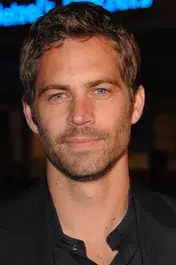
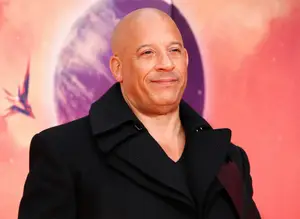
By then, the entire series may span 25 years. When a franchise stands the test of time, it naturally becomes a cultural landscape. Time grants it magic and privilege. Repetition becomes a style, flaws become traditions, and memories shape legends. If we were to revisit the first installment of The Fast and the Furious (2001), we would be surprised to discover that Dominic Toretto (acted by Vin Diesel) wasn't always the bald guy we see today. He was once slim and even had a thin but distinct layer of hair. Another male lead, Brian O'Conner (acted by Paul Walker), will forever be remembered for his charm in the seventh film.

"The Fast and the Furious" (2001)
Although the entire series has been criticized for its weak storyline, it didn't start off as mindless as it is now. It had a classic or rather cliché setup similar to A Better Tomorrow: one becomes a thief while the other becomes a cop. The clash between their professional roles is eventually resolved by their bond. Men always have to earn respect through their skills, which, in this case, is depicted as "street racing."
It can be said that the bond between Dominic Toretto and Brian O'Conner, while not groundbreaking, wasn't overly melodramatic either. They have always been the dual core of the entire series. When the series deviates from their partnership and solely focuses on car chases, such as in the The Fast and the Furious: Tokyo Drift (2006), it fails to sustain both box office success and critical acclaim. This at least proves that the series indeed has some notion of "characters." Or rather, the audience still cares about the characters.
However, with Paul Walker's untimely passing, the series has become a one-man show, veering further into absurdity and self-indulgence. With the absence of the core relationship, cars have become the true protagonists. Drivers have become mere accessories to the cars. Let's not forget that driving a car doesn't allow for much expression or action. Actions are limited to steering, accelerating, braking, and hitting the nitrous oxide valve. Facial expressions mainly consist of a tense and determined gaze forward.
Dominic Toretto has become more and more like a robot. Vin Diesel has almost reversed Arnold Schwarzenegger's The Terminator. The Terminator gradually unearthed subtle traces of humanity from its robotic nature, such as a sense of humor or a smile. On the other hand, Dominic Toretto is more like a machine cloaked in human skin. Although he can cry and laugh, he seems to lack emotions. His deep and resonant voice resembles the roar of an engine or a carefully synthesized male voice. As for fight scenes, once Dominic Toretto is in action, he is flawless, never giving up, and never dying.
Tell me, compared to the Terminator, is Dominic Toretto's model more advanced or outdated?
Of course, this isn't meant as criticism, and it's likely all part of the studio's planned design. After all, someone who drives a car like that can't be too serious. In "Fast X," the head of the secret agent system, Mr. Nobody (played by Alan Ritchson ), openly mocks the series itself: "These people are a car cult, doing everything that defies God and gravity."
Indeed, throughout the journey, we have witnessed this group of people using "cars" to go head-to-head with tanks, airplanes, and even nuclear submarines. We have witnessed a car sprint vertically on the Hoover Dam, glide through three skyscrapers, and even directly leap into space. When the villain says, "I've taken everything from you, you have nothing," Dominic Toretto simply turns the key and replies, "No, you haven't taken my car!"
This extreme obsession with cars, rather than carrying on the deep affection cowboys had for horses in the old Westerns, is more akin to the childlike fantasies found in "Transformers." There is another thing need to mention, that is, Dominic Toretto's constant mention of "family." It has become quite a famous catchphrase. According to some statistics, the word "family" appears 29 times in the "Fast X." It's hard not to believe that this was intentionally done by the studio for entertainment.
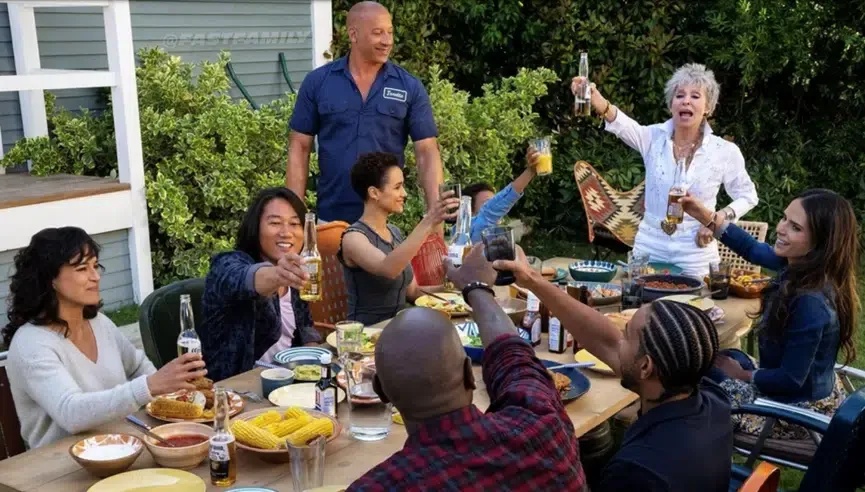
Family is an unquestionably positive concept, but it can also be vague and prone to becoming mere slogans. However, this catchphrase is not entirely superficial. there is still an unconsciousness of the era, and a car with no direction surely won't get very far.
Initially, it was probably for structural reasons, how to bring together a never-ending stream of new characters in sequels. "Family" is clearly the most convenient adhesive. However, when you look back at the tenth installment, what kind of family is this exactly? In reality, it is a melting pot of races, transcending the barriers of blood and class. Clearly, this family represents an idealized version of "America."

At the beginning of the final chapter, Dominic Toretto's grandmother delivers a speech during their famous regular barbecue gathering, emphasizing the importance of "inheritance" - the legacy of this group of car thieves that no one can take away. Any astute observer can easily draw parallels between the grandmother and the aging President Biden, as they both strive to uphold a once glorious system, optimistically declaring that the barbecue can continue forever, even though the audience knows it's impossible.
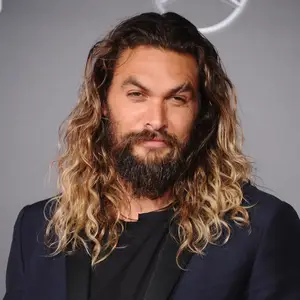
The antagonist in "Fast X," Dante (acted by Jason Momoa), the son of a Brazilian drug lord, with his exaggerated appearance and behavior, is reminiscent of the iconic villain Joker. Although Dante is essentially a passer-by in the film, he still hits on the sore points of present-day America.
In The Dark Knight (2008), the Joker played by Heath Ledger represents an unknown origin of terror attacks, attacking society from the outside. Ten years later, in Joker (2019), the Joker played by Joaquin Phoenix represents the unstoppable rise of populism, tearing society apart from within. Meanwhile, Dante in "Fast X", sharply questions the legitimacy of the "globalized family" although not necessarily having such explicit predetermined significance.
In the past, while Dominic Toretto constantly expanded his family by recruiting new members, he inadvertently destroyed countless local families. As for the consequences, when the entire system is in danger, Dominic Toretto cannot possibly save every "family member." In short, this deranged Dante exposes the darkness behind Dominic Toretto's "family" slogan, no matter how eloquently it is presented, it ultimately remains self-indulgent.
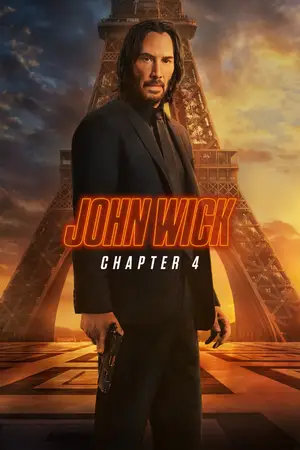
In terms of "seeking revenge on globalization," the most representative character is John Wick. Interestingly, this series also reached its final chapter this year.

"John Wick 4" (2023)
It would be interesting to compare these two blockbuster action franchises. They both represent a certain Hollywoodization trend, using exaggerated and illogical designs to stimulate the increasingly desensitized audience. John Wick (acted by Keanu Reeves) ultimately becomes a relentless killing machine with countless wounds, much like the unstoppable killers in horror films like "Friday the 13th" or "A Nightmare on Elm Street".
However, the guiding spirit of "John Wick" is precisely the opposite of the "Fast & Furious" series. It explicitly challenges globalization and elite rule. Wick is a killer who has been deprived of "family." His frenzied battles begin with a disproportionate reason – seeking revenge for a dog. This dog represents his longing for his deceased wife and his own last shred of dignity as a human being. The "John Wick" series has also produced four films, but Wick doesn't build or expand a new family. He has already lost a bright future and seeks revenge solely to find justice for the past.
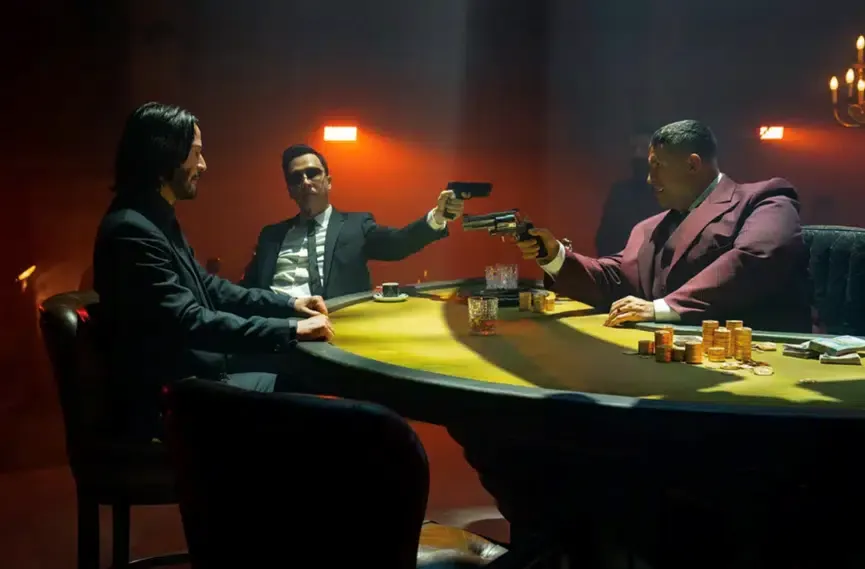
The target of Wick's revenge and struggle, the "High Table," is actually the behind-the-scenes elite maintaining the globalized system. Wick roams the world, engaged in a constant cycle of pursuit and counter-pursuit with the "High Table," becoming a game between global elite forces and local powers.
"John Wick" series emphasizes the word "rules". These rules undoubtedly predate the car worship era of the "Fast & Furious" series and are more serious than the vague notion of "family." "Rules" overlook technological advancements and emphasize the timeless nobility of humans. It is for this reason that Wick is more of a "human" than Dom. Although the main villain in the fourth installment mocks Wick as a lost soul searching for a grave, in reality, Wick is searching for the individual identity erased by the elite system.
The ending of "John Wick" series brings to mind the epic film Gladiator (2000) – where life and death are trivial, and true victory is reclaiming dignity and breaking free from the identity of a slave. To live as a free person or die – even in the next moment of freedom. This concept is so powerful that it surpasses even the most extravagant star-studded cast, the most spectacular car chases, and explosions.

Perhaps both "Fast & Furious" and "John Wick" will belong to a bygone era, a time of imminent change that remains unresolved. If "Fast & Furious" continues, the nostalgic appeal might outweigh the curiosity for the audience. Since all familiar faces have returned, it's worth accompanying them for the final ride.
Perhaps Dom's son, who has already shown his potential, will take on the responsibility of carrying on the legacy. Hopefully, he can leave behind the empty slogans and become a pure racer, returning to the literal meaning of the series' title, knowing why he pursues and why he is angry.




Comments 0
No comments yet.